North Indian Veg Curry Recipes: 20 Restaurant-Style Gravies You Can Make at Home
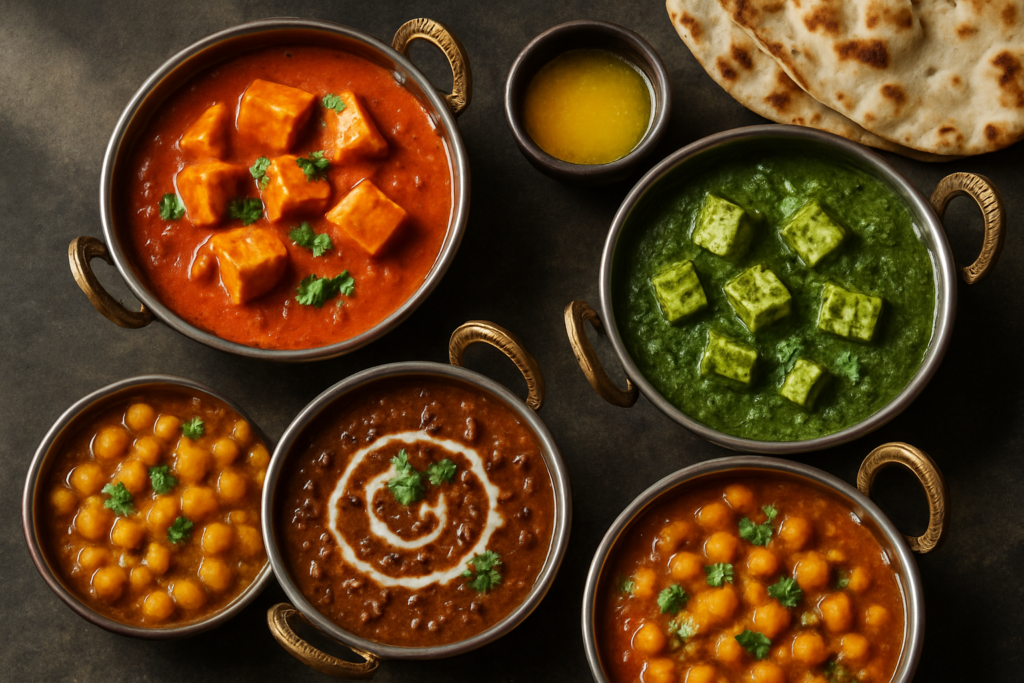
This guide covers 20 restaurant-style north Indian veg curry recipes, from silky Shahi Paneer to smoky Dal Makhani and hearty Chana Masala. Each recipe is built on the same foundational technique: a properly caramelised onion-tomato base, well-bloomed spices, and knowing when oil separates from masala. No specialist equipment needed — just a reliable gas or electric stove.
Prep Time: 20–30 minutes (varies per recipe)
Cook Time: 30–45 minutes (varies per recipe)
Total Time: 50–75 minutes average
Servings: 4 per recipe
Summary: This is your ultimate guide to 20 authentic north Indian veg curry recipes, each with restaurant-style depth and flavour. Whether you’re cooking a quick weeknight dinner or a full Saturday feast, there’s something here for every occasion and skill level.
Why You’ll Love These North Indian Veg Curry Recipes
- True restaurant-style depth — The bhuno technique (slow-cooking the masala) makes all the difference between a flat curry and one with layers of flavour.
- Beginner-friendly — Every recipe is written step by step with sensory cues, so you know exactly what “golden onions” or “fragrant masala” looks and smells like.
- Indian diaspora approved — Substitutions are included for hard-to-find ingredients so you can cook these in London, Toronto, Sydney, or anywhere in between.
- Genuinely vegetarian, genuinely satisfying — No meat needed. These curries are rich, hearty, and filling enough to convert the most sceptical non-vegetarian at your dinner table.
- Make-ahead friendly — The base gravy for most of these curries can be made in bulk on Sundays. Weeknight dinners sorted in 15 minutes flat.
The Foundation: Understanding North Indian Gravy Recipes
Almost every single one of these north Indian gravy recipes starts with the same foundational base — onions cooked low and slow until they’re a deep mahogany colour, ginger-garlic paste bloomed in hot oil, tomatoes cooked down until the fat separates. That separation of oil — the “bhuno” moment — is your green light that the masala is ready.
I know purists will disagree, but I almost always use a mix of mustard oil and ghee for most of these curries. The mustard oil gives that distinctive Punjabi sharpness, and the ghee rounds everything out with richness. If you can’t find mustard oil, a neutral oil works perfectly fine — just add an extra half teaspoon of ghee at the end as a finishing fat.
Learn more about the rich history and regional diversity of Indian cuisine — it genuinely helps you understand why these recipes work the way they do.
Ingredients You’ll Need for Most North Indian Veg Curry Recipes
These are the building blocks that appear across nearly all 20 recipes. Stock your pantry with these and you can make any curry on this list at a moment’s notice.
The Essential Pantry List
- Onions — Yellow or red, finely chopped. Red onions give more colour, yellow more sweetness. Outside India, regular brown onions work beautifully.
- Tomatoes — Fresh, ripe, and red. In winter when tomatoes are bland, add a tablespoon of tomato paste to compensate. Never use canned chopped tomatoes as your only tomato — they make the gravy watery.
- Ginger-Garlic Paste — Make a big batch and freeze in ice cube trays. Each cube = roughly 1 teaspoon. Abroad, store-bought paste is absolutely fine.
- Whole Spices (for tempering) — Bay leaves, cumin seeds, cardamom pods (green and black), cloves, cinnamon sticks. Can’t find black cardamom? Skip it — don’t substitute with green, they taste completely different.
- Ground Spices — Coriander powder, cumin powder, turmeric, Kashmiri red chilli powder (for colour without too much heat), garam masala.
- Kashmiri Red Chilli Powder — This is non-negotiable for that gorgeous deep red restaurant colour. Available on Amazon and in any South Asian grocery abroad.
- Kasuri Methi (Dried Fenugreek Leaves) — The secret restaurant ingredient. Rub it between your palms before adding to release the aroma. No substitute — but you can skip it if you truly can’t find it.
- Cream / Cashew Paste — Heavy cream for richness, cashew paste for body. For vegan versions, coconut cream works well.
- Ghee — A finishing drizzle transforms every curry. For vegans, use cold-pressed coconut oil as a finishing fat.
- Paneer / Tofu — Most paneer dishes can be made with firm tofu for a vegan version. Press the tofu well and fry before adding.
The 20 Best North Indian Veg Curry Recipes
1. Paneer Butter Masala — The One Everyone Requests
Soft paneer cubes in a velvety, mildly spiced tomato-cashew gravy. The key technique: blend the onion-tomato base completely smooth and strain it through a sieve. That one extra step gives you the restaurant-quality silkiness that most home versions skip.
Key Ingredients: Paneer, tomatoes, cashews, cream, butter, Kashmiri chilli powder, kasuri methi, ginger-garlic paste.
Signature Tip: Add a pinch of sugar to balance the acidity of the tomatoes. This is the secret that makes the gravy taste “sweet” even without cream.
2. Dal Makhani — Worth Every Hour It Cooks
Whole black urad dal and rajma, slow-cooked overnight (or for several hours) with butter and cream. This is the king of Punjabi vegetarian curry. There is no quick version that tastes the same — you simply have to let it cook low and slow. Soak and pressure cook the dal, then simmer on the lowest flame for 2-3 hours with butter and tomatoes. The slow simmer develops a thick, almost creamy consistency that no shortcut can replicate. See my detailed guide on how to make the best dal makhani at home.
3. Shahi Paneer — Mughlai Royalty on Your Dinner Table
Creamy, mild, and perfumed with whole spices. The base is made with onions, cashews, melon seeds, and yogurt — no tomato in the traditional version. This is one of those restaurant-style Indian curry dishes that looks incredibly fancy but is surprisingly forgiving to make. The key is grinding the onion-cashew paste to an absolutely smooth consistency.
4. Aloo Gobi Masala — A Weekly Non-Negotiable
Don’t let the simplicity fool you. A well-made Aloo Gobi — with perfectly cooked cauliflower that still has a slight bite, potatoes that aren’t mushy, and a dry-ish masala coating — is one of the most satisfying dishes in the entire north Indian repertoire. The trick is to cook the vegetables separately before adding them to the masala, so each piece holds its shape.
5. Palak Paneer — The Green Gravy That Converts Everyone
Blanch the spinach, shock it in ice water, blend it smooth. This three-step process gives you that vivid restaurant-green colour that turns brown if you skip the ice bath. Add a tablespoon of fresh cream and a tiny squeeze of lemon right at the end — chef’s secret, non-negotiable. This is one of the most reliable north Indian veg curry recipes for weeknight dinners.
6. Chana Masala — The Dhaba Classic
Tangy, spiced, and hearty chickpeas in a dark, almost dry gravy. Use dried chickpeas soaked overnight — canned work but they don’t absorb the masala the same way. A little tamarind or dried mango powder (amchur) is what gives this curry its characteristic sourness.
7. Matar Paneer — Simple, Quick, and Always Impressive
Paneer and peas in a spiced tomato gravy. Perfect for when you need an impressive indian curry for dinner on a Tuesday. Use frozen peas — they’re actually better than fresh here because they’re sweet and soft without going mushy.
8. Paneer Lababdar — The Showstopper
Similar to Paneer Butter Masala but smokier, richer, and with more whole spice character. The “lababdar” refers to the way the paneer is cooked in layers of masala until it practically absorbs the gravy. If you’re cooking for guests, make this one.
9. Rajma Masala — Comfort in a Bowl
Red kidney beans in a thick, deeply spiced tomato-onion gravy. Rajma Chawal (with steamed rice) is the ultimate north Indian comfort meal. Cook rajma from dried beans — the texture difference from canned is enormous. Pressure cook until completely tender, almost falling apart.
10. Baingan Bharta — Smoky and Magnificent
Char-roasted eggplant, mashed and cooked with onions, tomatoes, and green chillies. The smokiness from direct flame roasting is everything here. On a gas stove, roast directly over the flame, turning every few minutes until the skin is completely charred and the eggplant is collapsed. On an electric stove, use your oven’s broiler on the highest setting.
11. Kadai Paneer — Bold, Spicy, and Full of Crunch
Named after the iron wok it’s cooked in, this Punjabi vegetarian curry is drier than most with chunky capsicum and onion pieces. The freshly ground kadai masala (coriander seeds + dried red chillies toasted and ground) makes all the difference — please don’t use pre-made kadai masala for this one.
12. Mix Vegetable Curry — Restaurant-Style
The kind of thick, rich mixed veg curry you get at weddings and dhabas. Carrots, beans, peas, cauliflower, and potatoes in a creamy tomato gravy. Par-boil the harder vegetables separately before adding to the gravy so everything finishes cooking at the same time.
13. Aloo Matar — The Weeknight Hero
Potatoes and peas in a simple, spiced tomato gravy. This one takes 25 minutes from start to finish and tastes like someone spent all afternoon cooking. It’s an excellent first curry to learn — the techniques it teaches apply across the entire list.
14. Paneer Tikka Masala — Barbecue Meets Curry
Marinated and grilled (or pan-charred) paneer tikka pieces folded into a smoky, tangy masala. The key is actually grilling the paneer before adding it to the gravy — not adding raw paneer. Those charred edges release a smokiness into the sauce that’s just incredible.
15. Kofta Curry (Malai Kofta) — The Celebration Dish
Soft paneer and potato dumplings in a rich, creamy, mildly spiced white gravy. The koftas are delicate — deep fry them on medium heat and drain well. They’ll break if the oil is too hot or if you touch them too soon. Patience is the ingredient.
16. Lauki Kofta Curry — The Underrated One
Bottle gourd dumplings in a spiced tomato gravy. Most people wrinkle their nose at lauki (bottle gourd) until they eat this. The koftas are light, almost fluffy, and the gravy is deeply flavoured. This is one of those north Indian veg curry recipes that genuinely surprises people.
17. Saag Aloo — Mustard Greens and Potatoes
The rustic cousin of Palak Paneer, made with mustard greens (sarson), potatoes, and a generous hand with the ghee. If you can find mustard greens abroad, use a mix with spinach (2:1 ratio) to temper the bitterness. Finish with a tadka of garlic in ghee poured right on top at the table.
18. Stuffed Capsicum Curry — For the Creative Days
Capsicums stuffed with a spiced paneer-potato filling, braised in a tangy tomato gravy. More effort than most curries here, but spectacular on a weekend when you want to cook something that looks like it came from a restaurant.
19. Paneer Pasanda — Silky and Subtle
Thin slices of paneer sandwiched with a spiced filling, cooked in a mild, cream-based Mughlai gravy. This is one of the more refined entries in the north Indian canon — perfumed with cardamom, rose water, and saffron. Serve it for Diwali or Eid and watch people go quiet for all the right reasons.
20. Dhaba Dal Tadka — The One That Started It All
Yellow lentils cooked until completely soft, then hit with a sizzling ghee tadka of cumin, garlic, dried red chillies, and asafoetida. Simple, perfect, unforgettable. Check out the full post on restaurant-style dal tadka recipe for the deep dive version.
The Master Base Gravy for Restaurant-Style Indian Curry at Home
Most of these north Indian veg curry recipes use a variation of the same base. Make a big batch of this on Sunday and your entire week of curries is halfway done.
Ingredients for the Master Gravy (Makes enough for 3-4 curry bases)
- 4 large onions, roughly chopped
- 6 large ripe tomatoes, roughly chopped
- 2 tablespoons ginger-garlic paste
- 3 tablespoons oil (a mix of mustard oil and ghee works well)
- 1 teaspoon cumin seeds
- 2 green cardamoms
- 1 bay leaf
- 1 teaspoon turmeric powder
- 2 teaspoons Kashmiri red chilli powder
- 2 teaspoons coriander powder
- 1 teaspoon cumin powder
- Salt to taste
Step-by-Step Instructions for the Master Base
- Heat the oil in a heavy-bottomed pan over medium-high heat. A kadai or a Dutch oven works best — the thick base prevents burning during the slow cooking. When the oil shimmers and a single cumin seed dropped in sizzles immediately, add all the whole spices (cumin seeds, cardamoms, bay leaf). Let them sizzle for 30-45 seconds until you can smell the beautiful toasty aroma — don’t let them burn or the whole base will taste bitter.
- Add the onions and a generous pinch of salt (salt draws out moisture and helps them cook faster). Cook on medium-high heat, stirring every 2-3 minutes, for about 20-25 minutes. Don’t rush this step. The onions need to go from white to translucent to golden to a deep mahogany-brown colour. This deep caramelisation is where the sweetness and depth of every north Indian curry comes from. If they’re sticking, splash in a tablespoon of water and keep going.
- Add the ginger-garlic paste and cook, stirring constantly, for 2 minutes until the raw smell disappears and it turns golden. It will stick to the pan slightly — that’s fine. Add another splash of water if needed to prevent burning.
- Add all the ground spices (turmeric, Kashmiri chilli powder, coriander powder, cumin powder) and stir continuously for 60 seconds. The spices will toast in the oil and the colour will deepen to a gorgeous red. This “blooming” of spices is what makes the base taste complex rather than raw and powdery.
- Add the tomatoes along with a big pinch of salt and stir everything together. Increase the heat to medium-high and cook, stirring every few minutes, for 15-20 minutes. The tomatoes will release water, then the water will evaporate, and eventually you’ll see the oil beginning to separate from the masala around the edges of the pan. This is the bhuno moment — when the masala is properly cooked. The mixture should look thick, glossy, and the oil will be visibly pooling at the edges.
- Cool slightly and blend the entire mixture to a smooth paste. For a super-silky restaurant finish, strain through a fine mesh sieve. This step is optional but makes an enormous difference to the final texture.
- Divide into portions and refrigerate for up to 5 days or freeze for up to 3 months. Label each portion. When you want to make a curry, bring a portion to heat, add your protein or vegetables, adjust with water, cream, or spices for the specific dish, and you’re done in 15 minutes.
Tips for Perfect North Indian Veg Curry Every Time
- Never rush the onions. Properly caramelised onions are the single most important factor in a great north Indian curry. Set a timer for 20 minutes and let them go. They’re ready when they’re deep brown and smell sweet, almost nutty.
- The oil-splitting test. Wait until the oil separates from the masala before adding water or cream. If you add liquid too early, you’ll boil the spices instead of frying them, and the curry will taste raw and flat.
- Kasuri methi is non-negotiable. Always add it at the very end, rubbed between your palms, as a finishing herb. It’s what makes a home curry taste like a restaurant curry. Period.
- Rest your curry. Like a good biryani, curries taste better after they’ve sat for 15-20 minutes off the heat before serving. The flavours meld and deepen. This is why leftover curry always tastes better the next day.
- Control your water. Add hot water, never cold, when adjusting consistency. Cold water shocks the masala and can make the gravy taste thin and disconnected. Keep a small pot of hot water on the side when cooking.
Variations for Every Table
Jain Versions
Omit garlic, ginger, and all root vegetables (potatoes, carrots). Use asafoetida (hing) for flavour depth in place of garlic. Most paneer-based curries adapt beautifully — Shahi Paneer, Paneer Butter Masala, and Matar Paneer are all Jain-friendly with these swaps.
No-Onion-No-Garlic (Sattvic)
Use a tomato-cashew-yogurt base without onions or garlic. Increase the ginger, use a generous pinch of hing, and add a little extra fresh cream for body. Palak Paneer and Dal Tadka work particularly well in this format.
Vegan Adaptations
Replace paneer with firm pressed tofu or store-bought vegan paneer. Use full-fat coconut cream in place of dairy cream. Use cold-pressed coconut oil instead of ghee. Most of these curries are naturally vegan without the dairy additions — the base gravy itself is completely plant-based. For more on the health benefits of a plant-based Indian diet, read this detailed guide from Healthline on the Indian diet.
Gluten-Free
All of these recipes are naturally gluten-free — just ensure your asafoetida (hing) brand is gluten-free (many contain wheat flour as a filler). Serve with rice instead of naan for a fully gluten-free meal.
What to Serve With These North Indian Curry Recipes for Dinner
- Butter Naan or Garlic Naan — If you have a tandoor or a very hot cast iron pan, homemade naan elevates every single one of these curries. Check the guide on how to make restaurant-style naan at home without a tandoor.
- Steamed Basmati Rice — The long-grain variety, washed until the water runs clear and cooked with a bay leaf and cardamom pod. The slight fragrance is perfect against rich gravies.
- Laccha Paratha — Flaky, layered whole wheat flatbread. For the dal-based curries especially, laccha paratha is the ideal companion — the layers trap the curry beautifully.
Storage and Reheating
Refrigerating: Most of these curries keep well in an airtight container in the refrigerator for 3-4 days. In fact, they taste better on day two. The spices meld overnight in the most wonderful way.
Freezing: Curries without cream or yogurt freeze brilliantly for up to 3 months. Freeze the base gravy without the main ingredient (paneer, etc.) and add fresh protein when reheating. Cream-based curries can separate on freezing — if that happens, whisk briskly while reheating on low heat and they come back together.
Reheating: Always reheat on the stovetop over low heat with a splash of warm water. Microwave reheating works in a pinch but tends to make paneer rubbery — if you must use the microwave, set it to 60-70% power and stir halfway through. Finish with a fresh pinch of kasuri methi and a tiny drizzle of ghee to revive the flavours.
Frequently Asked Questions About North Indian Veg Curry Recipes
Why does my curry taste flat even when I follow the recipe exactly?
Nine times out of ten, it’s one of three things: onions that weren’t cooked long enough, spices that were added to oil that wasn’t hot enough (blooming spices properly is crucial), or not enough salt. Also check your spices — ground spices older than 6 months lose most of their potency. Smell them before using; if they don’t have a strong aroma, they need replacing.
What’s the secret to restaurant-style colour in north Indian gravies?
Kashmiri red chilli powder. It gives a gorgeous deep red colour without excessive heat. Use 1-2 teaspoons per curry and you’ll get that vivid restaurant colour immediately. Some restaurants also use a tiny pinch of food-grade red colour — the Kashmiri chilli does the job beautifully on its own without it.
Can I use store-bought paneer for these recipes?
Yes, absolutely. Store-bought paneer works perfectly well. The trick is to bring it to room temperature before cooking and to never overcook it — paneer becomes rubbery very quickly. If you’re pan-frying paneer before adding to curry, keep the pieces large and add them to the warm gravy at the end, just heating through rather than simmering for a long time.
How do I make the gravy thicker without adding more cream?
Soak 15-20 raw cashews in warm water for 20 minutes, then blend into a completely smooth paste. Add this to your curry — it thickens the gravy beautifully, adds richness, and is much lighter than adding extra cream. A tablespoon of yogurt stirred in off the heat also adds body without heaviness.
Which of these north Indian veg curry recipes should I try first as a beginner?
Start with Aloo Matar or Dal Tadka — both are forgiving, require minimal ingredients, and teach you the foundational techniques (caramelising onions, blooming spices, the bhuno technique) that apply to every other recipe on this list. Once those two feel comfortable, move to Palak Paneer and then Paneer Butter Masala. Build your confidence gradually and restaurant-style curries become very achievable.