Gujarati Thali Recipes: 12 Classic Dishes for a Complete Authentic Meal at Home
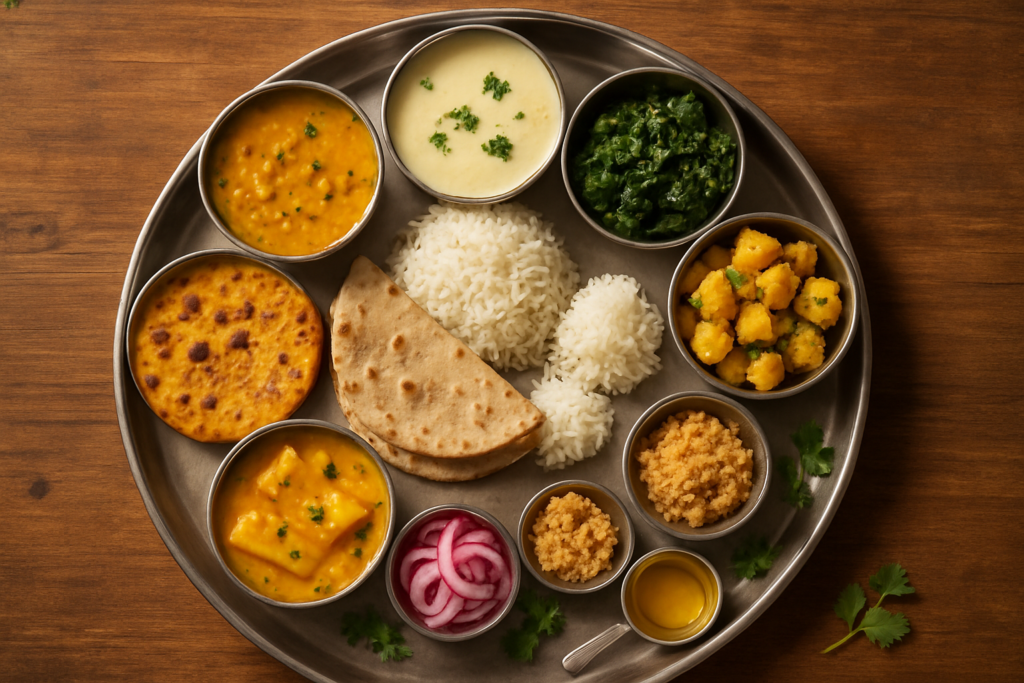
A complete Gujarati thali balances all six tastes — sweet, salty, sour, spicy, bitter, and astringent — across twelve dishes that are designed to be made together. This guide covers every component from tuvar dal to churma ladoo, with timings, ratios, and the sequencing that makes the whole spread manageable at home.
Quick Overview: Complete Gujarati Thali
- Prep Time: 60 minutes
- Cook Time: 90 minutes
- Total Time: ~2.5 hours (less with prep done ahead)
- Servings: 4 people
A complete Gujarati thali typically includes dal, kadhi, 2-3 shaaks (vegetable dishes), rotli, thepla, rice, khichdi, salad, chaas, pickle, and a sweet — all balancing the classic Gujarati sweet-sour-spicy flavor profile. Most components can be prepped the night before, making same-day assembly much easier.
Why You’ll Love These Gujarati Thali Recipes
- It’s a complete, balanced meal — protein from dal and kadhi, carbs from rotli and rice, vegetables from shaaks, probiotics from chaas. A Gujarati thali is nutritionally thoughtful in a way that feels effortless.
- Most components are meal-prep friendly — the dal, kadhi, muthia, and churma can all be made a day ahead. You’ll thank yourself on serving day.
- Naturally vegetarian and mostly vegan-adaptable — with simple swaps, the entire thali can be made vegan without losing any of its soul.
- The flavors are genuinely addictive — that jaggery-tamarind combination in the dal, the silky sweetness of kadhi, the herbaceous punch of thepla. Once you’ve had a proper Gujarati meal, you keep coming back.
- It’s a joyful cooking project — yes, it takes time, but there’s something deeply satisfying about assembling a full thali. It’s a celebration on a plate.
Understanding the Soul of Gujarati Thali Recipes
Before we get into the individual recipes, it’s worth understanding something central to this cuisine. Gujarati cuisine has a very specific philosophy: every meal should balance all six rasas (tastes) — sweet, salty, sour, spicy, bitter, and astringent. This is why jaggery goes into everything — not because Gujaratis have a sweet tooth (well, okay, a little), but because sweetness balances the other flavors into something harmonious and complete.
The thali format itself ensures you’re eating all these flavors simultaneously — a bite of tangy dal, a spoonful of sweet-sour kadhi, a piece of spiced shaak, all mopped up with a ghee-slathered rotli. That combination is the whole point. Don’t eat each dish in isolation — mix, combine, let the flavors talk to each other on your plate.
Gujarati Thali Recipes: The Full Food List
Here’s what a traditional Gujarati thali includes. Some versions have even more dishes, but this is the everyday version that serves as the gold standard:
- Tuvar Dal (sweet-sour-spicy lentil soup)
- Gujarati Kadhi (yogurt-besan curry)
- Aloo Batata Nu Shaak (spiced potato dry vegetable)
- Methi Muthia (steamed fenugreek dumplings)
- Rotli (thin whole wheat flatbread)
- Thepla (spiced methi flatbread)
- Steamed Rice
- Moong Dal Khichdi
- Kachumber Salad
- Chaas (spiced buttermilk)
- Aamras or Shrikhand (mango pulp or sweet yogurt)
- Churma Ladoo (sweet wheat-jaggery balls)
See the detailed Gujarati dal recipe here if you want a dedicated deep-dive into just the dal, or check out our soft methi thepla recipe for a standalone guide.
Ingredients You’ll Need for the Complete Gujarati Thali
Your Gujarati Pantry Staples
Most of these ingredients are easy to find in any Indian grocery store. For those cooking in the UK, USA, Australia, or Canada — almost everything below is available on Amazon or at any South Asian grocery store. A few notes for the diaspora:
- Tuvar dal (pigeon pea lentils): Available as toor dal or arhar dal in Indian stores. No real substitute — this is the backbone of the Gujarati dal recipe. If truly unavailable, yellow split peas work in a pinch.
- Jaggery (gur): Brown sugar or coconut sugar work as substitutes (use slightly less). Jaggery powder is widely available on Amazon now.
- Kokum: Some Gujarati dal recipes use kokum instead of tamarind for sourness. Kokum is harder to find abroad — tamarind paste is a perfect substitute.
- Methi (fenugreek leaves): Fresh methi is ideal for theplas and muthias. Dried kasuri methi can substitute at 1/3 the quantity. Frozen methi works beautifully too.
- Asafoetida (hing): Essential — don’t skip it. Most Indian stores carry it. Make sure you’re using compounded hing (the powder kind) — a tiny pinch goes a very long way.
- Besan (gram flour): Used in kadhi and theplas. Chickpea flour sold in health stores is the same thing.
How to Make Gujarati Thali Recipes Step by Step
Step 1 — Plan Your Cooking Order
Start with items that take the longest. Soak tuvar dal for 20-30 minutes while you prep vegetables, roll theplas, and knead rotli dough. This planning step will save a lot of stress — the dal needs to be pressure-cooked and simmered well before the rotlis are ready to serve.
Step 2 — Make the Tuvar Dal (Gujarati Dal Recipe)
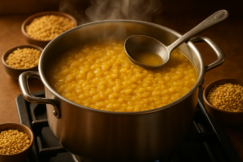
Pressure cook soaked tuvar dal with turmeric and 2 cups water for 3-4 whistles until completely soft and mashable. Whisk the cooked dal until smooth — don’t skip the whisking, it gives the dal that characteristic silky consistency. In a separate pan, heat ghee and add mustard seeds — let them splutter properly before adding anything else. Add cumin, dried red chillies, curry leaves, and hing. Pour this tempering into the dal along with jaggery, tamarind pulp, coriander-cumin powder, and salt. Simmer together for 10 minutes. Taste it — it should hit you with sweet, tangy, and warmly spiced all at once. That balance IS the Gujarati dal recipe. Garnish generously with fresh coriander.
Step 3 — Make the Gujarati Kadhi Recipe
Whisk together yogurt, besan, and water until there are absolutely NO lumps — this step is crucial, or your kadhi will be grainy. Add turmeric, salt, and jaggery to the mixture. Pour into a heavy-bottomed pot and cook on medium heat, stirring constantly in one direction — this prevents the kadhi from breaking. Cook until it just starts to boil, then reduce heat and simmer 15-20 minutes. In a small pan, heat ghee and prepare the tadka: mustard seeds, cumin, fenugreek seeds, dried red chillies, curry leaves, and grated ginger. Pour the sizzling tadka over the simmering kadhi. It should be slightly sweet, silky, and gently tangy — nothing like the thick North Indian kadhi pakora.
Step 4 — Make Theplas
Mix wheat flour, besan, finely chopped fresh methi, turmeric, chilli powder, sesame seeds, salt, and a teaspoon of oil. Gradually add water and knead into a semi-soft dough — slightly softer than rotli dough. Divide into balls and roll thin. Cook on a hot tawa on both sides with a little oil until golden spots appear. Stack them immediately after cooking — they stay soft this way and don’t dry out. I know purists will argue about whether oil or ghee is traditional here, but a thin smear of oil works perfectly.
Step 5 — Make Rotlis
Knead atta with a pinch of salt and warm water until very smooth and soft — softer than you think is necessary. Let it rest 20 minutes covered with a damp cloth. Roll into thin rounds and cook on a hot tawa. Rotlis traditionally puff up directly on the flame — if yours don’t puff, it usually means either the dough isn’t soft enough or the tawa wasn’t hot enough. Smear generously with ghee while still hot.
Step 6 — Make Aloo Batata Nu Shaak
Heat oil in a pan, add mustard seeds and let them pop enthusiastically. Add hing, then boiled diced potatoes. Sprinkle turmeric, red chilli powder, coriander-cumin powder, sesame seeds, salt, and sugar. Toss well on medium heat for 5-6 minutes until potatoes are lightly golden at the edges. Finish with a squeeze of lemon and lots of fresh coriander. Simple, humble, and absolutely essential on every Gujarati thali.
Step 7 — Make Methi Muthia
Mix all muthia ingredients into a stiff dough. Shape into small cylindrical rolls about the size of your palm. Steam for 20-25 minutes until a toothpick inserted in the center comes out clean. Let cool slightly, then slice into rounds about half a centimeter thick. Heat oil, add mustard seeds and sesame seeds and let them pop, add hing, then slide in the sliced muthias. Toss gently on medium heat until they’re lightly golden and fragrant. Garnish with fresh coconut and coriander if you have them.
Step 8 — Make Rice and Khichdi
Cook plain steamed rice your usual way. For khichdi — heat ghee in a pressure cooker, add cumin seeds and wait for them to sizzle, add hing, then washed rice and moong dal, turmeric, and salt. Add 3.5 cups water and pressure cook for 2 whistles. It should be soft, slightly mushy, and comforting — that texture is the whole point of khichdi.
Step 9 — Make Kachumber Salad
Finely dice cucumber, tomato, and onion. Toss with lemon juice, salt, a pinch of chilli powder, and lots of fresh coriander. Pop it in the fridge. The coolness of kachumber against the warm dishes is one of those details that makes a Gujarati thali feel complete.
Step 10 — Make Chaas (Spiced Buttermilk)
Blend yogurt with cold water until frothy — a hand blender works beautifully for this. Stir in roasted cumin powder, black salt, chopped fresh mint, and grated ginger. Taste and adjust. Refrigerate in a jug. Chaas is THE drink of the Gujarati meal — it’s cooling, digestive, and ties the whole meal together.
Step 11 — Make Aamras or Shrikhand
If using fresh Alphonso mangoes, peel, scoop the pulp, and blend with a pinch of cardamom and a few saffron strands soaked in warm milk until silky smooth. Taste — good Alphonsos need very little extra sugar. Refrigerate until serving. For shrikhand, hang thick yogurt in muslin for 2 hours, then beat with powdered sugar, cardamom, and saffron until smooth and creamy.
Step 12 — Make Churma Ladoos
Roast coarse wheat flour in ghee on the lowest heat you can manage until it turns golden and smells gloriously nutty — this takes 15-20 minutes and you cannot rush it without burning. Take off heat, add powdered jaggery, cardamom, and chopped nuts. Mix well while still warm. While the mixture is still warm enough to hold shape but cool enough to touch, roll into ladoos. They’ll firm up beautifully as they cool.
Tips for Perfect Gujarati Thali Recipes Every Time
- The jaggery-tamarind balance is personal: Every Gujarati family adjusts this differently. Start with equal quantities and taste from there.
- Don’t crowd your tawa for rotlis: Work one rotli at a time on a properly hot tawa. If the tawa isn’t hot enough, the rotli will dry out before it cooks properly and will never puff.
- Always whisk kadhi in one direction: This technique genuinely does prevent the kadhi from splitting. Whether it’s science or tradition, it works.
- Make muthias and churma a day ahead: Both improve overnight. Muthia develops a better texture and churma ladoos firm up perfectly by the next day.
- Taste everything with jaggery AND salt together: Gujarati cooking requires both to be in balance. If your dal tastes too sweet, it usually means there’s not enough salt — add salt before you reach for more tamarind.
Variations of Gujarati Thali Recipes
Jain Gujarati Thali
Skip potatoes (and all root vegetables) in the shaaks and replace with ridge gourd (turia), raw banana, or cluster beans. Skip onion in the kachumber. The dal, kadhi, thepla (without onion), khichdi, and sweets all remain the same. Jain Gujarati food is actually incredibly well-developed — some of the best Gujarati restaurants in Ahmedabad are Jain-run.
No-Onion No-Garlic Version
Gujarati food is already largely no-garlic by tradition (unlike Punjabi food), and the shaaks work beautifully without onion too. Simply skip onion in the kachumber and shaaks — increase the hing slightly to compensate for depth of flavor.
Vegan Gujarati Thali
Replace dairy yogurt with coconut yogurt in the kadhi (it works surprisingly well and adds a subtle coconut note that’s actually quite pleasant). Use oil instead of ghee for the tadkas. For shrikhand, blend soaked cashews with sugar and cardamom as a vegan alternative. The rest of the thali is already naturally vegan.
Gluten-Free Adaptation
Replace wheat flour in theplas and muthias with jowar (sorghum) flour — it works remarkably well. The rotlis can be made with jowar or bajra flour. Check that your asafoetida is gluten-free (some commercial brands use wheat flour as a filler). The dal, kadhi, shaaks, rice, and sweets are already naturally gluten-free. Check out our guide to gluten-free Indian flatbreads for more tips.
What to Serve With This Complete Gujarati Thali
A full Gujarati thali is complete in itself, but these accompaniments make it feel extra special:
- Fafda and Gathiya: These savory chickpea-flour snacks are often served on the side or as a pre-meal nibble at festive occasions. Buy them from an Indian store or snack section.
- Mango or Lemon Pickle (Athanu): A good homemade athanu — sweet-sour-spicy — is the condiment that ties every bite together. Even store-bought works well.
- Papad: Roasted or fried — a crispy contrast against all the soft and liquid dishes. A small stack of papads on the thali plate looks beautiful and adds textural variety.
Storage and Reheating
Here’s one of the best things about gujarati thali recipes — most components store and reheat beautifully:
- Tuvar Dal: Keeps in the fridge for 3-4 days. Reheat with a small splash of water to loosen, on low heat. The flavor actually deepens overnight.
- Gujarati Kadhi: Fridge for 2-3 days. Reheat slowly on low heat, stirring frequently — never blast it on high heat or it may break. Add a small splash of water if it’s thickened.
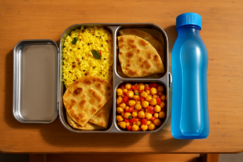
- Thepla: Room temperature for 2-3 days wrapped in foil (this is why it’s the world’s best travel food). Can be kept in the fridge for 5-6 days. Reheat on tawa for 30 seconds.
- Methi Muthia: Fridge for 4-5 days. Re-temper with mustard seeds and sesame before serving — it revives them beautifully.
- Churma Ladoos: Store at room temperature in an airtight container for up to a week, in the fridge for 2-3 weeks.
- Aamras: Fridge for 2-3 days. Don’t freeze fresh mango aamras as it changes the texture.
For detailed guidance on the nutritional benefits of the ingredients in this thali — particularly the gut-healthy chaas and protein-rich dal — Healthline’s overview of fermented and probiotic foods is worth a read.
Frequently Asked Questions
Can I make a Gujarati thali ahead of time?
Absolutely yes — and honestly, most Gujarati home cooks do exactly this! The dal, kadhi, muthias, and churma can all be made the night before. Theplas also stay good for 2-3 days at room temperature. On the day, you just need to reheat the dal and kadhi, make fresh rotlis, and put together the kachumber and chaas. This split preparation makes the whole thali feel very manageable and far less stressful.
What is the difference between Gujarati dal and regular toor dal?
The big difference is the sweet-sour-spicy balance that defines Gujarati cooking. Regular toor dal tadka is mostly savory. The Gujarati dal recipe deliberately uses jaggery for sweetness and tamarind (or kokum) for tang — creating that signature flavor that’s almost like a warm hug in a bowl. Some families also add tomatoes, peanuts, or raw mango depending on the season. No two Gujarati households make their dal quite the same way, and that’s exactly how it should be.
My kadhi always curdles when I heat it. What am I doing wrong?
This is a very common kadhi problem and it almost always comes down to two things: not enough besan (gram flour acts as a stabilizer), and heating it too fast. Make sure your yogurt-besan-water mixture is completely lump-free before you even put it on the stove. Then cook on medium heat only, stirring constantly in one direction, until it just starts to boil. After that, reduce to a gentle simmer. Never cover the kadhi while cooking, and never walk away from it during the initial heating phase.
What can I use instead of jaggery in Gujarati recipes if I can’t find it abroad?
For those cooking outside India — brown sugar is the most accessible substitute and works well in most Gujarati dishes. Use it in a roughly 1:1 ratio but taste as you go since jaggery has a more complex, molasses-like flavor. Coconut sugar also works beautifully. Avoid white granulated sugar — it gives a flat, one-dimensional sweetness that doesn’t replicate that warm, rounded quality that jaggery brings. Many Indian grocery stores abroad, and even Amazon, now stock jaggery powder which is very easy to work with.
Is a Gujarati thali naturally vegan?
Most dishes in a Gujarati thali are already plant-based — the shaaks, theplas, dal, rice, and salad need no modifications. The main non-vegan elements are kadhi (uses dairy yogurt), ghee on rotlis, and shrikhand. To make a fully vegan Gujarati thali, swap dairy yogurt for coconut yogurt in the kadhi, use oil instead of ghee on rotlis, and serve extra aamras instead of shrikhand. The result is still an incredibly satisfying and complete meal that honors the spirit of the cuisine beautifully.