Boondi Ladoo Recipe: Perfect Temple-Style Moist Ladoo at Home
Boondi Ladoo Recipe: Perfect Temple-Style Moist Ladoo at Home
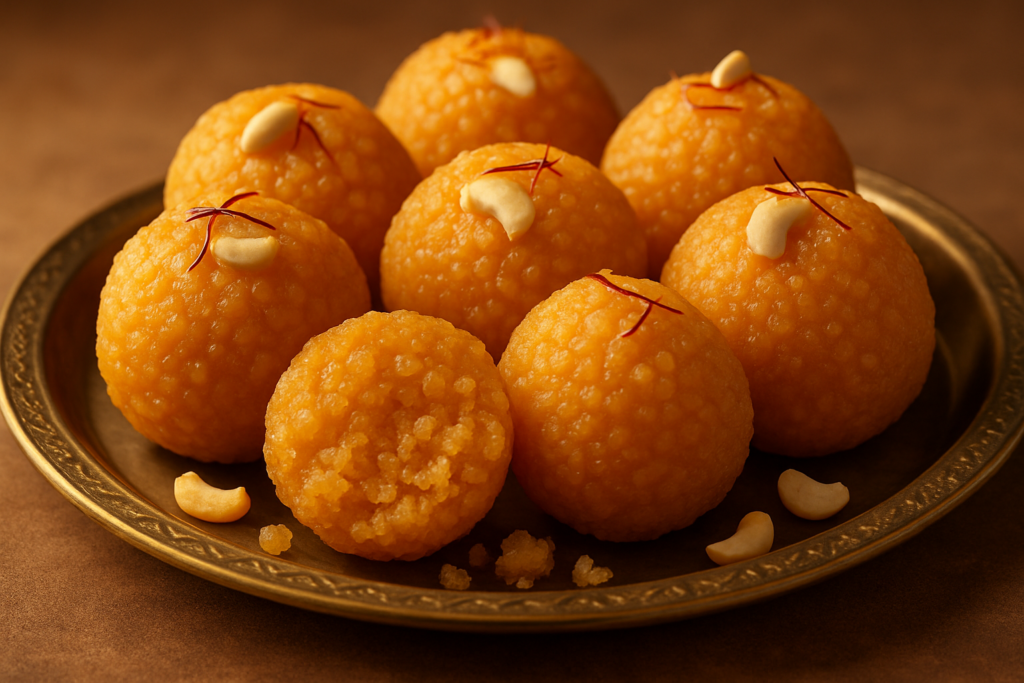
Boondi ladoo is made from small fried chickpea flour droplets soaked in a one-string sugar syrup scented with cardamom and saffron, then shaped while warm into round, moist balls. The method has three critical points: batter consistency, syrup consistency, and shaping temperature. Get those right and the ladoos will hold together perfectly with a soft, moist interior.
Why You’ll Love This Boondi Ladoo Recipe
- Temple-authentic taste: The combination of cardamom, saffron, and rose water gives it that exact prasad flavour you remember from childhood.
- Beginner-friendly steps: Everything is broken down so even if you’ve never made boondi before, you’ll get it right.
- No thermometer needed: The traditional syrup consistency test described below works every single time.
- Shelf-stable for days: These ladoos stay fresh at room temperature for up to 10 days, making them perfect for festivals or gifting.
- Customisable: Works beautifully with Jain and no-onion-no-garlic variations, with notes for everyone.
Prep Time: 20 minutes
Cook Time: 45 minutes
Total Time: 65 minutes
Servings: 20 ladoos
This boondi ladoo recipe gives you perfectly round, moist, temple-style ladoos made from fried chickpea flour droplets soaked in a one-string sugar syrup scented with cardamom and saffron. Follow the syrup and frying tips carefully and you’ll never have crumbly ladoos again.
Ingredients You’ll Need for This Boondi Ladoo Recipe
For the Boondi
- 2 cups besan (chickpea flour / gram flour) — sifted. Outside India, Bob’s Red Mill or any Indian grocery store brand works. Don’t use regular all-purpose flour; it won’t crisp the same way.
- A pinch of orange food colour (optional but traditional) — gives that gorgeous temple-gold hue. You can skip it or use a tiny pinch of turmeric instead for a natural alternative.
- Water — enough to make a flowing batter (approximately 1 to 1.25 cups). The batter consistency is explained below.
- Ghee or oil for deep frying — ghee gives the most authentic flavour, but a neutral oil works too. Outside India, Ziyad or any clarified butter brand is fine.
For the Sugar Syrup
- 2 cups sugar
- 1 cup water
- ½ tsp cardamom powder — freshly ground from green cardamom pods if you can. The pre-ground kind loses its punch quickly.
- A generous pinch of saffron — soaked in 2 tbsp warm milk or warm water. Outside India, even a small pinch of good Spanish saffron from a supermarket works beautifully.
- 1 tsp rose water (optional but highly recommended for that temple flavour)
Mix-ins and Garnish
- 2 tbsp raisins (kishmish)
- 2 tbsp cashew pieces (broken, not whole) — lightly fried in a teaspoon of ghee until golden
- ½ tsp clove powder or 4-5 whole cloves — optional but adds depth
- 2 tbsp warm ghee — added at the end, the secret to moist ladoos that don’t fall apart
How to Make Boondi Ladoo — Step-by-Step Instructions
Step 1: Make the Boondi Batter
Sift your besan into a large mixing bowl. This removes lumps and makes the batter smoother. Now add water gradually — not all at once. You’re aiming for a batter that flows easily off a spoon but isn’t watery. Think: thinner than pancake batter, thicker than milk. Add the food colour if using. Whisk vigorously for 2 minutes so there are no lumps. A smooth batter = round boondi. A lumpy batter = flat, sad boondi.
Step 2: Heat the Ghee and Do a Test Drop
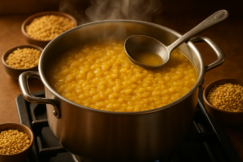
In a deep kadai or heavy-bottomed pot, heat enough ghee or oil for deep frying — at least 3 inches deep. Medium heat is your friend here. If your oil is too hot, the boondi browns before it cooks through; too cool, and the boondi absorbs too much fat and turns greasy. To test: hold a slotted ladle (the one with holes, called a boondi jhara) over the hot oil and drop a tiny bit of batter through. It should rise to the top within 2-3 seconds and look round. If it’s flat, your batter is too thick. If it spreads and tears, your batter is too thin.
Step 3: Fry the Boondi in Batches
Hold your boondi jhara (perforated ladle) about 4-5 inches above the oil — height matters! Too close and the drops merge into each other. Pour a ladleful of batter over the jhara and use the back of a spoon to push it through. The boondi should rain down into the hot ghee in little drops. Fry for about 60-90 seconds, stirring gently, until they’re just cooked through but still pale golden — not dark brown. They’ll cook a little more in the syrup. Remove with a slotted spoon and place on a plate lined with paper towel. Repeat until all the batter is used. Do NOT leave the boondi sitting too long — start the syrup while you fry.
Step 4: Make the One-String Sugar Syrup
In a heavy pan, combine the sugar and water. Bring to a boil over medium heat, stirring until the sugar dissolves. Once it starts boiling, don’t stir — just swirl the pan occasionally. After about 7-10 minutes, test the consistency: dip a clean spoon into the syrup, let it cool for a second, then press a drop between your thumb and forefinger and pull apart slowly. You should see one clean thread form and hold without breaking. This is the famous ek taar chashni — one-string consistency. If no thread forms, cook another minute and test again. Add saffron milk, cardamom powder, and rose water now, and turn the flame to the lowest setting.
Tip: The syrup should sound like it’s sighing — a very gentle, low bubble. Not a rapid boil. If it’s boiling hard when you add the boondi, you’ll end up with crunchy, grainy ladoos.
Step 5: Combine Boondi with Sugar Syrup
Add all the fried boondi to the warm syrup at once. Also add the lightly fried cashew pieces and raisins. Stir everything gently with a large spoon so every piece of boondi is coated. Cover and let it rest for 10-15 minutes. During this time, the boondi will absorb the syrup and soften beautifully. You’ll notice the mixture becoming more cohesive. If it looks too dry, add a tablespoon or two of warm water and mix. If it looks too wet, let it sit uncovered for another 5 minutes.
Step 6: Add Warm Ghee and Shape the Ladoos
This is the step most recipes skip, and it’s the reason homemade ladoos fall apart. Drizzle 2 tablespoons of warm ghee over the boondi mixture and mix well. The ghee acts as a binder and also adds that gorgeous shine and richness. Now, while the mixture is still warm — not hot, not cold, but warm — take a small handful and press it firmly in your palms, rotating to shape into a round ball. Use gentle but firm pressure. If the mixture cools down too much, it will start crumbling. If this happens, pop the bowl in a low oven (around 100°C / 200°F) for 3-4 minutes to warm it up again. Make all 20 ladoos and place on a plate to set.
Tips for Perfect Boondi Ladoo Every Time
- The jhara height rule: Always hold the perforated ladle at least 4 inches above the oil. This is what creates the round shape as the batter drops and forms a ball mid-air before hitting the oil.
- Don’t over-fry the boondi: Pull them out when they’re pale golden, not deep brown. They’ll continue to darken slightly in the syrup and you want soft, moist boondi inside the ladoo, not crunchy ones.
- Syrup temperature is everything: The one-string consistency is non-negotiable. Too thin = soggy ladoos that fall apart. Too thick = hard, rocky ladoos you could use as a doorstop. I know purists will disagree, but if you’re nervous about syrup, use a candy thermometer — you’re looking for 112°C (234°F).
- Shape while warm: The mixture sets quickly. Work in batches if needed — shape half, then reheat the rest briefly.
- Taste and adjust: Before you shape, taste a small piece of the soaked boondi. If it feels under-sweetened, your boondi absorbed the syrup unevenly — it’s fine, just mix more. If it feels grainy, your syrup went past one-string. Salvageable! Add 2-3 tbsp warm water, stir, and reheat gently.
Motichoor Ladoo vs Boondi Ladoo — What’s the Difference?
The difference between motichoor ladoo and boondi ladoo is mostly about the size of the boondi and what happens after frying. In motichoor ladoo, the boondi is extremely tiny (like fine sand), the batter is thinner, and the boondi is often soaked and then partially mashed before being shaped — giving it that smooth, almost creamy texture. Boondi ladoo uses larger, rounder boondi that stays whole inside the ladoo, giving you that beautiful textured bite. Motichoor is softer and finer; boondi ladoo has more chew and structure. Both are absolutely divine, and both are made with the same base — besan and sugar syrup. The temple-style ladoo in this recipe is the boondi version.
Want to try the other version? Check out my motichoor ladoo recipe — it uses a finer jhara and a slightly different technique.
Why Is My Boondi Ladoo Falling Apart? (And How to Fix It)
This is the most common problem people face with this boondi ladoo recipe, and there are exactly four reasons it happens:
- Sugar syrup was too thin — didn’t reach one-string consistency. The boondi soaks up the syrup but there’s no sticky base to bind them when you try to shape.
- Mixture cooled down before shaping — the syrup sets and loses its stickiness. Always shape while the mixture is warm.
- You skipped the warm ghee step — ghee is the secret binder. Don’t skip it.
- Boondi was over-fried and too crunchy — crunchy boondi doesn’t absorb the syrup properly and the pieces slide apart instead of binding together.
If your mixture is already crumbling, here’s the rescue plan: heat 3-4 tablespoons of water in a small pan, add it to the mixture, mix well, and reheat the whole thing on a low flame for 2-3 minutes. Add a tablespoon of warm ghee and try shaping again while it’s hot. Works nine times out of ten.
Variations for Every Kitchen
Jain and No-Onion-No-Garlic Version
This boondi ladoo recipe is already naturally Jain-friendly. There’s no onion, garlic, or root vegetables involved. Simply ensure your food colour is plant-based (or skip it entirely) and use mineral water if your community follows stricter Jain dietary guidelines. Everything else stays the same.
Vegan Version
Replace ghee with refined coconut oil throughout — for frying the boondi, for frying the nuts, and for the final binding step. Use water instead of milk to soak the saffron. The flavour will be slightly different but still absolutely delicious.
Gluten-Free
This recipe is naturally gluten-free since besan (chickpea flour) contains no gluten. However, if you’re highly sensitive, ensure your besan is certified gluten-free, as cross-contamination can happen during processing.
No-Sugar Version (for diabetic family members)
A version made with powdered erythritol works reasonably well. The syrup doesn’t behave the same way, so the ladoos are softer and need to be refrigerated. The taste is close but not identical — a good-enough compromise for someone who can’t have sugar but loves ladoos.
What to Serve With This Boondi Ladoo Recipe
- As prasad or festival offering: These are traditionally served at pujas, Diwali, Ganesh Chaturthi, and Janmashtami. Pair with homemade peda and dry fruit barfi for a full mithai platter.
- With masala chai: The slight bitterness of a strong Indian chai cuts through the sweetness beautifully.
- As part of a thali: In many parts of Rajasthan and UP, a single boondi ladoo is served at the end of a full thali meal as the dessert. Try it after a dal-baati or puri sabzi meal.
Storage and Reheating
Once completely cooled and set (allow at least an hour), store your boondi ladoos in an airtight container at room temperature. They’ll stay fresh and moist for up to 10 days. In a cooler climate, they last even longer. Do not refrigerate — the cold makes the sugar crystallise and the ladoos lose their soft texture and turn grainy. If you live in a very humid climate, store in a cool corner of your kitchen and consume within 7 days.
No reheating needed — these are meant to be eaten at room temperature. If they do harden a bit after several days, place them in a very low oven (90°C) for 5 minutes and they’ll soften right up. Chickpea flour, the base of this recipe, is also remarkably high in protein and fibre — a fun fact to share when someone asks if they can have two ladoos.
For longer storage (up to a month), you can freeze the ladoos in a zip-lock bag. Thaw at room temperature for 2-3 hours before serving. They taste almost exactly the same. Making a double batch before Diwali and freezing half for the following week is a practical approach.
Also check out my besan barfi recipe — another classic that uses the same base ingredient and stores just as well.
Frequently Asked Questions
Why is my boondi ladoo falling apart even after following the recipe?
Nine times out of ten, it comes down to either the syrup consistency or the shaping temperature. If your sugar syrup didn’t reach one-string consistency (ek taar), the boondi won’t have enough sticky base to hold together. Similarly, if the mixture cooled before you shaped them, the syrup has already set and lost its adhesive quality. The fix: reheat the mixture gently with a splash of warm water, add a tablespoon of warm ghee, and shape immediately while still warm and pliable.
What is the correct boondi ladoo sugar syrup consistency?
You need exactly one-string consistency — what Indian cooks call ek taar chashni. To test it: dip a spoon in the syrup, wait 5 seconds for it to cool slightly, then press a drop between your thumb and index finger. Pull your fingers apart slowly. A single, unbroken thread of syrup should form and hold without snapping. If it snaps immediately, cook for another minute. If two or three threads form, your syrup is too thick and you need to add a tablespoon of water and stir. If you prefer using a thermometer, the target temperature is 112°C (234°F).
What’s the difference between motichoor ladoo vs boondi ladoo?
Both are made from fried besan drops in sugar syrup, but the size and texture differ significantly. Boondi ladoo uses larger, whole boondi that you can see and feel inside the finished ladoo — it has a slightly chewy, textured bite. Motichoor ladoo uses extremely fine, sand-grain-sized boondi that gets lightly mashed and mixed into an almost smooth, creamy texture before shaping. Boondi ladoo is the temple-style classic (Tirupati style); motichoor ladoo is often associated with North Indian wedding sweets and has a more melt-in-the-mouth quality.
Can I make boondi ladoo without a perforated ladle (boondi jhara)?
Technically yes, but it’s harder. You can use a metal colander with small holes, a fine strainer with larger holes, or even a slotted spatula in a pinch. The key is the size of the holes — they need to be roughly 3-4mm in diameter to produce proper round boondi. If the holes are too large, you’ll get flat, irregular drops. A proper boondi jhara costs about ₹50-100 in India and is widely available on Amazon abroad — worth the investment if you plan to make this boondi ladoo recipe more than once.
How do I make boondi ladoo recipe if my boondi turned out flat instead of round?
Flat boondi almost always means one of two things: your batter is too thick, or your oil isn’t hot enough. If the batter is too thick, the drops don’t have the right surface tension to form a ball mid-air before hitting the oil. Add a tablespoon of water at a time and retest. If your oil is too cool, the batter spreads before it sets. Test with a small drop — it should rise to the surface within 2-3 seconds. Also remember the height rule: hold the jhara at least 4 inches above the oil surface so the batter drops have enough distance to round out before they hit the hot ghee.