Sindhi Kadhi Recipe: The Authentic Tangy Vegetable Curry Your Grandma Would Approve
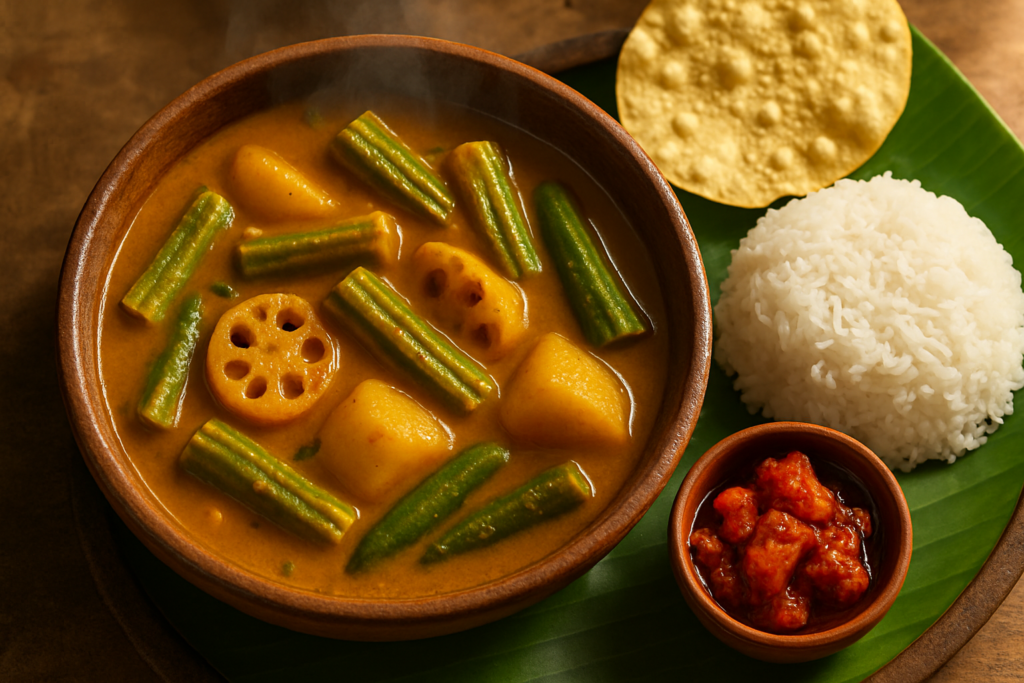
Sindhi Kadhi: A Tangy, Yoghurt-Free Vegetable Curry
Sindhi kadhi is a tangy, hearty curry thickened with roasted gram flour and loaded with seasonal vegetables. Unlike the more familiar Punjabi version, it contains no yoghurt — the sourness comes from tomatoes and tamarind, and the body comes entirely from besan roasted directly in oil. The result is earthy, deeply flavoured, and genuinely unlike anything else in Indian cooking.
Sindhi kadhi is genuinely unlike anything else in Indian cooking. While most of us are familiar with the creamy, yoghurt-based Punjabi kadhi, the Sindhi version is a completely different beast — it’s made with no yoghurt at all. The sourness comes from tomatoes, tamarind, or dried kokum, and the body comes entirely from roasted gram flour. And then there are the vegetables. Drumsticks, cluster beans, potatoes, lotus stems — a whole riot of produce simmered together in that tangy, besan-thickened gravy. It’s hearty, it’s earthy, and it’s deeply, deeply satisfying.
Prep Time: 20 minutes
Cook Time: 40 minutes
Total Time: 60 minutes
Servings: 4-5
Sindhi kadhi is a tangy, yoghurt-free vegetable curry thickened with roasted besan (gram flour), soured with tomatoes and tamarind, and loaded with seasonal vegetables. It’s served hot over steamed rice with papad on the side and is a complete, nourishing meal in one pot.
Why You’ll Love This Sindhi Kadhi Recipe
- No yoghurt needed: Perfect if you’re out of curd or making a completely vegan version — the sourness comes naturally from tomatoes and tamarind.
- Packed with vegetables: Unlike most gravies, this one actively wants you to throw in as many vegetables as you have. It’s a great way to use up what’s sitting in your fridge.
- One pot meal: Everything comes together in a single kadhai or pressure cooker. Less washing up, more eating.
- Deeply comforting: The roasted besan gives it a nutty, thick, filling quality that feels like a proper home-cooked meal on a tired day.
- Stores beautifully: This kadhi tastes even better the next day once the flavours have had time to settle in.
Ingredients You’ll Need for This Sindhi Kadhi Recipe
Serves 4-5. Substitution notes are included for anyone cooking outside India.
For the Kadhi Base
- 4 tbsp besan (gram flour) — this is the backbone of the dish. You can find it in any Indian grocery store abroad. Chickpea flour works as a substitute but the flavour is slightly milder.
- 3 tbsp oil or ghee — mustard oil gives a more authentic flavour, but any neutral oil works fine. Ghee adds richness if you’re not vegan.
- 1 tsp mustard seeds
- 1 tsp cumin seeds
- 1/2 tsp fenugreek seeds (methi dana) — adds a slight bitterness that balances the sour perfectly. Don’t skip this.
- 8-10 curry leaves
- 2-3 dried red chillies
- 1/4 tsp asafoetida (hing) — crucial for authentic Sindhi flavour. If you can’t find it, simply omit rather than substitute.
- 1 tsp turmeric powder
- 1.5 tsp coriander powder
- 1 tsp red chilli powder (adjust to taste)
- 1 tbsp tamarind pulp — soak a small lemon-sized ball of tamarind in warm water and strain. Tamarind concentrate works abroad (use about 1 tsp).
- 2 medium tomatoes, roughly chopped
- Salt to taste
- 800ml to 1 litre water
Vegetables
- 1 drumstick (sahjan), cut into 3-inch pieces — frozen drumsticks from Indian stores work perfectly abroad.
- 100g cluster beans (gawar phali), trimmed and halved — French beans are a good substitute if you can’t find gawar.
- 1 medium potato, peeled and cubed
- 100g lotus stem (kamal kakdi), sliced into rounds — optional but very traditional. Canned lotus root from Asian grocery stores works.
- 80g colocasia (arbi), peeled and halved — baby potatoes are a fine substitute.
- 6-8 okra (bhindi), halved lengthwise
- A small handful of fresh methi (fenugreek) leaves — optional but traditional.
For Garnish
- Fresh coriander leaves, chopped
- A squeeze of lemon (optional)
How to Make Sindhi Kadhi: Step-by-Step Instructions
Step 1: Prep Your Vegetables
Get all your vegetables cut and ready before you start cooking — this recipe moves quickly once the besan hits the pan. Soak your arbi and lotus stem in water to prevent discolouration. If you’re using tamarind from a block, soak it in half a cup of warm water now and strain out the pulp.
Step 2: Roast the Besan — The Most Important Step
Heat a large, heavy-bottomed pot or pressure cooker on medium flame. Add the oil or ghee. Once it’s warm, add the besan directly to the oil and begin stirring continuously. This is the step you cannot rush or walk away from. Keep stirring on medium-low heat for 5-7 minutes until the besan turns a deep golden colour — not pale yellow, not brown, but the colour of a well-toasted cashew. It will smell nutty and aromatic. If the besan stays raw, the whole dish is ruined, so stay patient. This step is what makes or breaks your Sindhi kadhi recipe.
Step 3: Bloom the Whole Spices
Turn the flame up slightly to medium. Push the roasted besan to the side of the pan and add a tiny extra splash of oil if needed. Add the mustard seeds and wait for them to pop — this takes about 30 seconds. Now add the cumin seeds, fenugreek seeds, curry leaves, dried red chillies, and asafoetida. Let them sizzle for about 20 seconds. Your kitchen should smell incredible right now.
Step 4: Add the Tomatoes and Spice Powders
Add the chopped tomatoes to the pan and mix everything together. Add the turmeric, coriander powder, and red chilli powder. Cook this on medium heat, stirring occasionally, until the tomatoes have completely broken down and you can see oil releasing at the edges — about 6-8 minutes. Don’t skip this cooking step; raw tomatoes will make the kadhi taste sharp and thin.
Step 5: Add the Harder Vegetables First
Add the potato, arbi, lotus stem, and cluster beans to the pot. Stir them into the tomato-besan masala and let them coat well. Cook for 2-3 minutes on medium heat, stirring so nothing sticks.
Step 6: Add Water and Tamarind
Now add the water — start with 800ml and you can add more later. Add the tamarind pulp and salt. Stir everything well, making sure there are no lumps of besan. The liquid will look thin and light-coloured right now — don’t worry, it will thicken as it cooks. Bring it to a boil on high heat.
Step 7: Add the Drumsticks and Delicate Vegetables
Once it comes to a boil, add the drumstick pieces and okra. Reduce the flame to medium, cover with a lid (leaving a small gap), and let it simmer for 20-25 minutes, stirring every 5 minutes. The kadhi will slowly thicken and deepen in colour. If you’re using a pressure cooker instead of an open pot, cook for 2 whistles on medium flame — though the open pot method is preferable because you can watch the colour develop.
Step 8: Taste, Adjust, Finish
After 20 minutes of simmering, taste your kadhi. It should be tangy, mildly spicy, and have a thick, velvety consistency that coats the back of a spoon. Adjust salt and tamarind as needed. If it’s too thick, add a splash of hot water. Add the fresh methi leaves if using, stir once, and cook for 2 more minutes. Turn off the flame and garnish with fresh coriander.
Tips for Perfect Sindhi Kadhi Every Time
- Never rush the besan roasting. Under-roasted besan tastes raw and floury and there’s no fixing it once the water is added. Go slow, go golden.
- Use mustard oil if you can. The pungent, slightly bitter quality of mustard oil is very traditional to Sindhi cooking. It adds a layer of flavour that regular oil simply can’t replicate.
- Add vegetables in stages based on cooking time. Hard root vegetables go in early, delicate things like okra and drumstick go in later. Otherwise you’ll have mushy okra and crunchy potatoes.
- The kadhi thickens as it cools. If it looks perfectly thick while hot, add a little extra water so it doesn’t become a paste by the time it reaches the table.
- Balance the sourness last. Add tamarind at the end rather than the beginning if you’re new to this dish — it’s easier to build up than to dial down a too-sour kadhi.
Sindhi Kadhi vs Punjabi Kadhi: What’s Actually Different?
The sindhi kadhi vs punjabi kadhi comparison is a genuinely interesting one. Punjabi kadhi is made with sour yoghurt or buttermilk whisked with besan — it’s creamy, white-ish, and often served with pakoras floating in it. The sourness is dairy-based and the texture is more silky.
Sindhi kadhi, by contrast, contains no dairy in the base at all. The sourness comes from tomatoes, tamarind, or kokum. The besan is first dry-roasted in oil rather than whisked into liquid, which gives it a much nuttier, deeper flavour. And then there’s the vegetable situation — Sindhi kadhi is practically a sabzi in itself, loaded with drumsticks, lotus stems, arbi, and cluster beans. It’s a thicker, darker, more intensely flavoured dish. When you want something truly hearty and vegetable-forward, Sindhi kadhi is the one to make.
You can also read about the history and philosophy of Sindhi cuisine on Wikipedia — it’s a fascinating culinary tradition that survived partition and spread across the world carrying these recipes with it.
Variations of This Sindhi Kadhi Recipe
Jain / No-Onion No-Garlic Version
Good news — this recipe is already onion and garlic free! It’s traditionally made without them. Just make sure your asafoetida is Jain-certified (some brands are processed alongside wheat). For a fully Jain version, skip the potato and arbi and replace with raw banana or raw papaya.
Vegan Version
Use oil instead of ghee and this dish is completely vegan. No other changes needed.
Gluten-Free Version
Besan is naturally gluten-free! Just double-check that your asafoetida is gluten-free — many Indian brands of hing are cut with wheat flour. Look for pure asafoetida or a certified GF brand.
Quick Weeknight Version
Use only potatoes and frozen peas if you don’t have the full vegetable lineup. It won’t be as traditional but it’ll still be delicious. I know purists will disagree, but on a Wednesday evening after a long day, frozen peas are your best friend.
Kokum Version
Some Sindhi families, especially those with coastal connections, use kokum instead of tamarind for sourness. Add 4-5 kokum pieces along with the tomatoes. It gives a slightly more floral, fruity tang.
What to Serve With Sindhi Kadhi
- Steamed white rice: This is the classic, non-negotiable pairing. The kadhi soaks into the rice beautifully. A generous ladle of kadhi to every small scoop of rice is the right ratio.
- Sai bhaji and rice: The traditional Sindhi meal is actually sai bhaji (spinach-chana dal) alongside kadhi-chawal. Together they make one of the most complete, nutritious vegetarian meals you can eat. Check out my sai bhaji recipe here.
- Papad and achar: A crispy papad (roasted or fried) and a spoonful of mango pickle or lemon pickle alongside your kadhi-chawal is the complete Sindhi Sunday lunch. Don’t skip the papad.
Storage and Reheating
Refrigerator: Sindhi kadhi stores well in an airtight container in the fridge for up to 3 days. The flavours genuinely improve overnight as the spices meld together.
Freezer: You can freeze this kadhi for up to 1 month. Freeze without the okra if possible (it gets slimy when frozen and reheated). Defrost in the fridge overnight before reheating.
Reheating: Reheat on the stovetop over medium-low flame, adding a splash of water because the kadhi will have thickened. Stir well and bring it to a gentle simmer before serving. Avoid microwaving if you can — it heats unevenly and the besan can turn lumpy.
For more on the nutritional benefits of gram flour-based dishes, Healthline has a great breakdown of besan’s health benefits — it’s high in protein, fibre, and iron, making this kadhi a genuinely nutritious everyday meal.
Frequently Asked Questions About This Sindhi Kadhi Recipe
Can I make Sindhi kadhi without tamarind?
Absolutely. The most common substitute is extra tomatoes — use 4 tomatoes instead of 2 and cook them down really well. Some families add a teaspoon of dry mango powder (amchur) for sourness. Kokum is another traditional option. The key is that you need some acid in the dish, so choose whichever sour element you have available.
Why does my Sindhi kadhi taste raw or floury?
This almost always means the besan wasn’t roasted long enough. The besan must turn a deep golden colour in the oil — pale yellow is not enough. It should smell nutty and toasty, not like raw flour. If you’ve already added water and it tastes raw, the only fix is to continue simmering on low heat for a longer time, which sometimes helps but isn’t guaranteed. The lesson: be patient with the roasting step.
What vegetables can I use if I don’t have drumsticks or lotus stem?
This is one of the most flexible recipes around. You can use raw banana, yam (suran), sweet potato, green peas, flat beans, or even cauliflower. Sindhi kadhi is really a vehicle for seasonal vegetables, so use what’s fresh and available.
Is Sindhi kadhi the same as besan kadhi with vegetables?
It’s the most accurate description of it! Besan kadhi with vegetables is essentially what Sindhi kadhi is — a gram flour-thickened curry packed with vegetables. The distinction is in the method (besan roasted in oil first, not whisked with yoghurt) and the specific combination of vegetables and spices that are traditional to Sindhi cooking. So yes, if you see a recipe labelled “besan kadhi with vegetables,” there’s a good chance it’s drawing from the Sindhi tradition.
Can I make this in an Instant Pot?
Yes, with some adjustments. Use the Sauté function to roast the besan and bloom the spices — this step must still be done properly, don’t rush it. Add your vegetables and water, then cook on Manual/Pressure Cook for 4-5 minutes with natural pressure release. The texture will be slightly different (okra and delicate vegetables may get very soft), so it’s worth adding okra only after pressure cooking is done, using the Sauté function for a few extra minutes. Overall, the open pot method gives the best result for this particular dish, but the Instant Pot works in a pinch. Find my other Instant Pot Indian recipes here.