Onam Sadhya Recipes: How to Make All 26 Dishes for a Complete Kerala Feast at Home
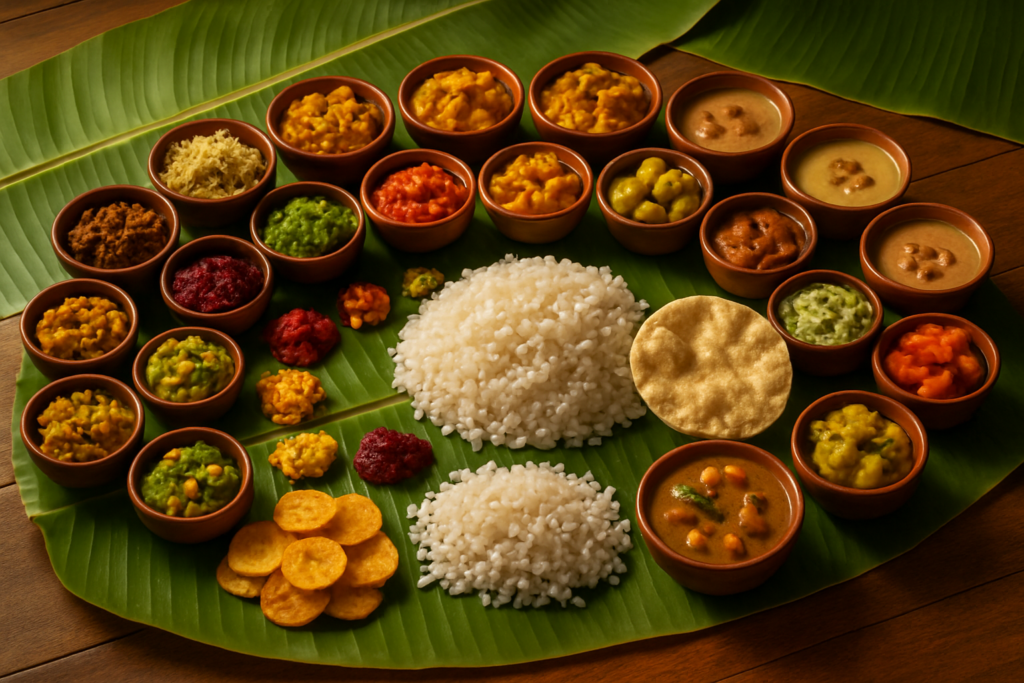
A complete Onam Sadhya is a 26-dish Kerala feast served on a fresh banana leaf for the harvest festival of Thiruvonam. This guide covers every dish — from avial and olan to ada pradhaman — with a practical two-day cooking plan, detailed techniques, and substitution advice so the full meal is achievable at home without last-minute chaos.
Prep Time: 3 hours (plus overnight soaking)
Cook Time: 4 hours
Total Time: 7 hours (best done over 2 days)
Servings: 6 people
Summary: A complete onam sadhya is a 26-dish Kerala feast served on a fresh banana leaf for the harvest festival of Onam. This guide covers every dish from avial and olan to ada pradhaman, with a practical two-day cooking plan so you actually enjoy the day instead of collapsing in the kitchen.
Why You’ll Love Making Onam Sadhya Recipes at Home
- It’s the most complete vegetarian meal in Indian cuisine — not one dish, but an entire symphony of flavors, textures, and temperatures that balance each other perfectly.
- Most dishes are naturally vegan (except the payasam which uses ghee) — making it one of the most inclusive festival meals you can host.
- Everything can be prepped in stages — unlike biryani or a multi-course dinner where everything must be hot simultaneously, a sadhya is designed to be made over two days.
- The flavors are unlike anything else in Indian cooking — coconut, tamarind, jaggery, raw mango, yogurt, and coconut oil create a flavor profile that’s completely unique to Kerala.
- It’s genuinely impressive — serving 26 dishes on a banana leaf is something your guests will talk about for years.
The Complete Onam Sadhya Full Menu — All 26 Dishes
Before we get to the individual recipes, let’s understand what dishes are served in onam sadhya and why they exist in this specific combination. The sadhya is not random — it’s a nutritionally and gastronomically balanced meal where every dish has a purpose.
The Rice and Pappadum (The Foundation)
Kerala Matta rice (rosematta) is the traditional choice — it’s a short-grained parboiled red rice with an earthy, slightly nutty flavor. Kerala red rice has been a staple grain of the region for centuries. Pappadum (urad dal pappadum, thin and crispy) and banana chips flank the rice and are the first items placed on the leaf.
The Liquid Curries Poured Over Rice
- Parippu — Soft toor dal tempered in ghee with mustard seeds and curry leaves. Served as the very first course with ghee poured over. The most comforting dish on the leaf.
- Sambar — Kerala sambar is different from Tamil Nadu sambar — it uses coconut and is sweeter, more rounded.
- Rasam — Thin, peppery tamarind broth. Served as a digestive in the later courses.
- Pulissery — Yogurt-coconut curry with ash gourd. Cooling and slightly sour.
- Kalan — Thick, intensely flavored yogurt curry with raw banana. The spicier, richer cousin of pulissery.
The Vegetable Preparations
- Avial — The king of Kerala vegetable dishes. Mixed vegetables in a coconut-yogurt coating, finished with coconut oil. Never overcook the vegetables.
- Olan — Ash gourd and cowpeas in thin coconut milk. Mild, subtle, and often the dish people forget until they try it and realize it’s perfect.
- Erissery — Pumpkin and cowpeas with roasted coconut. Rich, thick, earthy.
- Kaalan — See above.
- Thoran (Cabbage) — Dry stir fry with fresh coconut.
- Thoran (Bitter Gourd) — More bitter, more intense, balances the sweet dishes.
- Thoran (Beetroot or Beans) — Vibrant, sweet-earthy.
- Kootu curry — Bengal gram and yam cooked with roasted coconut. Hearty and substantial.
- Pachadi (Beetroot) — Cooked beetroot in yogurt-coconut sauce. Jewel-red and lightly sweet.
- Pachadi (Pineapple or Cucumber) — Sweet-sour-spicy yogurt relish.
- Manga curry — Raw mango in coconut-chilli gravy. Vibrantly sour.
The Pickles and Relishes
- Inji puli — Ginger-tamarind-jaggery pickle. The most complex thing on the leaf — sweet, sour, spicy, pungent all at once. You only get a tiny spoonful, but it transforms everything.
- Naranga achar — Lemon or lime pickle.
- Mango pickle — Classic kadumanga (small mango pickle in oil).
The Crisps
- Banana chips (raw, salted) — Fried in coconut oil. The crunch against the soft curries is essential.
- Sharkara varatti — Jaggery-coated banana chips. Sweet and addictive.
- Pappadum — Two varieties ideally.
The Payasam — Always Last, Always Two Types
- Ada pradhaman — Rice flakes (ada) in jaggery and coconut milk with ghee. Rich, thick, the most celebrated payasam in Kerala.
- Moong dal payasam or Chakka pradhaman — The second payasam, usually lighter.
The Finish: Buttermilk and Banana
The meal ends with plain buttermilk (moru) and a piece of Kerala banana (nenthrapazham). Simple, cooling, perfect.
Ingredients You’ll Need for the Complete Onam Sadhya
An onam sadhya requires planning. Here’s what to source, and what to do if you can’t find certain items — especially for those making this outside India.
- Kerala Matta Rice: Available at most Indian grocery stores globally as “rosematta” or “Kerala red rice.” Substitute: par-boiled white rice. Do NOT use basmati.
- Ada (rice flakes for pradhaman): Look for it in South Indian or Kerala grocery stores labeled “Ada” or “rice ada.” Outside India: try rice paper sheets broken into small pieces as a last resort, but honestly — order it online.
- Raw banana (nenthrakka/plantain): Green plantain works perfectly outside India. Any unripe plantain is fine.
- Ash gourd (kumbalanga): Look for winter melon or wax gourd in Chinese grocery stores — it’s the same vegetable. Very commonly available.
- Elephant foot yam (chena): Available frozen in many Indian stores abroad. Substitute with taro root.
- Coconut oil: Non-negotiable. Virgin cold-pressed coconut oil is best. Do not substitute with refined oil for this — the taste will be completely different.
- Jaggery: Available at every Indian grocery store. Online too. Dark jaggery gives a deeper flavor to payasam.
- Fresh coconut: If you can’t find fresh, unsweetened desiccated coconut rehydrated with a little water works for thorans. For coconut milk — use good quality canned coconut milk (full fat).
How to Make Onam Sadhya at Home — Complete Step-by-Step
Do not try to make all 26 dishes in one day the first time. Here’s a two-day plan.
Two Days Before: Soak and Prep
Soak ada overnight for ada pradhaman. Soak Bengal gram (kadala) and cowpeas (vanpayar) in separate bowls. Wash and chop all vegetables and refrigerate. Make inji puli now — it genuinely tastes better after two days of sitting.
Day Before: Make the Pickles, Chips, and Long-Cooking Dishes
Fry banana chips and sharkara varatti — cool completely and store in airtight tins. Make the mango pickle temper if using fresh. Make sambar — it’s better the next day. Prepare kootu curry — it holds well.
Morning of the Feast: Fresh Dishes and Payasam
- Start with ada pradhaman (takes 60-90 minutes): Soak softened ada, make jaggery syrup (melt jaggery with a splash of water, strain through a cloth to remove impurities — don’t skip this). Cook ada in the jaggery syrup over medium heat, stirring constantly, for at least 40 minutes until the ada completely dissolves and the mixture coats a spoon thickly. Add thin coconut milk, simmer 10 minutes. Remove from heat, add thick coconut milk, ghee, cardamom, and dry ginger. The payasam thickens as it cools, so don’t worry if it seems thin while hot.
- Make avial: Cut all vegetables into 2-inch fingers — drumstick, raw banana, yam, carrots, green beans, raw mango if using. Boil with turmeric, salt, and a handful of curry leaves until cooked but with the tiniest bit of bite — a fork should go in with light pressure. Grind fresh coconut with green chillies, cumin, and a tablespoon of curd into a coarse paste (not smooth — texture is important). Remove the vegetables from heat, fold in the coconut paste gently, return to low heat for 2 minutes. Remove from heat entirely, pour raw coconut oil over the top, and add a large handful of torn curry leaves. Do not cook the coconut paste — it should stay fresh and bright.
- Make parippu: Pressure cook toor dal with turmeric until completely soft and mashable. Thin with water to a pourable consistency. In a small tempering pan, heat ghee (yes, ghee, not oil), splutter mustard seeds, add dried red chillies, a pinch of asafoetida, and curry leaves. Pour over dal. Separately, warm coconut milk and stir into the dal just before serving. Parippu waits for no one — serve it hot with ghee.
- Make olan: Simmer boiled cowpeas and diced ash gourd in thin coconut milk with green chillies, curry leaves, and salt. When the gourd is tender, add thick coconut milk and immediately remove from heat — do not boil after this point. Pour coconut oil generously over the top. This dish should taste mild and almost meditative.
- Make erissery: Cook cubed red pumpkin and cooked cowpeas together with a ground paste of coconut, cumin, and dried red chillies. Simmer until thick — the pumpkin will break down and create a naturally thick gravy. The key finishing step: in a small pan, heat coconut oil and fry a generous handful of fresh grated coconut, stirring constantly, until it turns deep golden-brown and smells nutty. Stir this roasted coconut through the erissery. This is the soul of the dish.
- Make pulissery: Grind coconut, cumin, and green chillies into a paste. Cook diced ash gourd with turmeric and salt until tender. Add coconut paste and simmer 5 minutes. Very important: let the pot cool for 10 full minutes before adding the beaten curd — you want the temperature to drop below 70°C. Stir in sour curd and return to very low heat, stirring until it just heats through — never let it boil. Temper with mustard seeds, fenugreek, dried red chillies, and curry leaves in coconut oil.
- Make kalan: Cook raw banana and yam pieces in a thick coconut-chilli-pepper paste until very well coated and the gravy is almost dry. Lower heat completely, wait 5 minutes, then stir in thick sour curd a little at a time, stirring constantly. Heat gently on the lowest flame until it comes together into a thick, aromatic curry. Temper strongly with fenugreek seeds, dried red chillies, and curry leaves — this temper should be slightly burnt-smelling, which gives kalan its characteristic depth. Kalan should be thick enough to hold its shape on a spoon.
- Make the three thorans: All use the same base method. Heat coconut oil in a wide pan, splutter mustard seeds, add dried red chillies and curry leaves. Add the prepared vegetable with turmeric and salt. Cover and cook on medium heat for 5-7 minutes. Uncover, stir in fresh grated coconut, and stir fry 2 minutes until everything is just cooked but still has color and texture. The bitter gourd thoran should taste properly bitter — don’t try to reduce that bitterness too much, it’s what balances the sweet dishes.
- Make the pachadis: For beetroot pachadi — boil grated beetroot with green chillies and salt until soft. Grind coconut with mustard seeds (yes, raw mustard in the paste — don’t fry it) into a fine paste. Mix into the cooled beetroot. Add thick curd and mix. Temper with mustard seeds and curry leaves. The jewel-red color is spectacular on the banana leaf.
- Make inji puli (if not already made): Peel and dice fresh ginger into small cubes. Fry in coconut oil until golden and slightly crispy — this takes patience, about 10 minutes on medium. Set aside. In the same pan, add more coconut oil, fry dried red chillies, then add thick tamarind pulp, jaggery, salt, and a pinch of turmeric. Boil, stirring frequently, until it reduces to a thick, dark, jammy consistency — it should fall slowly from a spoon. Add the fried ginger pieces back in and mix. Cool completely. Stores for 2 weeks at room temperature and months in the fridge. You only need a tiny dollop per person on the leaf.
- Arrange the banana leaf and serve: Place each washed banana leaf with the tip pointing to the LEFT of the person sitting. Starting from the left side of the leaf going right: salt, banana chips, sharkara varatti, pappadum, inji puli, naranga achar, mango pickle, then the vegetable preparations left to right: kootu curry, erissery, olan, avial, thoran (x2-3), pachadi (x2). Pour rice in the center. The liquid curries — parippu with ghee, sambar, rasam, pulissery, kalan — are poured by a family member as needed during the meal. Payasam is served last, either poured directly onto the leaf or in a small cup.
Tips for Perfect Onam Sadhya Recipes Every Time
- Make a master timeline working backward from your serving time. To serve at 12:30pm, plan to be in the kitchen by 6am. Write it down.
- The quality of coconut oil makes everything. Use cold-pressed virgin coconut oil for finishing dishes, and a good quality refined coconut oil for frying chips. The aroma difference is massive.
- For yogurt-based curries (pulissery, kalan), always cool the pot before adding curd. A candy thermometer is actually useful here — keep below 70°C when curd goes in.
- Taste everything before serving — the salt levels change as curries sit. Sambar in particular absorbs salt as it cools and may need adjusting before serving.
- Don’t skip the finishing coconut oil — every single dish gets a final pour of raw coconut oil. This is not optional. It’s what ties the whole meal together and gives it that distinctively Kerala finish.
Onam Sadhya Variations
Jain / No-Onion-No-Garlic Version
Good news — the traditional onam sadhya is almost entirely no-onion-no-garlic already! Kerala sadhya uses shallots (small onions) in sambar and a few dishes. You can omit the shallots in sambar and use extra tomatoes and asafoetida for depth. Avial, olan, thorans, payasam — all naturally Jain. The only tricky one is sambar — just make a tomato-based sambar without any onion and it works beautifully.
Vegan Version
Replacing ghee with coconut oil throughout makes the entire sadhya vegan — even the parippu can be tempered in coconut oil instead of ghee. For payasam, simply skip the ghee or use coconut oil (the flavor will be different but still delicious). The curd in pulissery and kalan can be replaced with thick cashew curd, though I know purists will strongly disagree with me here. I’ve tried it and it works.
Gluten-Free Version
The entire traditional onam sadhya is naturally gluten-free. Every single dish — rice, dal, vegetable curries, payasam — contains no wheat. Just check your sambar powder and store-bought pickles for hidden wheat starch.
What to Serve With Onam Sadhya
The sadhya is complete in itself, but traditionally it’s accompanied by:
- Nendrapazham (ripe Kerala banana) — Placed on the leaf at the end. Its natural sweetness rounds off the meal.
- Moru (plain buttermilk) — Simple salted buttermilk. The last pour onto the rice before the leaf is folded. A digestive and a palate cleanser.
- Hot black tea (chai) or black coffee — Served to guests after the feast, not during. Kerala filter coffee for a true experience.
If you’re building up to this full feast, practice with our classic Kerala avial recipe or try the detailed ada pradhaman recipe first to get a feel for working with coconut milk and jaggery.
Storage and Reheating
Most onam sadhya dishes store very well:
- Sambar, rasam, parippu: Fridge for 3-4 days. Reheat gently on the stovetop, adding a splash of water. Sambar actually tastes best on day two.
- Avial, olan, erissery, thorans: Fridge for 2 days. Reheat in a pan with a tiny splash of water and a fresh pour of coconut oil. Microwaving works but loses some texture.
- Pulissery and kalan: Fridge for 2 days. Reheat VERY gently on the lowest flame — these are curd-based and will separate if heated too aggressively.
- Inji puli and pickles: Room temperature for 2 weeks, fridge for months.
- Banana chips and pappadum: Room temperature in airtight tins for up to a week. Do not refrigerate — they go soggy.
- Ada pradhaman: Fridge for 3 days. Reheat gently with a splash of coconut milk stirred in. It thickens considerably in the fridge — this is normal.
For more Kerala recipes to practice through the year, check out our complete Kerala vegetarian recipe collection.
The Health Side of Kerala Sadhya
Despite feeling incredibly indulgent, a traditional onam sadhya is nutritionally excellent. Coconut oil contains medium-chain triglycerides that metabolize differently from other fats. The meal combines legumes (protein and fiber from dal, kadala, vanpayar), multiple vegetables, fermented dairy (curd-based curries), and complex carbohydrates from red rice. The ancient Ayurvedic principles built into this meal — the balance of sweet, sour, salty, bitter, pungent, and astringent — mean it genuinely feels nourishing rather than heavy, despite having 26 dishes.
Frequently Asked Questions About Onam Sadhya Recipes
How many dishes are in a traditional onam sadhya?
A traditional onam sadhya has between 26 to 64 dishes depending on the region and the occasion. The minimum ‘standard’ sadhya served at most homes includes about 26 dishes — rice, two payasams, parippu, sambar, rasam, pulissery, kalan, avial, olan, erissery, thorans, pachadis, pickles, chips, pappadum, banana, and buttermilk. Royal sadyas in Thrissur or temple feasts can go up to 64 items. Most home cooks aim for 26-32 dishes, which is the complete experience.
Can I make onam sadhya two days in advance?
Yes — and honestly, you should! Inji puli and pickles taste much better after 2-3 days. Sambar improves overnight. Chips and pappadum can be fried a day ahead and stored in airtight tins. The payasam and fresh yogurt-based curries like pulissery and kalan should be made fresh on the day, as should the thorans and avial which lose their color and texture when stored. Plan a two-day cooking schedule and the whole thing becomes very manageable.
What is the correct way to serve onam sadhya on the banana leaf?
The banana leaf is placed with the tip pointing to the guest’s left. This is very important — tip pointing right is considered inauspicious in Kerala tradition. Along the top of the leaf from left to right: salt, banana chips, pappadum, then the small dishes going left to right — inji puli, pickles, thoran, pachadi, olan, erissery, avial. Parippu with ghee goes as the first pour on rice, then sambar, then kalan and pulissery. Payasam is served last. The exact arrangement varies by region and family, but the left-tip rule is universal.
Can I make onam sadhya without coconut for someone with an allergy?
This is genuinely difficult because coconut is the backbone of every single Kerala sadhya dish. That said, you can substitute cashew milk for coconut milk in payasam and olan. For thorans, simply skip the grated coconut finishing — the stir fry still works. Avial without coconut loses its soul, but a South Indian mixed vegetable poriyal works as a substitute. The inji puli, sambar, and plain dal are naturally coconut-free. With careful adjustments, about 10-12 dishes can be made coconut-free.
What rice is used for onam sadhya and where can I buy it outside India?
Traditionally, Kerala Matta rice (also called rosematta or Kerala red rice) is used — a short-grained, par-boiled, reddish-brown rice with an earthy, nutty flavor that pairs perfectly with the intense curries. Look for it at Indian grocery stores abroad labeled ‘rosematta rice’ or ‘Kerala red rice.’ It’s also available on Amazon under several brands. If you truly cannot find it, use any par-boiled white rice. Avoid basmati — it’s too fragrant and long-grained for a sadhya experience.