Nimbu Pani Recipe, Shikanji & Jaljeera: What’s the Difference + How to Make All 3
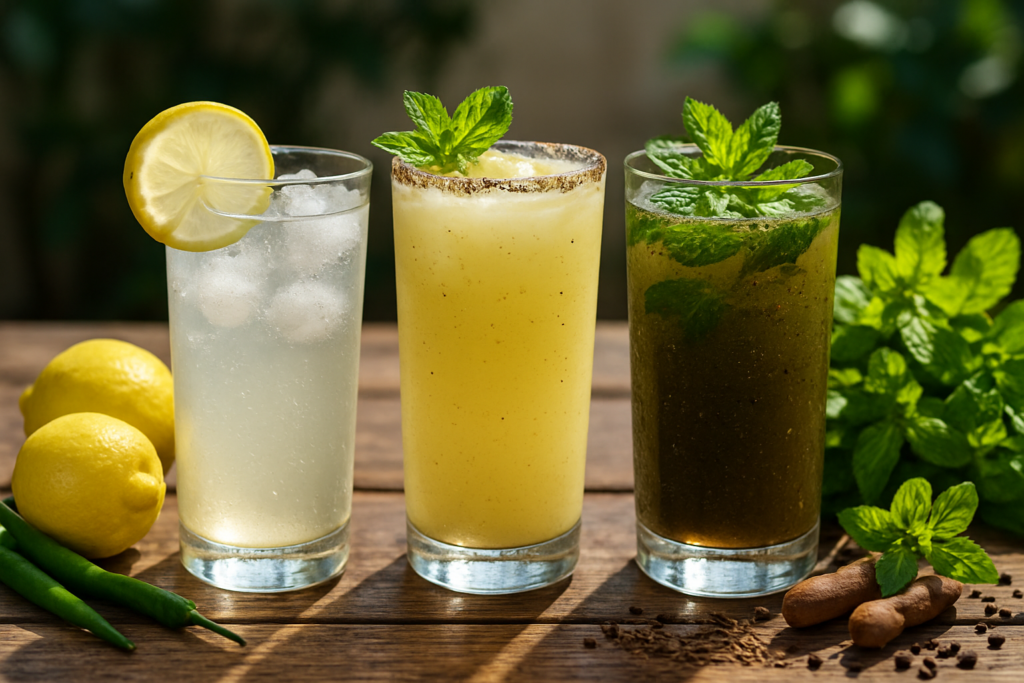
Nimbu pani, shikanji, and jaljeera are three distinct Indian summer drinks that are often confused with one another. Nimbu pani is simple lemon water. Shikanji is lemon water elevated with warming spices. Jaljeera is a tamarind-based spiced cooler. Here is a clear explanation of the differences, plus proper recipes for all three.
Prep Time: 15 minutes | Cook Time: 5 minutes (for roasting spices) | Total Time: 20 minutes | Servings: 4 (each recipe makes 2 servings)
Three beloved Indian summer drinks decoded and demystified: nimbu pani is simple lemon water, shikanji is lemon water elevated with warming spices and kala namak, and jaljeera is a tangy tamarind-based spiced cooler. All three are refreshing, all three are easy, and all three are miles better than anything bottled.
Nimbu Pani, Shikanji, Jaljeera — What Actually Makes Them Different?
Before the recipes, here is a clear explanation of the differences, because food websites mess this up constantly.
Nimbu Pani: The Original
Nimbu pani literally translates to “lemon water” in Hindi. It’s India’s oldest, most widespread answer to the summer heat — freshly squeezed lemon juice, water, sugar, and salt. That’s it. The salt is crucial (it helps replace electrolytes lost in the heat and balances the flavor), but the drink itself is clean, simple, and delicate. You’ll find it served in steel glasses outside temples, in small earthen matkas at railway stations, and in Indian homes across the country. Lemonade-style drinks exist across every culture, but India’s nimbu pani has its own distinct character — it’s less sweet than its Western counterparts and relies on that salt balance.
Shikanji: Nimbu Pani’s Spiced, Sophisticated Cousin
Shikanji (also spelled shikanjvi or shikanjee) is particularly associated with North India — Delhi, Punjab, Rajasthan, and UP. Think of it as nimbu pani that went on a journey. It keeps the lemon and water base but adds a personality: roasted cumin powder, kala namak (black salt, which smells sulphuric and tastes smoky), black pepper, fresh mint, and often a touch of ginger. The result is a drink that’s still refreshing but layered, complex, and utterly addictive. In Delhi’s Chandni Chowk, shikanji wallahs serve it so cold and so perfectly spiced that it’s practically a religious experience. I know some purists insist shikanji must have milk in it (a creamy Punjab-style version does exist), but the lemon-based version is far more popular.
Jaljeera: The Dark Horse
Jaljeera means “cumin water” (jal = water, jeera = cumin), but cumin is just one player in a whole spice orchestra. What sets jaljeera completely apart from the other two is that it’s tamarind-based, not lemon-based. The sourness comes from tamarind, it’s colored by mint and spice powders, and it has a sharp, deeply savory-spicy-sour punch that’s nothing like the clean tartness of nimbu pani. It’s traditionally served as a digestive — the hing and cumin combination is genuinely excellent for your gut. You’ll find jaljeera powder packets in every Indian grocery store, but homemade is dramatically better.
Why You’ll Love These Indian Summer Drinks Recipes
- Ready in minutes — even jaljeera with homemade masala takes under 20 minutes total. On a hot day, that matters.
- Genuinely cooling — not just cold, but actually cooling in the Ayurvedic sense. Ingredients like mint, cumin, and kala namak have real heat-fighting properties. Black salt has been studied for its digestive and cooling benefits.
- Completely customizable — adjust sweetness, sourness, and spice to your own taste. These aren’t fussy recipes.
- Way cheaper and better than store-bought — and you control exactly what goes in. No artificial colors or preservatives.
- Impressive for guests — serve all three in a flight at a dinner party and watch everyone lose their minds.
Ingredients You’ll Need for All Three Drinks
For the Nimbu Pani Recipe
- Lemons: Indian recipes traditionally use nimbu which are small, thin-skinned Indian limes — if you’re in India, use those. Abroad, regular lemons or Persian limes both work beautifully. Key limes give a more floral flavor if you can find them.
- Sugar: Plain white sugar works. You can also use sugar syrup (equal parts sugar and water, heated until dissolved) for a smoother mix. Honey works as a substitute but changes the flavor slightly.
- Salt: Regular table salt works for nimbu pani. But kala namak (black salt) is a game-changer. Find it at any Indian grocery store or on Amazon.
For the Shikanji Recipe (Indian-Style Spiced Lemonade)
- Kala namak (black salt): Non-negotiable for authentic shikanji. It smells strange in the jar — don’t panic, that’s normal. In the drink it becomes magnificent. Available at Indian stores worldwide.
- Roasted cumin powder: Buy whole cumin, dry roast in a pan until fragrant, then grind. Store-bought roasted cumin powder also works fine.
- Chaat masala: Find this at Indian grocery stores. If you truly can’t get it, a pinch each of amchur (dry mango powder) and regular cumin powder is a reasonable substitute.
- Fresh mint: Absolutely worth using fresh here. Dried mint doesn’t give the same bright, cooling effect.
For the Jaljeera Recipe
- Tamarind paste: Most supermarkets carry tamarind paste now. Indian stores will have it for sure. If you can only find tamarind blocks, soak and strain as described in the instructions.
- Jaljeera masala: You can buy pre-made packets (Everest and MDH make decent ones), but homemade is genuinely superior. The recipe is in the instructions below.
- Boondi: These tiny fried chickpea-flour balls are traditional on top of jaljeera. Find them at Indian stores. They’re optional but very fun.
- Hing (asafoetida): Used in the homemade masala. It’s pungent in the jar but adds incredible depth. Find it at any Indian grocery store. If unavailable, leave it out.
How to Make the Perfect Nimbu Pani Recipe
Let’s start with the simplest and work up to the most complex.
Classic Nimbu Pani (Simple Indian Lemonade)
- Squeeze the lemons: Squeeze both lemons into a tall glass or jug and fish out any seeds. You should get about 4 tablespoons of juice from 2 medium lemons.
- Dissolve sugar in the juice first: Add your sugar and salt directly to the lemon juice — not the water. Stir hard for 30 seconds. The acid in the lemon juice helps dissolve sugar faster than water alone. This small trick makes a noticeably smoother drink.
- Add cold water and taste: Pour in 2 cups of cold water and stir well. Now taste it. It should be tart, slightly sweet, and have a clean salty finish. Adjust — more sugar if too puckery, more lemon if it tastes flat, more salt if it needs depth.
- Serve immediately: Add generous ice, garnish with a thin lemon wheel, and serve. Nimbu pani waits for no one — drink it fresh.
Shikanji Recipe — Indian Spiced Lemonade Done Right
- Start with mint: Place your mint leaves in the bottom of a jug or glass. Using the back of a spoon or a muddler, press down firmly but don’t shred them. You want them bruised — a few gentle presses release the oils. Shredded mint makes the drink bitter.
- Build the flavor base: Add lemon juice to the muddled mint. Then add the sugar, kala namak, roasted cumin powder, black pepper, and chaat masala. If using ginger juice, add it now — grate a small piece of ginger and squeeze it through your fingers to extract the juice.
- Stir and dissolve: Stir everything well until the sugar is fully dissolved. The mixture should smell deeply aromatic at this point — cumin-forward with that distinctive kala namak note underneath.
- Add water and taste: Pour in cold water, stir again, and taste. Shikanji should be noticeably more complex than plain nimbu pani. You should be able to pick out the cumin warmth, the smoky salt, and the bright mint even while the lemon ties it all together.
- Serve properly: Ice in the glass first, shikanji poured over, a fresh mint sprig standing tall, and a tiny pinch of roasted cumin powder dusted on top. That last touch makes it look restaurant-worthy.
Jaljeera Recipe — Tamarind-Spiced Indian Summer Cooler
- Make your jaljeera masala (if going homemade): Dry roast cumin seeds in a small pan over medium heat, stirring constantly, for about 2 minutes until they darken one shade and your kitchen smells toasty and nutty. Take them off the heat immediately and let them cool. Grind with the remaining masala ingredients into a fine powder. You’ll have extra — store it in an airtight jar and it’ll keep for a month.
- Prepare the tamarind water: Dissolve tamarind paste in 1/4 cup of your measured cold water, stirring until fully combined. If using a tamarind block, tear off a small ball (marble-sized), soak in 1/4 cup warm water for 10 minutes, then squeeze and strain through a sieve. The resulting liquid should be dark brown and smell pleasantly sour.
- Combine everything: In a jug, add the tamarind water to the remaining cold water. Add jaljeera masala, kala namak, regular salt, sugar or jaggery, and lemon juice. Stir very thoroughly. The drink will look dark and murky — that’s correct.
- Taste and adjust: This is the most important step for jaljeera. Taste it carefully. It should hit you with sour, spicy, salty, and sweet almost simultaneously. If it’s too flat, add more tamarind or masala. If it’s too sour, add a pinch more sugar. If the spice isn’t there, add another pinch of masala. It should be bold.
- Add mint and rest briefly: Bruise a few mint leaves and add them to the jug. Let the jaljeera sit for 2–3 minutes (even 5 is better) — the flavors marry beautifully with a short rest. Don’t add ice yet.
- Serve with flair: Ice in glasses, jaljeera poured over, a small handful of boondi floated on top if using. Serve immediately while the boondi still has some crunch. The jaljeera is gorgeous even without it, but boondi makes it feel special.
Tips for Perfect Nimbu Pani, Shikanji and Jaljeera Every Time
- Dissolve sugar in citrus first, not water: This applies to both nimbu pani and shikanji. The acid helps break down the sugar faster. Dissolving in water gives you grainy sediment at the bottom of the glass.
- Dry roast your own cumin: Pre-ground roasted cumin powder loses potency quickly. Roasting whole cumin seeds yourself takes 2 minutes and the difference in flavor is enormous — warm, nutty, and fragrant versus flat and dusty.
- Serve ALL THREE ice cold: These drinks need to be very cold. Chill your glasses in the freezer for 10 minutes before serving if you’re feeling fancy. Room temperature nimbu pani is a tragedy.
- Don’t muddle mint too hard for shikanji: Over-muddled mint releases chlorophyll and tannins, making the drink taste green and bitter. Just a gentle press is perfect.
- For jaljeera, let it sit: Even 5 minutes of rest after mixing dramatically improves the flavor. The spices bloom into the tamarind water and everything gets more harmonious. If you can make it 30 minutes ahead and refrigerate (without ice), it’ll be incredible.
Variations to Suit Every Diet and Occasion
Jain / No-Onion-No-Garlic Version
Great news — all three drinks are naturally Jain-friendly! None of them contain onion or garlic. For strict Jains, just double-check your store-bought jaljeera masala powder for any prohibited ingredients and consider making homemade instead.
Vegan Version
All three drinks are vegan as written. If you’re using the creamy Punjabi milk-based shikanji variation (which isn’t covered here but it exists!), swap regular milk for oat milk or cashew milk — it works surprisingly well.
Sugar-Free / Diabetic-Friendly Version
Replace sugar with a few drops of stevia liquid or 1/2 teaspoon of monk fruit sweetener in any of the three drinks. The drinks are still beautiful — the sourness and spice carry them even without much sweetness. You can also use a small amount of jaggery in jaljeera, which has a lower glycemic index than refined sugar.
Gluten-Free Version
All three drinks are naturally gluten-free. Just verify that your store-bought chaat masala and jaljeera masala packets don’t contain any wheat-based fillers — some budget brands do this. Making your own masala from scratch is the safest route.
Fizzy / Sparkling Version
A particularly good party trick — make any of these three with sparkling water instead of still water. Shikanji with sparkling water is particularly spectacular. Add the sparkling water gently after all the other ingredients are mixed, and don’t stir too vigorously or you’ll lose all the bubbles.
What to Serve These Indian Summer Drinks With
- Nimbu pani pairs beautifully with crispy aloo tikki chaat or a simple dal and rice lunch. It cuts through richness and refreshes the palate.
- Shikanji is absolutely perfect alongside hot samosas or any fried street food. The spiced-citrus combination with something hot and fried is one of life’s great pleasures.
- Jaljeera is traditionally served as an amuse-bouche before a meal — it primes the digestive system and stimulates appetite. Serve it with a small plate of papdi or fried papadums. It also pairs wonderfully with homemade pani puri, where you can actually use jaljeera as the filling water.
Storage and Reheating
These are fresh drinks, so storage has limits — but here’s what works:
- Nimbu pani: Best consumed within an hour of making. If you must store it, keep it refrigerated without ice for up to 4 hours. It will start tasting a little flat and slightly bitter (from the lemon pith oils) after that.
- Shikanji: The spiced base (without water and ice) can be stored in the fridge for up to 8 hours. Add cold water and ice fresh when serving. Once diluted, drink within 2–3 hours.
- Jaljeera: This one actually stores reasonably well. The base (without ice and boondi) keeps refrigerated for up to 2 days and the flavor improves slightly as it sits. Add ice and boondi only when serving.
- Jaljeera masala powder: Stores in an airtight container at room temperature for 3–4 weeks. The flavor is best in the first 2 weeks.
- No reheating needed — these are cold drinks! If your jaljeera base has been refrigerated, it’s ready to use directly from the fridge.
Frequently Asked Questions About Nimbu Pani, Shikanji and Jaljeera
What is the main difference between nimbu pani and shikanji?
Nimbu pani is simple Indian lemon water — lemon juice, water, sugar, and salt. Shikanji is a spiced, upgraded version that adds kala namak (black salt), roasted cumin powder, mint, black pepper, and sometimes ginger. Shikanji has a much more complex, layered flavor while nimbu pani is clean and refreshing. Think of nimbu pani as the base and shikanji as the deluxe edition.
Is jaljeera the same as nimbu pani?
Not at all! Jaljeera is a completely different drink. While nimbu pani is lemon-forward and light in color, jaljeera is primarily tamarind-based with a strong punch of spices like cumin, hing, amchur, and black pepper. It’s darker in color, more intensely spiced, and has a distinctly sour-tangy flavor profile that’s quite different from the clean tartness of nimbu pani.
Can I make jaljeera without store-bought jaljeera masala?
Absolutely — and honestly, homemade is better. The recipe above includes a simple homemade jaljeera masala using dry-roasted cumin, black pepper, dry ginger, hing, amchur, and kala namak. Grind them together and it keeps in an airtight jar for up to a month. You’ll taste the difference immediately.
What can I substitute for kala namak (black salt) if I can’t find it abroad?
Kala namak is available at most Indian grocery stores worldwide and on Amazon — it’s strongly worth seeking out because it gives shikanji and jaljeera that signature smoky, slightly sulphuric note that makes them taste authentic. In a real pinch, use regular pink Himalayan salt, but the flavor won’t be the same. It’s worth ordering online if your local store doesn’t carry it.
Can these drinks be made ahead of time for a party?
Nimbu pani and shikanji are best fresh, but you can prepare the concentrated spiced-lemon base (without water and ice) up to 6 hours ahead and refrigerate. Add cold water and ice just before serving. Jaljeera actually improves with time — make the base up to a day ahead and refrigerate it. Add ice at serving time and boondi at the very last second or it’ll get soggy and sad.