South Indian Breakfast Recipes: 20 Best Tiffin Dishes from Tamil Nadu, Kerala, Karnataka & Andhra
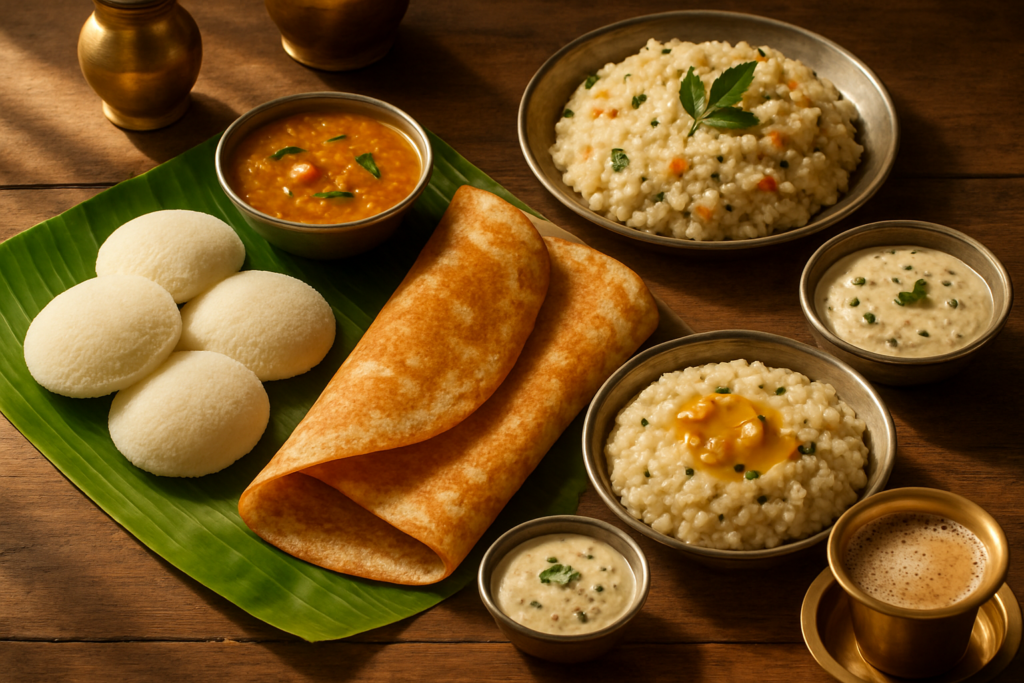
Every single morning of my childhood in Chennai, I woke up to the same soundtrack — the pressure cooker hissing from the kitchen, the sharp pop of mustard seeds hitting hot oil, and the unmistakable fragrance of curry leaves that somehow managed to travel from the kitchen, through the hallway, and all the way to my bedroom. My paati (grandmother) started her south indian breakfast recipes routine at 5:30 AM without fail, rain or shine, and by the time we stumbled to the dining table, there was always something steaming and perfect waiting for us on a steel plate.
I’ve spent the last fifteen years living away from Tamil Nadu — first in Bangalore, then briefly in London, and now in Mumbai — and if there’s one thing I’ve learned, it’s that recreating these dishes is both easier and harder than it looks. Easier because the techniques are simple once someone shows you properly. Harder because the flavour muscle memory of eating these dishes for twenty years means your hands just know when the batter is fermented right, when the sambar needs more tamarind, when the upma is cooked through. This guide is my attempt to transfer some of that muscle memory to you.
What you’ll find here isn’t a rushed listicle — it’s a genuine deep dive into the best south indian breakfast recipes across Tamil Nadu, Kerala, Karnataka and Andhra Pradesh. I’ve covered the classics (idli, dosa, upma, sambar, chutneys) and included some lesser-known beauties like Coorg akki rotti, Kerala puttu, Andhra pesarattu, and Karnataka’s beloved Bisi Bele Bath. Pull up a chair. This one’s going to take a minute — and it’s worth every second.
Prep Time: 30 minutes (active) + 8-12 hours fermentation for idli batter
Cook Time: 45 minutes
Total Time: About 1 hour active time (plan batter overnight)
Servings: 4 people
Summary: This guide covers the essential south indian breakfast recipes every home cook should know — from fluffy fermented idlis and crispy dosas to comforting upma and spiced sambar. Everything is vegetarian, most recipes are naturally vegan, and all of them are genuinely beginner-friendly with the right guidance.
Why You’ll Love These South Indian Breakfast Recipes
- Genuinely nutritious, not just healthy-sounding: Fermented foods like idli and dosa batter are rich in probiotics and the fermentation process increases bioavailability of nutrients. Healthline covers the science behind fermented foods and energy — and honestly, a good idli-sambar breakfast keeps me full until 1 PM without fail.
- Naturally vegetarian and mostly vegan: Almost every dish here is plant-based without trying. No substitutions needed.
- Once you learn the base batter, you can make dozens of dishes: The same idli batter becomes dosa, uttapam, paniyaram, and kal dosa. One recipe, infinite variety.
- Scalable for meal prep: Idli batter lasts 4-5 days in the fridge. Make it Sunday evening and have effortless breakfasts all week.
- Works for every dietary restriction going: Jain, gluten-free, diabetic-friendly (especially ragi versions) — there’s a variation for everyone at the table.
The South Indian Breakfast Recipes You Actually Need to Know
Before we get into the full recipes, let me quickly orient you by region — because “South Indian” is doing a lot of heavy lifting as a term. Tamil Nadu, Kerala, Karnataka, and Andhra Pradesh each have distinct tiffin cultures, and while there’s significant overlap, the flavour profiles, cooking fats, and even serving styles differ considerably.
Tamil Nadu’s South Indian Breakfast Classics
Tamil Nadu is ground zero for the idli-dosa universe. Here, breakfast (called “tiffin” or “kaalaai saapadu”) is a serious affair. Meals are typically served on steel plates with small katoris of sambar, coconut chutney, and tomato chutney arranged around them. The key flavour notes are tamarind, mustard, curry leaves, and sesame oil — specifically Idhayam gingelly oil if you want to be authentic about it.
The big hitters from Tamil Nadu:
- Idli — the queen of all south indian morning recipes. Soft, cloud-like, steamed rice cakes that pair with sambar and chutney.
- Dosa — paper-thin, crispy, and frankly one of the world’s great breakfast foods. I know that’s a big claim. I stand by it.
- Pongal — a creamy, comforting porridge of rice and moong dal cooked with ghee, pepper and cumin. My paati made this every Wednesday and I’ve never loved a Wednesday more.
- Idiyappam — delicate rice noodle “hoppers” that are surprisingly easy once you have the press.
- Vada — fried, crunchy, donut-shaped lentil fritters that have no business being this delicious at 7 AM.
Kerala’s Breakfast Table: Where Coconut is King
Kerala breakfasts are coconut-forward in a way that even Tamil Nadu isn’t. The cooking fat is often coconut oil, the chutneys are thicker and richer, and the star dishes are distinct enough to deserve their own category entirely.
- Puttu — steamed cylinders of rice flour layered with coconut, served with kadala curry (black chickpea curry) or banana and jaggery. This combination sounds strange and tastes extraordinary.
- Appam — lacy, bowl-shaped rice hoppers with crispy edges and a soft, spongy centre. Served with vegetable stew or coconut milk.
- Idiyappam with coconut milk — the Kerala version of idiyappam is often eaten sweet, dunked in warm coconut milk with a pinch of sugar or jaggery dissolved in it.
- Palappam — similar to appam but with a slightly different fermentation and a more pronounced sourness. A Sunday breakfast staple in most Kerala homes.
Karnataka’s South Indian Tiffin Recipes: Bolder, Butterier, Better
Karnataka has its own fierce tiffin culture, particularly in Bangalore, Mysore, and Udupi. If Tamil Nadu idlis are clouds, Karnataka’s breakfasts are more like warm hugs — richer, often butterier, and with more textural contrast. The Udupi cuisine tradition from Karnataka is actually what gave us most of the “South Indian restaurant” menu items we recognize worldwide.
- Bisi Bele Bath — a one-pot wonder of rice, lentils, vegetables and a complex spice powder, finished with ghee and cashews. It’s technically a meal but many Kannadigas eat it for breakfast and I respect that deeply.
- Set Dosa — served in sets of three, these are thicker, softer, and spongier than a regular dosa. Served with sagu (mixed vegetable curry) and coconut chutney.
- Akki Rotti — rice flour flatbreads cooked on a griddle with onions, curry leaves, green chillies and coconut mixed right into the dough. My Bangalore flatmate introduced me to this and I made it every other day for six months.
- Rava Idli — a brilliant invention born out of necessity (during WWII rice shortages, apparently), made from semolina instead of fermented batter. No fermentation needed, ready in 20 minutes.
Andhra Pradesh’s Fiery South Indian Morning Recipes
Andhra Pradesh breakfasts are not for the spice-shy. The state’s cuisine is famously the hottest in India, and the breakfast table is no exception. But beyond the heat, there’s incredible depth and some truly unique dishes you won’t find elsewhere.
- Pesarattu — green moong dal dosas that are crispy, earthy, and packed with protein. Often topped with a ginger-onion mixture and served with upma inside (called MLA Pesarattu, apparently named after the politicians who ate it). I know purists will disagree, but this is one of my favourite south indian breakfast recipes, period.
- Attu Karam — a fiery red chilli chutney that goes with dosas. Not for the faint-hearted.
- Punugulu — small, round fried fritters made from idli batter, served with spicy chutney. A brilliant way to use leftover batter.
- Upma Kozhukattai — steamed dumplings made from upma, a dish that bridges the gap between Tamil Nadu and Andhra traditions.
Ingredients You’ll Need for These South Indian Breakfast Recipes
I’ve organised this by pantry category so you can do one big shop and have everything you need for a full week of south indian tiffin recipes.
The Non-Negotiable Pantry Essentials
- Idli rice / parboiled rice: This is not the same as basmati or regular white rice. Idli rice has a specific starch composition that gives idlis their texture. Abroad substitute: Short-grain rice or Arborio rice works in a pinch, though the texture will be slightly different. Some people use a 1:1 blend of parboiled rice and regular short-grain with acceptable results.
- Urad dal (split, husked black lentils): Available at any Indian grocery store globally. This is non-negotiable — it’s what makes the batter ferment and gives idlis their airiness.
- Coarse semolina / rava / sooji: For upma and rava idli. Make sure you buy the coarse variety, not fine semolina — fine rava turns to paste in upma.
- Toor dal (split pigeon peas): For sambar. Abroad substitute: Yellow split peas work adequately if toor dal is unavailable, though the flavour is slightly different.
- Sambar powder: Buy a good brand — MTR, Aachi, or Brahmins are reliable. Or make your own sambar powder at home — it’s incredible and lasts months.
- Sesame oil (gingelly oil): For Tamil Nadu dishes especially. This is cold-pressed sesame oil, NOT the toasted Asian variety. The two are completely different. Idhayam brand if you can find it.
- Curry leaves: Fresh is infinitely better than dried. Most Indian grocery stores abroad carry them fresh or frozen. Grow your own if you can — mine has been going strong for three years on my Mumbai balcony.
- Fresh coconut: For chutneys. Frozen grated coconut is a perfectly acceptable substitute.
- Asafoetida (hing): The small yellow tin that makes everything taste more authentically South Indian. Use sparingly — a pinch is enough.
- Tamarind paste or block tamarind: For sambar and rasam. Block tamarind dissolved in water has better flavour than ready paste, but paste is more convenient.
- Fenugreek seeds (methi dana): Added to idli batter to aid fermentation and add slight bitterness that balances the sourness.
- Dried red chillies: Byadagi variety from Karnataka are slightly milder and give a beautiful deep red colour to chutneys. Kashmiri red chilli is a reasonable substitute.
The Core Recipes: South Indian Breakfast Recipes, Fully Explained
Recipe 1: Classic Idli with Hotel-Style Sambar
This is the foundation of all south indian breakfast recipes. If you only learn one thing from this post, let it be a proper idli-sambar. Everything else builds from here.
The Idli Batter (The Real One, Not a Shortcut)
- Wash and soak separately: Wash 3 cups idli rice under cold water until the water runs clear. Soak in plenty of fresh water for 6-8 hours. In a separate bowl, wash 1 cup urad dal, add 1 tsp fenugreek seeds, and soak for 6-8 hours. I usually do this the morning I want to make idlis the following day — soak in the morning, grind in the evening, ferment overnight, steam for breakfast.
- Grind the urad dal first: Drain the dal and add it to your mixer/grinder. Grind with minimal cold water (ice cold water is actually ideal — it keeps the motor from heating up and killing the fermentation agents) until the batter is completely smooth, white, and incredibly fluffy. When you drop a small amount into a bowl of water, it should float. This step takes 15-20 minutes in a mixer with pauses. Transfer to a large vessel — the batter will expand during fermentation, so use a vessel at least twice the volume.
- Grind the rice: Drain the soaked rice and grind to a slightly coarse paste. Not as fine as the dal — you want a tiny bit of texture, like very wet coarse sand. This gives idlis their characteristic slight bite.
- Mix with your hands: Add the rice batter to the urad dal batter. Add salt (about 1.5 tsp for this quantity). Mix everything together with your clean hands — not a spoon. The warmth and bacteria on your hands actually aid the fermentation process. My paati was absolutely firm on this point and honestly, science backs her up.
- Ferment in a warm place: Cover loosely with a plate (not an airtight lid) and leave in a warm spot for 8-12 hours. In South India, room temperature is enough. In colder climates, put the batter in your oven with just the light switched on — the bulb generates enough warmth. The batter is ready when it has almost doubled, smells pleasantly sour, and looks bubbly on top.
- Steam the idlis: Grease idli moulds well with oil (a paper towel dipped in oil works perfectly). Don’t overfill — the batter will puff up. Steam on medium-high heat in a pressure cooker without the weight, or in a steamer, for 10-12 minutes. To check doneness, insert a toothpick or wet knife — it should come out clean. Let them rest for 2 minutes before unmoulding. Use a wet spoon to gently lift them out.
Hotel-Style Sambar (The Kind That Makes You Go Back for More)
- Cook the dal: Pressure cook 1 cup toor dal with 1/4 tsp turmeric and 2 cups water for 3-4 whistles. It should be completely mushy — no whole lentils remaining. Mash it smooth with the back of a ladle or a whisk.
- Sauté the vegetables: In a large pot, heat 2 tbsp sesame oil. Add 8-10 pearl onions (shallots, halved) and 1 chopped medium onion. Sauté until translucent and the edges just start to brown. Add 2 chopped tomatoes and cook until completely broken down and the mixture looks jammy — this is your sambar base and it needs to be really well-cooked.
- Add vegetables and spice: Add drumstick pieces (moringa), cubed carrot, and any other vegetables you like — small aubergine pieces and raw plantain are common in Tamil Nadu. Add 2 tbsp sambar powder, 1 tsp tamarind paste, and salt. Stir well and cook for 5 minutes until the spices are fragrant.
- Combine and simmer: Pour in the mashed toor dal and add 1-2 cups water to reach your desired consistency. The sambar should be pourable but not watery — think slightly thinner than a soup. Bring to a boil, then simmer for 15-20 minutes. The longer it simmers, the better the flavours meld. Taste and adjust salt and tamarind.
- The final tadka: This step cannot be skipped. Heat 2 tbsp sesame oil in a small tadka pan until it shimmers. Add 1 tsp mustard seeds and wait — they will pop vigorously. Add 2 dried red chillies, a handful of curry leaves (they will splutter dramatically, stand back), and a generous pinch of asafoetida. Pour this entire fragrant mixture into the sambar, stir once, and cover immediately for 2 minutes to let the steam trap the aromas.
Recipe 2: Coconut Chutney (The Essential Accompaniment)
A south indian breakfast recipes spread without coconut chutney is, frankly, incomplete. Here’s my basic recipe and then two variations.
- Blend everything together: Add 1 cup freshly grated coconut (or thawed frozen coconut), 2-3 green chillies (adjust to taste), a small piece of ginger (about 1/2 inch), 2 tbsp roasted chana dal (dalia — this adds body and a pleasant nuttiness), and salt to a blender. Add water gradually and blend until smooth. You want it thick enough to coat the back of a spoon, not runny.
- Temper it: Heat 1 tsp oil in a small pan. Add mustard seeds. When they pop, add a sprig of curry leaves and 1 dried red chilli. Pour immediately over the chutney. Mix gently.
- Serve fresh: Coconut chutney is always best within 2 hours of making. It can be refrigerated for a day but the coconut flavour dulls considerably.
Variation — Tomato Chutney (for when you don’t have fresh coconut): Sauté 2 tomatoes, 4-5 dried red chillies, 4 garlic cloves, and a small piece of tamarind until soft. Cool and blend. Temper with mustard, curry leaves, and hing. This is actually my personal favourite for dosas — tangy, spicy, and vibrant red.
Recipe 3: South Indian Upma — The Most Underrated Breakfast
Upma gets a bad reputation, almost entirely from people who’ve had badly made upma. Badly made upma is indeed a gluey, sad affair. Good upma — properly roasted, properly tempered, finished with lemon — is genuinely delicious. I’ve converted three upma-haters in my life with this recipe.
- Dry roast the rava first: This step is non-negotiable and also where most people go wrong by skipping it. Heat a wide pan on medium heat and add 1 cup coarse rava. Stir constantly for 5-7 minutes until the rava turns a shade or two darker (light golden) and smells nutty. It will also feel drier and more free-flowing. Remove and set aside.
- Build the base: In the same pan, heat 2 tbsp ghee or oil. Add mustard seeds. When they pop, add 1 tsp chana dal and 1 tsp urad dal. Stir and fry until they turn golden brown — about 1-2 minutes. Add curry leaves, 2 slit green chillies, and grated ginger. Fry for 30 seconds.
- Cook the onions: Add 1 finely chopped medium onion and a good pinch of salt. Sauté until the onions are completely soft and translucent — about 5 minutes. Don’t rush this.
- Add boiling water: Add 2.5 cups water to the pan and bring to a full, rolling boil. Add salt and taste — the water should taste just slightly saltier than you want the final dish to be, since the rava will absorb the salt.
- Add rava slowly: Reduce heat to low. With one hand, slowly pour the roasted rava into the boiling water in a thin, steady stream. With your other hand (or ask someone to help), stir continuously with a wooden spoon to prevent any lumps from forming. The rava will absorb the water rapidly.
- Cover and cook: Once all the rava is added and the mixture has thickened, cover with a lid and cook on the lowest heat for 3-4 minutes. Open, fluff gently with a fork, squeeze half a lime over the top, and garnish with fresh coriander. Serve immediately — upma waits for no one.
Recipe 4: Pesarattu (Andhra’s Protein-Packed Green Dosa)
This is one of the most underrated easy south indian breakfast dishes. No fermentation, naturally vegan, high protein, and absolutely delicious.
- Soak the moong: Wash and soak 1 cup whole green moong dal in plenty of water for 4-6 hours. It doesn’t need to sprout, just soften.
- Blend the batter: Drain and blend the soaked moong with 2-3 green chillies, a 1-inch piece of ginger, 1/4 tsp cumin seeds, salt, and a small handful of fresh coriander. Add minimal water — the batter should be thick, slightly thicker than regular dosa batter. Some people add a handful of rice flour for crispiness, which I completely endorse.
- Prepare the topping: Mix together 1 finely chopped onion, 1 tbsp grated ginger, 1-2 finely chopped green chillies, and a handful of chopped coriander. Set aside.
- Cook the pesarattu: Heat a cast iron or non-stick tawa until very hot. Sprinkle a few drops of water — they should evaporate immediately. Drizzle a little oil and wipe with a paper towel. Pour a ladle of batter and spread in a thin circle. Scatter the onion-ginger topping on top and press gently. Drizzle oil around the edges. Cook on medium-high heat until the bottom is crispy and golden — about 2-3 minutes. Fold and serve. These don’t need to be flipped for the traditional version, though you can if you prefer.
Recipe 5: Kerala Puttu with Kadala Curry
Puttu is made using a special cylinder mold called a puttukutti, but don’t be deterred if you don’t have one — a stainless steel cylinder or even a perforated container that fits over your pressure cooker will work.
- Prepare the rice flour: Use store-bought roasted rice flour (Nirapara brand is widely available). Sprinkle water gradually over 2 cups rice flour, mixing as you go, until it resembles wet sand — it should hold its shape when pressed but not be doughy or wet. Add salt and mix well.
- Layer the puttukutti: Add a layer of rice flour (about an inch), then a layer of grated coconut, then another layer of rice flour, then coconut. Repeat until the cylinder is full, ending with coconut.
- Steam: Fit the filled cylinder over the pressure cooker with some boiling water inside (no weight). Steam for 8-10 minutes until steam emerges from the top holes of the puttukutti. Push out the puttu carefully onto a plate.
- Make kadala curry: Soak 1 cup black chickpeas overnight. Pressure cook with salt for 4-5 whistles. In a pan, heat coconut oil and sauté 1 sliced onion until deep golden. Add ginger-garlic paste, 2 chopped tomatoes, 1 tsp coriander powder, 1 tsp garam masala, 1/2 tsp pepper, and a dash of coconut milk. Add the cooked chickpeas and simmer for 10 minutes. The curry should be thick and deeply flavoured.
Tips for Perfect South Indian Breakfast Recipes Every Time
- Temperature matters for idli batter fermentation: Below 25°C, fermentation stalls. The oven-with-light trick genuinely works. In summer in India, counter fermentation is fine. In winter, you may need to add a pinch more fenugreek seeds or add 2 tbsp of the previous day’s batter (like a sourdough starter) to kickstart fermentation.
- Never use a cold, wet tawa for dosas: The tawa must be properly hot before you pour the batter. Test it by sprinkling a few drops of water — they should evaporate within 2 seconds. A cold tawa makes the batter stick. A properly hot tawa makes it glide.
- Sesame oil makes a genuine difference in sambar: I’ve made sambar with sunflower oil and it’s perfectly fine. I’ve made it with cold-pressed sesame oil and it tastes like a South Indian restaurant. Use sesame oil for the tadka at minimum.
- Roast your sambar powder briefly before adding it: 30 seconds in dry oil before adding the liquid wakes up the spices in a way that adding it directly to water never does. A small tip that makes a real difference.
- Rest your idlis before unmoulding: This is the most-skipped step that causes the most complaints. Give them 2 full minutes after switching off the heat. They continue to set during this time. Rushed unmoulding = torn idlis.
Variations for Every Dietary Need
Jain and No-Onion-No-Garlic South Indian Breakfast
Most south indian breakfast recipes adapt beautifully without onion and garlic. For sambar, simply skip onion and replace with extra tomatoes and a pinch more asafoetida (which provides a similar depth). For upma, skip onion entirely and add finely chopped beans, peas, or carrots for texture. Pesarattu works without onion topping — just use ginger, green chilli, and coriander. Pongal, idli, dosa, puttu — all naturally onion and garlic free.
Gluten-Free
All the recipes in this guide are naturally gluten-free. Rice, lentils, semolina (check packaging for cross-contamination warnings if you’re celiac), and coconut are all inherently gluten-free. The only thing to watch is asafoetida — some brands use wheat flour as an anti-caking agent. Look for gluten-free labelled hing, or simply skip it.
Vegan
Almost everything here is already vegan. The only non-vegan elements that appear occasionally are ghee (in upma, pongal) — replace with coconut oil for an equally delicious result. Many South Indian cooks, particularly in Kerala, already use coconut oil as their primary fat.
Diabetic-Friendly South Indian Morning Recipes
Ragi (finger millet) versions of idli and dosa are brilliant for blood sugar management. Replace 1/3 of the rice in the idli batter with ragi flour. The idlis will be darker, slightly nuttier, and genuinely quite good. Check out our ragi-based breakfast recipes for more on this. Oats upma (replacing rava with rolled oats) is another solid option.
What to Serve with These South Indian Breakfast Recipes
A proper South Indian tiffin spread isn’t just one dish — it’s a combination. Here’s how to build a complete breakfast table:
- The Holy Trinity: Idli/dosa + sambar + coconut chutney. This combination is non-negotiable and perfect. Always serve sambar warm-hot, never lukewarm.
- Filter Coffee (Degree Coffee): South Indian filter coffee made with a metal filter, mixed coffee-chicory powder (Narasu’s or Cothas brand), boiled whole milk, and just enough sugar. Learning to make authentic South Indian filter coffee will change your mornings. Strong, aromatic, slightly frothy — nothing else compares.
- Banana and Pappadam: A ripe banana alongside idlis is a classic Tamil Nadu breakfast accompaniment that sounds odd but works beautifully. The natural sweetness of the banana contrasts with the sour-savoury sambar. Many old-school tiffin hotels serve this automatically.
Storage and Reheating Your South Indian Breakfast
One of the great practical advantages of south indian tiffin recipes is how well they store and reheat:
- Idli batter: Refrigerate after fermentation for up to 5 days. The batter continues to ferment slowly in the fridge, getting slightly more sour each day. Day 3-4 batter makes excellent dosas and uttapam.
- Cooked idlis: Refrigerate in an airtight container for up to 2 days. Reheat by steaming for 3-4 minutes (microwave with a damp paper towel also works). Never microwave dry — they turn rubbery.
- Sambar: Refrigerates beautifully for 3-4 days and actually tastes better the next day as the flavours deepen. Reheat on the stovetop, adding a splash of water if it’s thickened. A quick fresh tadka when reheating makes it taste freshly made.
- Coconut chutney: Best consumed the day it’s made. Can be refrigerated for 1 day but the coconut aroma dulls. Do not freeze — the texture becomes grainy.
- Upma: Refrigerates for 1-2 days. Reheat with a splash of water in a pan, stirring well, or microwave with a damp cover. Leftover upma is excellent as a stuffing for dosas (upma masala dosa).
Frequently Asked Questions About South Indian Breakfast Recipes
Can I make idli batter without a wet grinder?
Absolutely, yes. I made idli batter in a regular mixie for years before investing in a grinder. The key is to grind the urad dal in short pulses with chilled water so the motor doesn’t overheat — this keeps the batter airy. The texture will be slightly less fluffy than grinder-made batter, but your idlis will still be soft and delicious. Just don’t over-grind the rice.
How long does idli batter stay good in the fridge?
Once fermented, idli batter keeps well in the refrigerator for 4-5 days. After that, the sourness becomes overpowering. The slightly sour batter from day 3 onwards actually makes excellent dosas and uttapam — thin them out with water and spread them on a hot tawa. Never waste fermented batter!
What can I use instead of fresh coconut for the chutney?
If you’re living abroad and can’t find fresh coconut, frozen grated coconut works beautifully — just thaw it completely before blending. Desiccated coconut can work in a pinch but soak it in warm water for 20 minutes first and reduce the quantity by half since it’s more concentrated. The chutney will be slightly denser but still tasty.
Why is my upma lumpy?
Lumpy upma is almost always caused by two things — adding rava to water that isn’t fully boiling, or not roasting the rava beforehand. Both steps are non-negotiable. Make sure the water is at a full rolling boil before you add the rava, and add it in a slow, steady stream while stirring with your other hand. Dry roasting the rava first also prevents clumping because it dries out any residual moisture.
Are these south indian breakfast recipes suitable for kids?
Most south indian breakfast recipes are wonderfully kid-friendly. Idlis are soft, easy to digest, and mildly flavoured — they’re actually one of the first solid foods many South Indian babies eat. For kids, simply reduce or skip the green chillies in sambar and chutney. Upma can be made sweeter and milder with extra ghee. Pongal with just salt and ghee is a favourite with picky eaters in my house.