Maharashtrian Breakfast Recipes: 15 Authentic Morning Dishes Beyond Poha and Upma
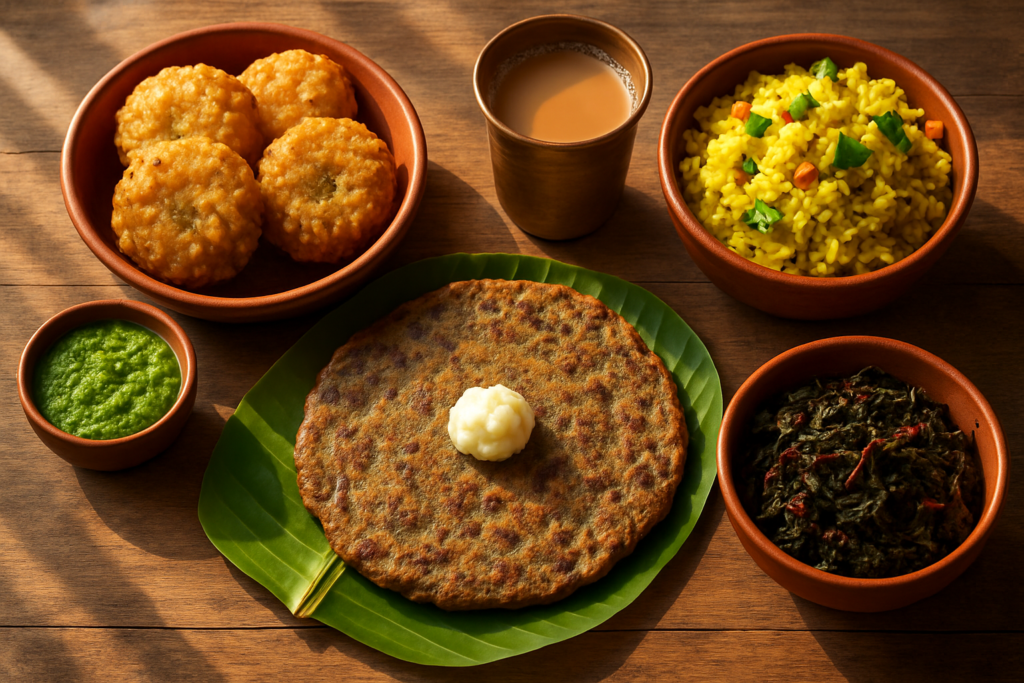
Maharashtrian breakfast goes far beyond poha and upma. The state’s morning repertoire includes multi-grain thalipeeth, crispy sabudana vada, fermented amboli, lacy ghavan rice crepes, no-cook dadpe pohe, and a dozen more dishes — many naturally vegetarian, gluten-free, or fasting-friendly. This guide covers 15 authentic recipes with full instructions, honest substitutions, and detailed tips.
When people think of Maharashtra’s morning food, poha and upma get all the glory. And yes, a well-made kanda batata poha is genuinely one of life’s great pleasures. But the state’s breakfast repertoire is so much richer, so much more varied, and honestly, so much more exciting than those two dishes alone. From the fasting-friendly sabudana vada that somehow ends up being everyone’s favourite even on non-fasting days, to the punchy, multi-grain thalipeeth that keeps you full until lunch, to the lesser-known ghavan and amboli — there’s a whole world of authentic Maharashtrian morning food waiting to be explored.
Prep Time: 30 minutes (plus overnight soaking for sabudana)
Cook Time: 45 minutes
Total Time: 1 hour 15 minutes (active)
Servings: 4
This post covers 15 authentic Maharashtrian breakfast recipes — from crispy sabudana vada and multi-grain thalipeeth to lesser-known gems like ghavan, amboli, and dadpe pohe. Detailed recipes for the top 5 are included below, with notes and variations for all 15. Perfect for home cooks at any skill level.
Why You’ll Love These Maharashtrian Breakfast Recipes
- Most are naturally vegetarian and many are vegan — no substitutions needed, they were built this way from the ground up.
- Multi-grain and nutrient-dense — dishes like thalipeeth use 5-6 different grains in one flatbread, which is proven to support better gut health and sustained energy.
- Adaptable for fasting, Jain, and gluten-free diets — variations for each dish are included below.
- Most use pantry staples — if you have an Indian kitchen, you already have 80% of what you need.
- Genuinely filling — unlike toast or cereal, these dishes actually keep you going until noon.
The 15 Authentic Maharashtrian Breakfast Recipes You Need to Know
These are organised roughly from everyday heroes to special-occasion dishes. For the top 5, full recipes are given. The remaining 10 get detailed notes, tips, and links to full posts for each.
1. Sabudana Vada — The Undisputed King of Maharashtrian Morning Food
If there is one dish that defines Maharashtrian breakfast recipes in the national imagination, it’s sabudana vada. These crispy fried tapioca pearl patties with roasted peanuts and mashed potato are traditionally eaten during Ekadashi and other fasting days — but they’ve escaped the fasting context entirely in most Pune and Mumbai households and become an all-the-time obsession. I know purists will disagree, but adding a tiny bit of lemon juice to the mixture makes them taste infinitely brighter.
The history of sabudana in Indian cooking is fascinating — it only arrived in Maharashtra in significant quantities in the mid-20th century after being promoted as a fasting food, and yet it feels completely native now.
The key technique: Drain soaked sabudana in a muslin cloth for at least an hour before mixing. Wet sabudana means broken vadas in the oil.
2. Thalipeeth — The Multi-Grain Champion
Thalipeeth is a thick, spiced flatbread made from bhajani — a traditional roasted multi-grain flour blend. The combination of jowar, bajra, rice, and various lentils in the bhajani gives thalipeeth a nutty, complex flavour that no single-grain flatbread can match.
The key technique is patting it directly onto the tawa with a wet hand rather than rolling it with a belan. If you’ve never done it before, it feels awkward the first time. By the third thalipeeth, you’ll feel like you’ve unlocked something ancient. Trust the process.
3. Kanda Batata Poha — Yes, It’s Here, Because It Deserves the Respect
A perfectly made kanda batata poha — with thick poha (never thin!), caramelised onions, just-cooked potato, fresh coconut, and a bright squeeze of lemon — is one of the most flawless breakfasts in the world. The key differentiator in Maharashtra is freshly grated coconut on top and using thick poha variety only. This is non-negotiable.
See my detailed guide: perfect kanda batata poha recipe with tips.
4. Dadpe Pohe — The No-Cook Coastal Wonder
This is the Konkan coast’s answer to poha and it requires absolutely zero cooking. Thin poha is mixed with freshly grated coconut, finely chopped onion, green chillies, lemon juice, salt, and a little sugar — that’s it. Squeeze and mix everything together with your hands, let it rest for 5 minutes, and eat. The coconut moisture softens the poha perfectly.
5. Ghavan (Rice Crepes) — Maharashtra’s Answer to the Dosa
Ghavan is a thin, lacy crepe made from a simple fermented or fresh rice flour batter. It’s lighter than a dosa, slightly less crispy, and has a mild sweetness that pairs beautifully with both coconut chutney and jaggery. In coastal Konkan households, ghavan with coconut milk is a Sunday morning ritual. If you’ve mastered dosa, you’ll find ghavan even easier — no fermentation required in the quick version, just rice flour, water, salt, and a hot pan.
6. Amboli — The Fermented Rice and Lentil Pancake
Amboli is a thick, soft, fermented pancake made from rice flour and urad dal — similar in spirit to a dosa but much thicker and spongier, almost like an appam without the coconut milk. It’s traditionally a Konkani dish that’s deeply embedded in Maharashtrian coastal cuisine. The overnight fermentation gives it a mild tang. Serve it with a coconut-coriander chutney and you have a genuinely spectacular breakfast.
7. Usal — The Spicy Sprouted Lentil Curry (Yes, For Breakfast!)
In Maharashtra, eating usal — a fiery, tangy curry made from sprouted moth beans or matki — for breakfast is completely normal and, frankly, very smart. It’s protein-rich, deeply spiced, and often eaten with pav (bread rolls) as misal pav or simply with a bhakri.
See my full sprouted matki usal recipe: authentic matki usal recipe step by step.
8. Misal Pav — The Breakfast That Became Maharashtra’s Identity
Misal pav deserves its own post (and it has one on this blog). The combination of spicy sprouted lentil curry, farsan (crunchy mix), chopped onion, fresh coriander, and lemon — all scooped up with buttered pav — is arguably Maharashtra’s most iconic dish. Nashik-style misal is drowned in a fiery red rassa. Pune misal is slightly milder. Kolhapur misal will make your eyes water. All of them are brilliant.
9. Batata Vada — The Street Breakfast Hero
Batata vada — spiced mashed potato dumplings dipped in a chickpea flour batter and deep fried — is technically both a breakfast and an all-day snack. Served in a bun as vada pav or just with green chutney and dry garlic chutney, it’s the kind of food that makes you understand why Mumbai runs the way it does. See my full recipe: crispy batata vada recipe Pune style.
10. Thalipeeth Bhajani Chilla (Quick Version)
When there’s no time to make proper thalipeeth but you want that bhajani flavour, thin the batter down with more water and make quick chillas (thin pancakes) on a non-stick pan. They’re crispier, faster, and a genuinely good weekday option.
11. Shevai — Steamed Rice Noodles
Shevai is handmade rice noodles that are steamed and then either served with fresh coconut milk and jaggery (sweet version) or tossed with a mustard-coconut tempering (savoury version). Making shevai from scratch requires a special shevai press, but the canned or packaged version works perfectly well for a weekday breakfast. The sweet coconut milk version is one of the most comforting Maharashtrian breakfast preparations.
12. Kothimbir Vadi — Crispy Coriander Squares
A Maharashtrian kitchen classic — fresh coriander mixed into a besan (chickpea flour) batter with spices, steamed into a firm cake, then sliced and shallow-fried until golden and crispy. Kothimbir vadi is often made in large batches and can be eaten for breakfast, as a snack, or alongside a meal. The two-step cooking (steam then fry) gives it a completely unique texture — crispy outside, almost mochi-like inside.
13. Sabudana Khichdi — The Gentler Cousin of Sabudana Vada
While sabudana vada is the rockstar, sabudana khichdi is the everyday workhorse. It’s quicker to make (no shaping or frying), equally delicious, and just as popular during fasting. The key is the same as with vada — perfectly soaked, well-drained sabudana and lots of coarsely crushed roasted peanuts. A generous amount of ghee makes all the difference.
14. Zunka — The Dry Besan Bhaji
Zunka (or zunka bhakri) is a staple breakfast in rural Maharashtra and Vidarbha that city folks are slowly rediscovering. It’s essentially a dry, crumbly preparation of besan (chickpea flour) cooked with onions, garlic, green chillies, and spices — and it’s served with bajra or jowar bhakri. Hearty, earthy, protein-packed, and genuinely delicious in the most rustic way possible. This is the kind of dish that food writers call ‘humble’ but I call simply great.
15. Puran Poli — The Festive Breakfast
Puran Poli closes this list not because it’s an everyday breakfast (it absolutely isn’t — it takes 2-3 hours to make properly) but because on festivals like Holi, Gudi Padwa, and Ganesh Chaturthi, a Maharashtra morning without puran poli is unthinkable. A soft, thin whole wheat flatbread stuffed with sweetened chana dal and jaggery filling, served warm with ghee and a bowl of katachi amti (the leftover dal water spiced up). If there is one dish on this list worth the full effort, it’s this one.
Ingredients You’ll Need for These Maharashtrian Breakfast Recipes
- Sabudana (tapioca pearls) — Available at any Indian grocery store. Outside India, look for ‘tapioca pearls’ in Asian or South Asian supermarkets. Make sure to buy the medium or large variety, not the tiny ones used for bubble tea.
- Bhajani flour (thalipeeth bhajani) — Available at Indian stores labeled as ‘thalipeeth bhajani.’ Substitute: mix equal parts jowar flour, whole wheat flour, and besan with a little rice flour.
- Thick poha — Labeled ‘thick beaten rice’ or ‘thick flattened rice.’ Never substitute thin poha for Maharashtrian-style dishes — it goes mushy.
- Roasted peanuts — Buy pre-roasted or dry roast raw peanuts in a pan for 5-7 minutes on medium heat, stirring constantly.
- Fresh coconut — Use frozen grated coconut if fresh isn’t available. Desiccated coconut is a distant last resort — it lacks moisture and flavour.
- Loni (white butter) — Traditional homemade unsalted white butter. Substitute with any good-quality unsalted butter, though the flavour won’t be quite the same.
- Curry leaves — Fresh only, please. Dried curry leaves are essentially decorative. Many Indian grocery stores in the West carry fresh curry leaves in the freezer section.
- Moth beans / matki — For usal. Substitute with moong beans if you can’t find matki, though the flavour is different. Soak overnight and sprout for 1-2 days.
Detailed Sabudana Vada Recipe — Step by Step
How to Make Perfect Sabudana Vada — The Maharashtrian Way
- Soak the sabudana: Rinse 2 cups of sabudana under water twice. Add just enough water to cover (about 1/2 inch above the sabudana level) and soak for 6-8 hours or overnight. This is critical — too much water and your vadas will fall apart in the oil.
- Drain thoroughly: Transfer soaked sabudana to a fine mesh colander and let it drain for at least 30-45 minutes. Press gently with a spoon to remove excess water. The sabudana should look fluffy and separate, not wet and clumpy. If you’re in a hurry, spread them on a clean kitchen towel for 20 minutes.
- Make the mixture: In a large bowl, combine drained sabudana, 3 boiled and mashed potatoes (cooled completely — hot potato makes the mix sticky), 1/2 cup coarsely crushed roasted peanuts, 4-5 finely chopped green chillies, 1 teaspoon grated ginger, 2 tablespoons chopped fresh coriander, 1 tablespoon lemon juice, and salt to taste. Mix with your hands until everything comes together. Taste and adjust salt and lemon.
- Shape the vadas: Divide into 12-14 equal portions. Roll each into a smooth ball, then flatten gently into a disc about 1.5 inches wide. Make a small hole in the center with your thumb — this is the traditional Maharashtra style and helps even cooking.
- Fry to golden perfection: Heat oil in a kadai to about 170°C (medium-high). Test with a small piece of mixture — it should rise to the surface within 3-4 seconds. Gently slide in 4-5 vadas at a time. Fry for 3-4 minutes per side until deep golden brown. They should look like little suns. Drain on paper towels and serve within 5 minutes for maximum crispiness.
- Serve with: Fresh green coconut chutney, dry shengdana (peanut) chutney, or a dollop of yogurt. A cold, tangy yogurt with a pinch of black salt works particularly well.
Tips for Perfect Maharashtrian Breakfast Recipes Every Time
- The soaking-to-draining ratio for sabudana is everything. Under-soaked sabudana means hard centers. Over-watered sabudana means vadas that explode in the oil. The sweet spot is overnight soaking with minimal water and long draining time.
- For thalipeeth, always use a wet hand to pat — never a rolling pin. The direct-hand technique gives thalipeeth its characteristic slightly uneven, rustic surface with crispy edges. A rolling pin makes it too uniform and somehow less delicious.
- Bhakri and thalipeeth love a cast iron tawa. If you’re using a thin non-stick pan, you’ll never get the same crust. Cast iron holds heat evenly and creates that gorgeous char that makes these dishes special.
- Fresh coconut is non-negotiable for dadpe pohe. This is one of those dishes where the coconut is not a garnish — it’s the primary moisture source. Desiccated coconut will not soften the poha properly.
- Make bhajani flour in batches and store it. Roast all the grains separately, cool completely, grind together, and store in an airtight container. It keeps for 3-4 months and makes thalipeeth on a weekday morning completely effortless.
Variations for Different Dietary Needs
Jain Maharashtrian Breakfast Recipes (No Root Vegetables)
Sabudana vada can be made Jain by skipping potato and using raw banana (cooked and mashed) as the binding agent instead. Thalipeeth is naturally Jain-friendly if you skip onion — add more coriander and green chilli for flavour. Kothimbir vadi, amboli, and ghavan are all naturally Jain.
No-Onion, No-Garlic Variations
Most of the fasting-friendly recipes here (sabudana vada, sabudana khichdi, shevai) are already no-onion-no-garlic by tradition. For thalipeeth and poha, simply omit onion and add a pinch of asafoetida (hing) in the tempering for depth of flavour. The dish will taste different but still very good.
Vegan Maharashtrian Breakfast
Almost everything on this list is naturally vegan except for dishes that use ghee or loni (butter) for serving. Simply substitute coconut oil for ghee in the tempering and skip the butter. Sabudana vada, dadpe pohe, ghavan, amboli, kothimbir vadi — all vegan as written.
Gluten-Free Options
Great news — most traditional Maharashtrian breakfast recipes are naturally gluten-free! Sabudana vada, sabudana khichdi, dadpe pohe, ghavan (rice flour), amboli (rice and urad), shevai — all gluten-free. Thalipeeth contains wheat in the bhajani blend, but you can make a fully gluten-free version using only jowar, bajra, rice flour, and besan.
What to Serve With These Maharashtrian Breakfast Recipes
- Coconut green chutney — Fresh coriander, green chilli, coconut, garlic, and lemon blitzed together. The universal partner for almost every Maharashtrian breakfast dish. Make a big batch on Sunday and it keeps for 3 days in the fridge.
- Dry peanut-garlic chutney (shengdana chutney) — Roasted peanuts ground with dried red chilli, garlic, salt, and a little oil. This keeps for weeks and is the condiment worth keeping on hand at all times.
- Masala chai or filter coffee — A strong, ginger-heavy masala chai is the default Maharashtrian morning beverage. In Konkan households, you might find strong filter coffee served alongside a coconut-based breakfast. Both are perfect.
Storage and Reheating
Sabudana vada: Best eaten immediately after frying. If you must store, keep them in an airtight container at room temperature for up to 4 hours and re-crisp in an air fryer or oven at 180°C for 5 minutes. Do not microwave — they’ll turn rubbery.
Thalipeeth: Stores well! Once cooled, stack with parchment paper between each thalipeeth and refrigerate for up to 2 days. Reheat on a hot tawa with a little ghee for 1-2 minutes per side. They’re honestly almost better reheated.
Bhajani flour: Store in an airtight jar at room temperature for up to 3 months, or in the freezer for up to 6 months.
Kothimbir vadi (steamed, unfried): The steamed log can be refrigerated for up to 3 days. Slice and fry just before serving for the freshest result.
Poha and dadpe pohe: These do not store well — make and eat immediately. Leftover poha becomes soggy and sad within an hour.
Frequently Asked Questions About Maharashtrian Breakfast Recipes
Can I make sabudana vada without frying — in an air fryer?
Yes, you can! Brush the shaped vadas with a little oil and air fry at 180°C for about 12-15 minutes, flipping halfway. They won’t be quite as crispy as deep-fried ones, but they’re a solid weekday compromise.
What is bhajani flour and where can I find it outside India?
Bhajani is a traditional roasted multi-grain flour blend made from jowar, bajra, wheat, rice, chana dal, and urad dal — all dry roasted and then ground together. Outside India, you can find it in Indian grocery stores labeled as ‘thalipeeth bhajani.’ If you can’t find it, a mix of jowar flour, whole wheat flour, and besan in equal parts makes a decent substitute.
Are these Maharashtrian breakfast recipes suitable for a Jain diet?
Many of them can be adapted for a Jain diet. For sabudana vada, simply substitute potato with raw banana and skip root vegetables entirely. Thalipeeth can easily be made Jain by skipping onion and garlic; it still tastes wonderful. Ghavan, amboli, and kothimbir vadi are all naturally Jain-friendly. Check the Variations section above for specific modifications for each dish.
How long should I soak sabudana and how do I know when it’s ready?
Sabudana should ideally soak for 6-8 hours or overnight in just enough water to cover it — the pearls should absorb all the water with none left pooling at the bottom. You’ll know it’s ready when you press a pearl between your fingers and it mashes easily with no hard center. Too much water makes vadas soggy and they’ll break while frying — this is the number one reason sabudana vada fails.
Can I make thalipeeth dough the night before?
Yes, you absolutely can — and many traditional Maharashtrian households do exactly this. Prepare the dough, cover it tightly with cling wrap or a damp cloth, and refrigerate overnight. In the morning, let it sit at room temperature for 10 minutes before shaping. The flavours actually develop beautifully overnight and many cooks swear the thalipeeth tastes even better the next morning. It’s a genuinely great weekend meal-prep strategy for busy families.
“Maharashtrian breakfast is not just a meal — it’s a daily ritual of flavour, tradition, and community. Whether it’s the crispy crunch of sabudana vada on an Ekadashi morning or the soft pat of thalipeeth on a rainy Monday, every dish tells a story of a land that takes its mornings seriously.”