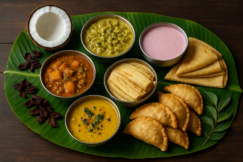
Ganesh Chaturthi Recipes: 15 Traditional Modak and Prasad Sweets to Make at Home
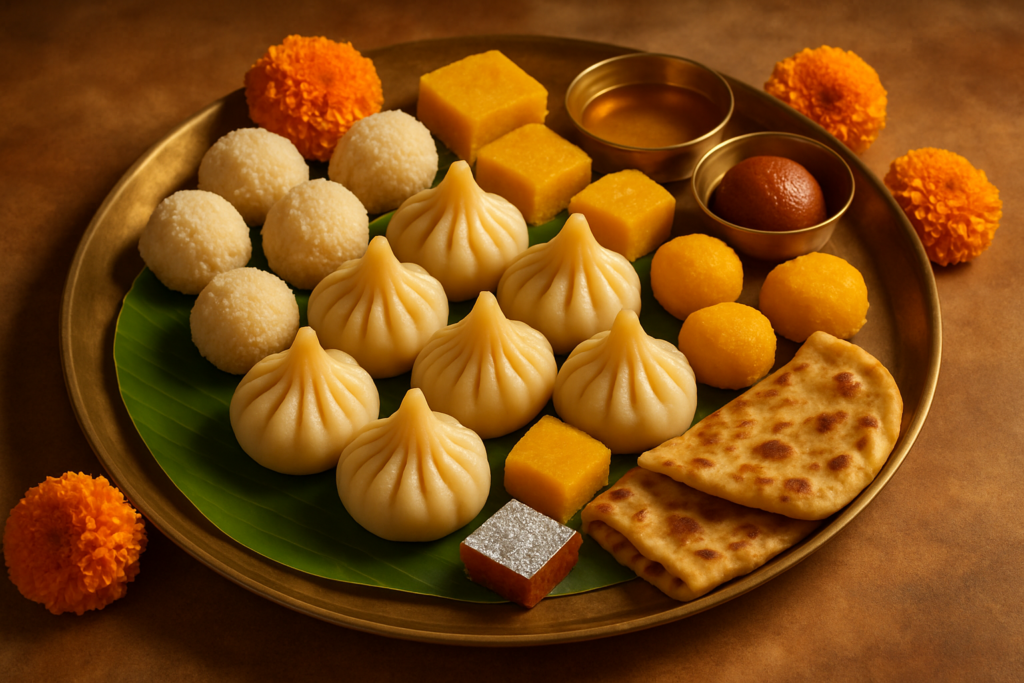
Ganesh Chaturthi calls for a specific set of sweets and prasad — steamed modak at the centre, supported by coconut ladoo, besan ladoo, puran poli, karanji, and more. This post covers 15 traditional recipes in full, with the ukadiche modak recipe explained step by step, plus tips on dough consistency, filling texture, shaping technique, and what can be made ahead.
If you’ve been searching for the best Ganesh Chaturthi recipes that actually work at home — not just look pretty in photos — you’re in exactly the right place. Whether it’s the traditional ukadiche modak recipe that Bappa himself is said to love, or easier sweets like coconut ladoo and besan chakli for the prasad thali, here are 15 recipes with all the tips you need.
I know some purists will insist on using only fresh rice flour ground that same morning, and while I respect that deeply, good store-bought rice flour on a Tuesday night after a full workday will also produce excellent modaks. Let’s be practical. Let’s also make incredible food. Both things are possible, and Ganpati Bappa, I firmly believe, appreciates the effort more than the sourcing.
Quick Recipe Overview: Ukadiche Modak (Steamed Modak)
- Prep Time: 45 minutes
- Cook Time: 60 minutes (including filling and steaming)
- Total Time: 1 hour 45 minutes
- Servings: Makes approximately 18-20 modaks
Ukadiche modak are traditional steamed rice flour dumplings filled with a fragrant coconut-jaggery mixture, shaped into a distinctive pleated form. They are the most sacred offering in all Ganesh Chaturthi recipes and the absolute centrepiece of the prasad thali. Make them fresh on the day of pooja for the best flavour and texture.
Why You’ll Love These Ganesh Chaturthi Recipes
- Completely authentic — these recipes follow Maharashtrian tradition with the kind of nuance that comes from careful attention to technique
- Beginner-friendly breakdowns — every sensory cue is explained so you know exactly when your jaggery filling is ready, when your dough is the right consistency, when your modaks are done steaming
- 15 recipes in one place — from the star ukadiche modak to coconut ladoo, karanji, puran poli, kheer, and more, so your entire Ganesh Chaturthi sweets spread is sorted
- Variations for every kitchen — Jain, no-onion-no-garlic, and options for Indian diaspora abroad who can’t easily source every ingredient
- Real make-ahead advice — what can be prepped two days in advance and what genuinely must be made fresh
The 15 Ganesh Chaturthi Recipes You Need This Year
Before we dive into the detailed ukadiche modak recipe, here’s your complete roadmap of all 15 traditional prasad recipes and sweets for Ganesh Chaturthi, organised from most important to easiest, so you can plan your cooking days sensibly.
- Ukadiche Modak — the steamed rice flour modak, recipe detailed in full below
- Fried Modak (Talniche Modak) — a maida or wheat dough outer shell, same filling, deep fried to golden perfection
- Chocolate Modak — a modern favourite, especially for kids, made with dark chocolate and a coconut filling
- Coconut Ladoo — three-ingredient magic: coconut, condensed milk or jaggery, cardamom
- Besan Ladoo — slow-roasted chickpea flour in ghee, mixed with powdered sugar and cardamom
- Puran Poli — a sweet flatbread stuffed with chana dal and jaggery filling, Bappa’s other great love
- Motichoor Ladoo — tiny fried boondi balls bound together with sugar syrup, the quintessential prasad
- Karanji (Gujiya) — deep-fried pastry crescents filled with coconut-jaggery and dry fruits
- Panchamrit — the sacred five-ingredient mixture (milk, curd, honey, ghee, sugar) for abhishek
- Modak Kheer — small modaks cooked in sweetened saffron milk, an absolute showstopper
- Rava Modak — semolina-based modak, easier for beginners than rice flour version
- Til Ladoo (Sesame Ladoo) — roasted sesame seeds and jaggery pressed into balls
- Peda — milk solids reduced with sugar and cardamom into soft, melt-in-mouth rounds
- Shrikhand — hung curd sweetened with sugar and saffron, a Maharashtrian festive staple
- Poha Chivda — a savoury-sweet flattened rice mix for the prasad thali balance
Now let’s go deep on the recipe that matters most.
Ukadiche Modak Recipe: Ingredients You’ll Need
This is the full ingredient breakdown for the classic steamed modak, with notes for those cooking in the UK, US, Australia, or Canada where some ingredients require substitutions.
For the Outer Shell (Dough)
- 2 cups rice flour — use fine rice flour, not glutinous rice flour. In the UK and US, look for “idli rice flour” at Indian grocery stores or online. Bob’s Red Mill white rice flour can work but the texture is slightly different.
- 2 cups water — it must be boiling hot when you add the flour. This is non-negotiable.
- 1/2 tsp salt
- 1 tsp ghee — adds elasticity. Do not skip. Substitute with coconut oil for vegan version.
For the Coconut-Jaggery Filling (Saran)
- 1.5 cups fresh grated coconut — frozen grated coconut works well and is widely available at Indian stores abroad. Desiccated coconut is a last resort; if using, rehydrate with a tablespoon of warm milk.
- 3/4 cup jaggery — grated or crumbled. If you can’t find jaggery, use dark brown sugar (same quantity) as a reasonable substitute, though the flavour changes. Coconut sugar is closer to jaggery.
- 1/2 tsp green cardamom powder — freshly ground from pods is noticeably better
- 1/4 tsp freshly grated nutmeg
- 1 tbsp poppy seeds (khus khus) — optional but traditional. In the US, these are widely available at Indian and Middle Eastern grocery stores.
- 1 tsp ghee
- A pinch of saffron strands dissolved in 1 tsp warm milk — optional, adds beautiful colour
- 2 tbsp cashew pieces and 1 tbsp raisins — optional, traditional addition
How to Make the Perfect Ukadiche Modak: Step-by-Step
Step 1: Make the Filling First (This Must Cool Completely)
Heat 1 tsp ghee in a heavy-bottomed pan on medium-low flame. Add the fresh grated coconut and stir gently for about 2 minutes. You want it to just dry out slightly — you’ll notice the raw coconut smell starting to mellow. Add the grated jaggery. Keep stirring continuously. The jaggery will melt and start binding with the coconut. Cook this for 6-8 minutes, stirring all the time, until the mixture comes together and starts to leave the sides of the pan. It should smell absolutely incredible — caramel, coconut, warm spice.
Add cardamom powder, nutmeg, poppy seeds, saffron milk, and dry fruits if using. Mix well for another minute. The filling is ready when it holds its shape if you press a small ball between your palms. Remove from heat and let it cool completely before using. Warm filling will tear the dough — this is a critical step that cannot be skipped.
Step 2: Make the Rice Flour Dough
Bring 2 cups of water to a full, rolling boil in a heavy pan. Add salt and ghee. Now lower the flame to minimum. Add all the rice flour at once and immediately stir vigorously with a wooden spoon or spatula. Everything will come together into a rough, shaggy mass. Cover with a lid and let it sit on the lowest flame for 2-3 minutes to steam-cook from the inside.
Turn off the flame. Let it cool for 3-4 minutes until you can handle it comfortably — it should be warm, not hot. Now knead the dough directly in the pan or on a clean surface. Knead firmly for 4-5 minutes. The dough should become smooth, soft, and pliable, like soft playdough. If it feels dry and cracks, add warm water one teaspoon at a time. If it feels sticky, add a pinch of dry rice flour. Cover with a damp cloth at all times while you work.
Step 3: Shape the Modaks
Grease your palms generously with ghee. Take a small lemon-sized ball of dough — about 30 grams. Roll it smooth between your palms first. Then press it flat into a round disc roughly 3 inches in diameter. Use your thumb to press the centre slightly thinner and the edges even thinner. Think of it like a thin bowl — thicker at the centre (so it doesn’t tear from the filling’s weight), thinner at the edges (so you can pleat easily).
Place a heaped teaspoon of filling in the centre. Don’t overfill — the edges need enough room to come together. Now the pleating: using your thumb and index finger, pinch the edge of the dough to make a small fold. Make another fold right next to it and press it lightly against the first. Keep going around the entire circumference, making 10-12 even pleats. As you finish pleating, gather all the pleats upward and pinch them together firmly at the very top to form the characteristic pointed tip. Seal tightly so no filling peeks through.
Step 4: Steam the Modaks
Get your steamer going with enough water to steam for at least 20 minutes. Grease the steamer plates or line with banana leaf pieces or parchment paper with tiny holes poked in it. Place modaks leaving an inch of space between each — they don’t expand much but you don’t want them touching and sticking.
Steam on medium-high heat for 12-15 minutes. The transformation is beautiful — they’ll go from opaque white to slightly translucent and develop a gentle sheen. That sheen means they’re done. Don’t over-steam; beyond 15 minutes they start to get rubbery and lose the delicate texture.
Remove carefully with a spoon or tongs — they’ll be fragile when hot. Brush each one with a very light coating of ghee while still warm. Arrange on a banana leaf or a brass thali for the pooja.
Tips for Perfect Ganesh Chaturthi Recipes Every Time
- Temperature is everything for the dough: The water must be at a full boil and the dough must be worked while still warm. Cold dough cracks and won’t pleat. Keep a cup of warm water nearby while shaping.
- Taste your jaggery before using: Not all jaggery is equal in sweetness. Taste the filling after the jaggery melts and before you add the spices. Adjust accordingly.
- Make modaks in batches: Don’t shape all your dough balls before starting to fill. Shape one, fill it, seal it, then make the next. The dough dries out quickly on the outside even under a damp cloth, and the edges won’t pleat properly if they’ve dried.
- Use fresh coconut if at all possible: The difference between fresh coconut and desiccated coconut in the filling is genuinely dramatic. Frozen grated coconut is a perfectly acceptable substitute.
- Don’t skip the ghee: In the dough, in the filling, on the finished modaks. Ghee is what makes these taste like temple prasad. Coconut oil works for vegan versions, but the flavour profile changes significantly.
For more festival cooking inspiration, check out our traditional Puran Poli recipe which is another must-have on the Ganesh Chaturthi prasad thali.
Variations of Ganesh Chaturthi Sweets Recipes
Jain-Friendly Version
All the modak and sweet recipes listed here are naturally Jain-friendly as they contain no onion, garlic, or root vegetables. The entire prasad thali — ukadiche modak, coconut ladoo, besan ladoo, puran poli — can be made without any modification for Jain families.
Vegan Version
Replace all ghee with coconut oil (use slightly less, as coconut oil is more liquid). For recipes that call for milk, substitute with coconut milk. Skip condensed milk in coconut ladoo and use jaggery instead — it actually tastes more traditional. The ukadiche modak is naturally vegan if you use coconut oil.
Gluten-Free
Great news — ukadiche modak are naturally gluten-free as they’re made with rice flour. Besan ladoo (chickpea flour) and coconut ladoo are also naturally gluten-free. Puran poli traditionally uses wheat flour; for a GF version, substitute with a mix of rice flour and tapioca starch (70:30 ratio).
Quick and Easy Versions for Busy Families
If you’re short on time, rava modak (semolina-based) is significantly easier to make than rice flour modak — the dough is more forgiving and doesn’t require the precise temperature management. Coconut ladoo with condensed milk takes literally 15 minutes. Mould-shaped chocolate modak is a 20-minute project that children absolutely love making.
What to Serve With These Ganesh Chaturthi Recipes
A full prasad thali for Ganesh Chaturthi typically has a beautiful balance of sweet, savoury, and sacred offerings. Here’s how to build one:
- Ukadiche Modak + Puran Poli + Coconut Ladoo — this trinity of sweets is the core of any Maharashtrian Ganesh Chaturthi table. If you’re making three things, make these three.
- Panchamrit — the sacred five-ingredient mixture of milk, curd, honey, ghee, and sugar used for abhishek (ritual bathing of the idol) and then distributed as prasad. It takes 5 minutes to make and is an essential part of the ritual.
- Savoury balance: Poha Chivda or Kanda Poha — a lightly spiced flattened rice dish cuts through all the sweetness and rounds out a full prasad spread.
You might also enjoy our easy 3-ingredient Coconut Ladoo recipe and our classic Besan Ladoo for the full prasad spread.
Storage and Reheating
Ukadiche Modak (Steamed): These are best consumed on the day they are made. If you must store them, keep in an airtight container in the refrigerator for up to 1 day. To reheat, re-steam for 5-6 minutes — do not microwave as they become rubbery. Honest advice: just make fewer and eat them all fresh.
Fried Modak (Talniche Modak): Store in an airtight container at room temperature for 2-3 days. They don’t need refrigeration.
Coconut Ladoo: Refrigerate in an airtight container for up to 5-7 days. Bring to room temperature before serving.
Besan Ladoo: Store at room temperature in an airtight container for up to 2 weeks. They actually get better after a day or two as the flavours meld.
Puran Poli: Refrigerate for up to 3 days, or freeze (stacked with parchment paper between each) for up to a month. Reheat on a hot tawa with a little ghee.
Karanji: Store at room temperature for up to a week in an airtight tin.
The besan ladoo genuinely improves overnight as the flavours meld — the same is not true of steamed modak, which should always be eaten fresh. Some wisdom is recipe-specific.
According to Healthline’s nutritional analysis of jaggery, the unrefined cane sugar used in these traditional recipes contains trace minerals and antioxidants absent in refined white sugar — which is a nice reminder that traditional Indian sweetmaking was ahead of the wellness curve by decades. And if you’re curious about the history and mythology behind Ganesh Chaturthi as a festival, Wikipedia has a surprisingly thorough and well-sourced article on its origins from the Puranas through to its revival as a public celebration by Bal Gangadhar Tilak in 1893.
Frequently Asked Questions About Ganesh Chaturthi Recipes
Can I make ukadiche modak without a mould?
Absolutely yes, and honestly, hand-shaped modaks are the traditional way. Moulds are a modern shortcut. The key is keeping your dough warm and your hands well-greased with ghee. It takes practice — the pleats start coming naturally by the second batch. There are many YouTube tutorials showing the finger movement up close, which can help visualise the technique.
Can I use store-bought rice flour for the modak dough?
You can, but results vary by brand. Idli rice flour or fine rice flour from Indian grocery stores works reasonably well. Avoid glutinous rice flour (sticky rice flour) — that’s a completely different product used in Southeast Asian cooking. In India, many families get fresh rice flour ground at the local chakki just for Ganesh Chaturthi, and that texture is genuinely superior. But good store-bought fine rice flour will absolutely get the job done.
How far in advance can I make these Ganesh Chaturthi sweet recipes?
Ukadiche modak must be made fresh on the day — they get hard and lose their delicate texture overnight. However, the coconut-jaggery filling can be made the day before and refrigerated. Fried modak, coconut ladoos, besan ladoos, and karanji can all be made 2-3 days ahead and stored in airtight containers. Puran poli can be made the day before and reheated with ghee on a tawa.
My modak dough keeps cracking when I try to shape it. What am I doing wrong?
The most common culprits are: the water wasn’t hot enough when you added the flour (it must be at a full rolling boil), the dough cooled down too much before you started shaping, or you added too much flour and the ratio is off. Always work with warm dough and keep the rest covered with a damp cloth. If it cracks while shaping, wet your fingers with a few drops of warm water and press the crack shut gently. A tiny bit of warm water worked into that section usually fixes it.
Which of these Ganesh Chaturthi recipes are suitable for Jain families?
Almost all of the sweet recipes and modak recipes listed here are naturally Jain-friendly since they don’t require onion, garlic, or underground root vegetables. All the sweets — steamed modak, fried modak, coconut ladoo, besan ladoo, puran poli, shrikhand, and kheer — are perfectly suitable for Jain observers. Just ensure your jaggery is sourced appropriately if your family follows strict standards, and avoid honey in panchamrit (substitute with extra sugar or date syrup).