Indian Tiffin Box Recipes for Kids: 30 Ideas
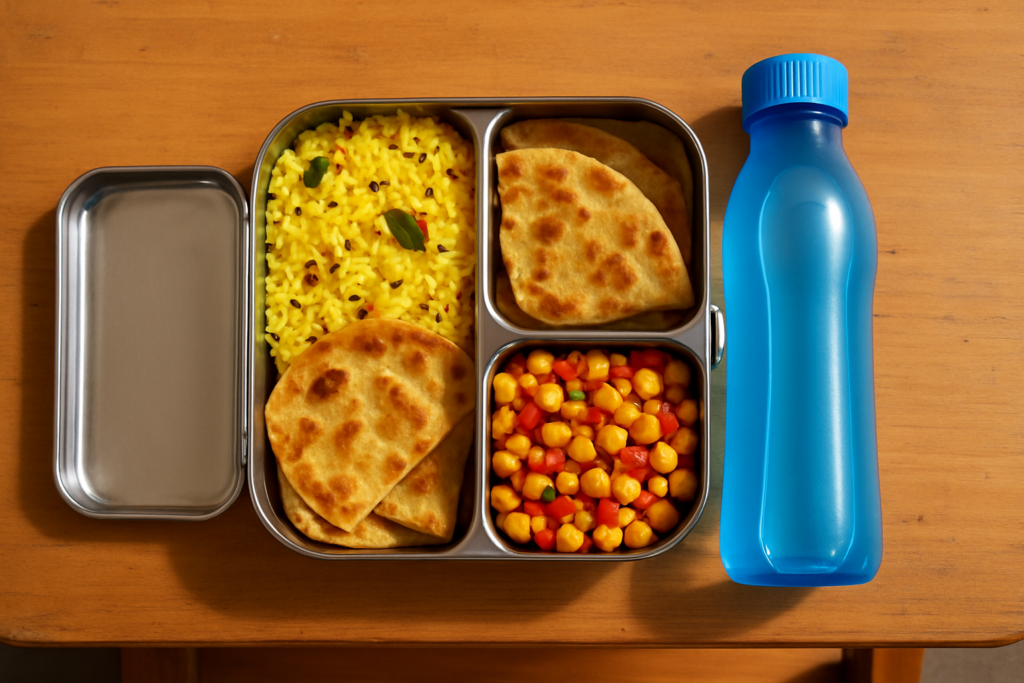
The best Indian tiffin box recipes for kids are dry or semi-dry dishes that hold texture for 4–6 hours without refrigeration: stuffed parathas, vegetable pulao, dry aloo sabzi, mini idlis with chutney in a separate container, corn poha, and cheese-stuffed chapati rolls. Avoid gravies, raw salads, and curd-based dishes in warm weather.
The short version
- Pack only dry or semi-dry preparations — gravies leak and turn soggy within an hour.
- Use stainless steel tiffin boxes with locking lids; silicone-sealed compartments keep chutneys separated.
- Cook rice and parathas slightly firmer than usual so they do not turn mushy by lunchtime.
- Avoid curd, raw cut fruit, and coconut-heavy chutneys in warm weather — they sour quickly.
- Repeat only once a week maximum; variety is the single biggest factor in whether the box comes home empty.
- Involve the child in choosing from a weekly menu — self-selected food gets eaten at higher rates.
Why tiffin food fails (and how to prevent it)
A school tiffin box sits unrefrigerated for three to six hours in a bag that may be sitting in sunlight. The two mechanisms that ruin most lunches are moisture migration and starch retrogradation.
Moisture migration happens when a wetter component — dal, gravy, or even a juicy tomato — releases water that is absorbed by bread, rice, or a dry snack. Aloo paratha becomes a soggy disc; poha turns into a paste. The fix is physical separation: a two- or three-compartment box, or chutneys packed in a small screw-top container inside the main box.
Starch retrogradation is what makes rice and chapati turn hard and chewy when they cool. Cooked starch molecules re-crystallise as temperature drops. Wrapping parathas in a cotton cloth or foil before placing them in the box slows this significantly because it traps steam. For rice dishes, a small amount of added fat — a teaspoon of ghee stirred in before packing — coats the starch granules and dramatically slows hardening.
A third issue is oxidation of colour: green vegetables like peas or spinach turn grey-olive because chlorophyll degrades in acidic or warm conditions. Blanching briefly, then finishing in a dry sabzi with minimal lemon, keeps colour more stable.
The 30 Indian tiffin box recipes for kids
These are grouped by base category so you can rotate across the week without repeating textures.
Paratha and chapati rolls (1–8)
- Aloo paratha — The stuffing must be completely dry; any moisture from boiled potato steams the bread from inside and makes it gummy. Mash potato while hot, let it cool, then mix in cumin, dried mango powder, and green chilli. Pack with a small jar of homemade pickle rather than curd.
- Paneer paratha — Grated paneer releases very little water, making it one of the most travel-stable stuffings. Add ajwain to the dough for subtle flavour and to aid digestion.
- Mixed vegetable paratha — Grate carrot, beetroot, and cabbage; squeeze out all water firmly before mixing into the dough. The vegetables go into the dough itself, not as stuffing, so there is no pocket that can burst.
- Mooli paratha — Squeeze grated radish until almost bone-dry before using. The water-removal step is not optional; skip it and you get a steamed, limp paratha within 30 minutes of packing.
- Chapati pinwheel rolls — Spread a thin layer of hummus or homemade green chutney on a warm chapati, lay grated cheese and finely chopped sweet pepper, roll tightly, and slice into 2 cm rounds. These look fun and stay compact without a separate container.
- Cheese and corn chapati roll — Stir-fry corn kernels with a pinch of cumin and salt until moisture evaporates. Roll inside chapati with grated cheese. The cheese melts slightly in the warm box and acts as a binder.
- Besan chilla roll — Make thin besan pancakes (besan, water, salt, turmeric) on a well-seasoned pan. Roll with grated carrot and paneer. Higher protein than a plain chapati roll, and the gram flour surface resists sogginess better than wheat.
- Leftover dal paratha — Thick, nearly dry leftover dal kneaded directly into the flour produces a protein-enriched dough with no separate stuffing to leak. Finish on a tawa with minimal ghee.
Rice and pulao boxes (9–14)
- Vegetable pulao — Use basmati; its lower starch content means grains stay separate longer than short-grain rice. Add a teaspoon of ghee before packing. Whole spices (bay leaf, cardamom) are removed before packing to avoid a child biting into them.
- Lemon rice — A South Indian classic that actually improves at room temperature as the flavour deepens. The turmeric, curry leaves, and mustard tempering act as mild preservatives. Use day-old rice for a firmer texture.
- Curd rice (winter only) — Extremely popular in South Indian households but only safe in cool weather or with a good insulated container. In summer, the curd ferments further and turns uncomfortably sour by lunch. A small chilled icepack alongside extends the safe window.
- Tomato rice — Cook the masala completely dry before mixing in cooked rice. Any remaining moisture is the enemy. A well-made tomato rice should look slightly glistening, not wet.
- Bisi bele bath (dry version) — The traditional Karnataka dish is quite wet. For tiffin, reduce the water by 30% and increase the lentil ratio so it sets into a firm, spoonable texture that does not slosh.
- Peas pulao with paneer — Pan-fry paneer cubes until golden before adding; this gives them a skin that resists the moisture inside the box and prevents them from becoming spongy by lunchtime.
Poha, upma, and grain dishes (15–19)
- Corn poha — Use thick poha flakes; thin poha turns to mush quickly. Rinse briefly, drain immediately, and cook on high heat to drive off all surface water before adding vegetables. Corn kernels add chewiness that makes the dish feel more substantial at lunchtime.
- Vegetable upma — Slightly undercooked semolina continues to absorb moisture in the box. Cook until the rava is fully dry and pulling away from the pan sides. A teaspoon of ghee stirred in keeps grains separate.
- Oats upma — Rolled oats hold shape better than semolina in a closed box and provide more fibre. Temper with mustard, curry leaves, and finely diced carrot. The result looks and tastes similar to semolina upma but travels more cleanly.
- Sabudana khichdi — Works well if the sabudana is soaked correctly: exactly enough water that all of it absorbs. Wet, sticky sabudana becomes an unappetising lump when it cools. Add roasted peanuts just before packing for crunch that holds for a couple of hours.
- Quinoa vegetable pulao — Quinoa does not retrogradate the way rice starch does, so it stays fluffy and separate for longer. Cook with the same spices as a regular pulao. A practical choice for children who eat lunch very late.
Idli, dosa, and South Indian formats (20–23)
- Mini idlis with dry chutney powder — Full-size idlis collapse under their own weight in a box. Mini idlis — made in a dedicated mould or cut from a standard idli — stay firmer. Pack chutney powder (idli podi) in a corner with a small spoon of sesame oil; the child mixes at the table.
- Rava idli — Faster than fermented idli and slightly denser, which means better structural integrity in transit. Eno-leavened rava idlis are soft when fresh but hold shape well in a compartment box.
- Set dosa with coconut chutney (winter) — Thicker than paper dosa, set dosa stays acceptably soft longer. Avoid coconut chutney in warm weather; it sours in under two hours without refrigeration. Substitute a small amount of tomato chutney cooked until very thick.
- Pesarattu (green moong dosa) — No fermentation needed; blend soaked moong, ginger, green chilli, and salt. These are denser than rice-based dosas and do not dry out or crack as badly. Roll tightly with ginger chutney inside.
Dry sabzis and finger foods (24–30)
- Dry aloo sabzi with jeera — Boil and cool potatoes completely before pan-frying; this reduces interior moisture. The outer surface should be lightly crisped before packing. Avoid adding fresh coriander inside the box — it wilts and smells sulphurous by lunchtime. Pack a small pinch separately if desired.
- Stuffed mini capsicums — Fill baby capsicums with spiced paneer or potato mixture, roast at 200°C for 12 minutes. They hold shape and are a dramatic change from standard tiffin. Cool completely before packing to prevent condensation inside the box.
- Masala corn — Boiled or roasted corn kernels tossed with butter, chaat masala, and lime zest (not juice — juice makes it watery). Travels well in a sealed compartment and is popular with almost all age groups.
- Bread upma — Day-old bread cubed and toasted dry before adding the tempering; this prevents it from absorbing moisture in the box. A useful last-minute option when other preparations were not possible the previous evening.
- Mini aloo tikki — Shape small, shallow tikkis — 1 cm thick — and pan-fry until a firm crust forms on both sides. A thicker tikki steams itself inside a closed box; a thin, well-crisped one holds better. Pack ketchup in a squeeze sachet.
- Moong dal chilla — Soak yellow moong dal for 3 hours, blend to a smooth batter, add ginger and green chilli, cook thin. High protein, gluten-free, and holds texture at room temperature far better than wheat-based options.
- Paneer bhurji on chapati — Cook the bhurji until completely dry — no visible moisture pooling in the pan. Spread on a cooled chapati and roll tightly in foil or butter paper. The foil layer retains warmth and prevents the chapati from drying and cracking.
Packing rules that apply to every recipe
- Cool completely before closing the lid. Packing hot food creates trapped steam that condenses on the lid and rains back down, making everything wet. If time is tight, spread food on a wide plate for five minutes.
- Ghee is a preservative in this context. A small amount of fat on the surface of rice, paratha, or sabzi creates a barrier that slows moisture loss and starch hardening.
- Salt lightly. Children often eat less if food is overseasoned, but also — salt draws moisture out of vegetables during storage, accelerating sogginess.
- Monday and Friday are the hardest days. Children are often more distracted. A familiar favourite on those days improves consumption rates more than a novel recipe.
- Seasonal adjustment matters. In Indian summers (March–June), avoid anything with curd, fresh coconut, or raw onion. In winter, the same items are perfectly stable for 4–5 hours.
If the tiffin keeps coming back uneaten
Before changing the recipes, check three non-recipe causes:
- Lunch break timing. If the child has only 15 minutes, complex foods that require unwrapping, mixing, or dipping get abandoned. Simple formats — rolls, pinwheels, rice in a spooning box — get eaten faster.
- Peer effect. Children often eat what they see others eating. A food that looks unfamiliar or smells strongly of tempering in a confined space gets socially self-edited. Milder seasoning and compact visual formats help.
- Box mechanics. A locking lid a child cannot open alone means the food stays in the box. Test every new tiffin box yourself before sending it.
Related questions
How do I keep paratha soft in the tiffin box for 4–5 hours?
Wrap each paratha individually in a cotton cloth or aluminium foil immediately after cooking. The trapped steam keeps the surface supple. An insulated tiffin bag extends this by slowing the temperature drop. Avoid stacking parathas directly on each other without a separator — they compress and become gummy.
Which Indian foods are not suitable for a school tiffin box?
Avoid gravies (dal makhani, paneer butter masala), curd-based dishes in warm weather, raw cut salads without acid, fresh coconut chutney in summer, and anything fried that must stay crispy — it will not. Deep-fried items like puri and bhatura also become greasy and heavy-smelling in a sealed box.
Can I pack idli or dosa in a tiffin box without it drying out?
Idli stays acceptably soft for about three hours if wrapped in a damp cotton cloth inside the box. After that, the starch firms noticeably. Mini idlis hold better than large ones because of lower internal moisture load. Dosa dries and cracks unless rolled with a moist filling; a rolled dosa with paneer or potato filling is far more tiffin-stable than a flat one.
What is a healthy but quick Indian tiffin box recipe for busy mornings?
Leftover chapati from dinner, spread with a thin layer of peanut butter and a drizzle of honey, rolled and sliced into pinwheels, packs in under three minutes and requires no morning cooking. Alternatively, cooked lemon rice from the previous evening — reheated briefly and given a fresh tempering squeeze — packs well and tastes better the next day as the flavours have had time to develop.
At what age can Indian spices be introduced in a child’s tiffin box?
Most Indian paediatric dietary guidance suggests introducing mild whole spices — cumin, coriander, turmeric — from around 8–10 months during home meals. For a school tiffin where the child cannot easily drink water, keep spice heat (chilli) very low until age 4–5, and even then, calibrate to the individual child’s tolerance. Aromatic spices like jeera and ajwain are generally well-tolerated and aid digestion; the concern is specifically with capsaicin heat, not spice flavour broadly.