Kashmiri Dum Aloo Recipe: Authentic No-Onion No-Garlic Version with the Real Whole-Spice Technique
Kashmiri Dum Aloo: Authentic No-Onion No-Garlic Version with the Real Whole-Spice Technique
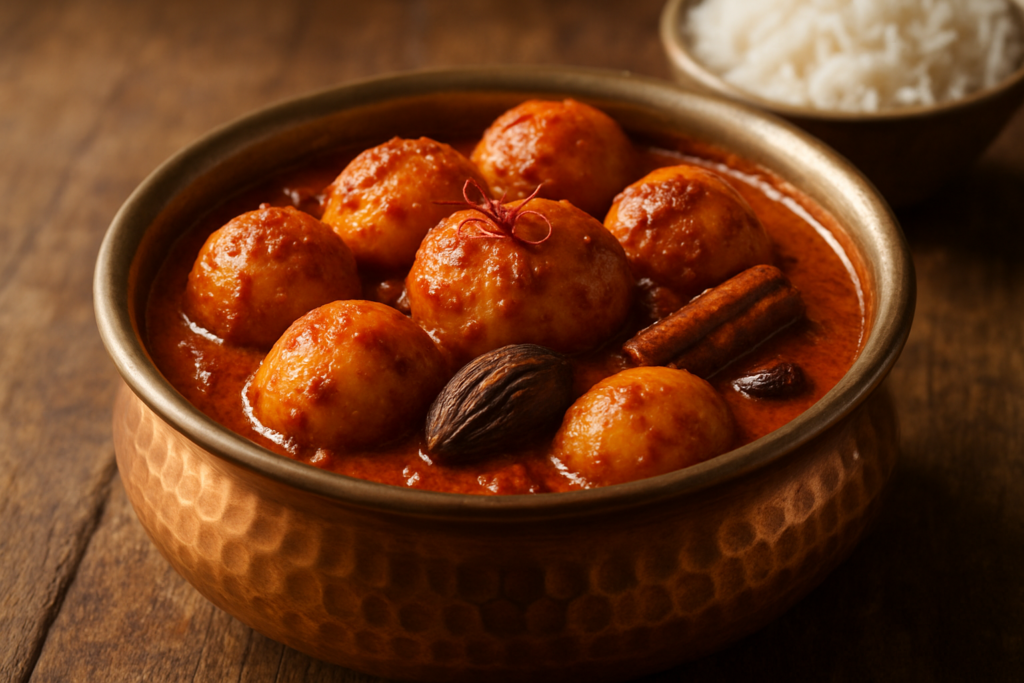
Kashmiri dum aloo is a no-onion, no-garlic potato curry from the Kashmir Valley, slow-cooked in a spiced yogurt gravy fragrant with fennel, dry ginger, and whole spices. The absence of onion and garlic is not a compromise — it is the point. This post walks through the complete whole-spice technique so the dish comes out with its characteristic brick-red colour and layered warmth.
What makes the Kashmiri dum aloo recipe so different from other aloo gravies is that flavour comes entirely from whole spices, fennel powder, dry ginger, yogurt, and mustard oil. Kashmiri Pandits traditionally cook without onion and garlic, and the dish is actually more complex and layered because of it.
If you’ve been searching for an authentic Kashmiri aloo recipe that doesn’t ask you to cheat with shortcut spice powders, this is it. The whole-spice technique — the real one — is covered step by step. It takes about an hour.
Why You’ll Love This Kashmiri Dum Aloo Recipe
- No onion, no garlic — and you won’t miss them: The whole spices, fennel powder, dry ginger, and mustard oil create a depth of flavour that is completely satisfying on its own.
- Beginner-friendly technique: If you can deep-fry potatoes and whisk yogurt, you can make this. Every step includes sensory cues so you know exactly what to look for.
- Restaurant quality at home: This is the dish that gets ordered at every Kashmiri restaurant, but it’s genuinely simple to make — and infinitely better when fresh.
- Perfect for fasting days and Jain diets: Since there’s no onion or garlic, it fits beautifully into a sattvic or Jain meal plan with very minor adjustments.
- Stores and reheats beautifully: The gravy actually deepens in flavour overnight, so leftovers are arguably better than the first serving.
Prep Time: 20 minutes | Cook Time: 40 minutes | Total Time: 60 minutes | Servings: 4
Kashmiri dum aloo is a no-onion, no-garlic potato curry from the Kashmir Valley made with small potatoes slow-cooked in a spiced yogurt gravy fragrant with fennel, dry ginger, and whole spices. It’s rich, slightly tangy, and deeply warming — perfect with rice or Kashmiri sheermal.
Ingredients You’ll Need for This Authentic Kashmiri Dum Aloo
A few ingredients here are non-negotiable for authenticity, and a few have easy substitutes for those cooking outside India. Both are noted below.
For the Potatoes
- 500g small baby potatoes — Try to use genuinely small ones, roughly walnut-sized. If you can only find larger potatoes, halve them after boiling. Baby Yukons work beautifully outside India.
- Mustard oil for deep frying — Please don’t skip this. Mustard oil gives the dish its characteristic pungency. If you absolutely cannot find it, use a neutral oil plus ¼ tsp mustard powder stirred in at the end, but it won’t be quite the same.
- Salt for boiling
Whole Spices (The Real Kashmiri Dum Aloo Spices List)
- 4 black cardamom pods (badi elaichi)
- 6 green cardamom pods (choti elaichi)
- 1 small cinnamon stick (about 2 inches)
- 4 cloves
- 2 bay leaves
- 1 tsp whole black peppercorns
- ½ tsp shahi jeera (caraway seeds / black cumin) — this is different from regular cumin and is key to the Kashmiri flavour profile. Find it at any Indian grocery or online.
For the Spiced Yogurt Gravy
- 1 cup full-fat yogurt — Must be full-fat. Low-fat yogurt will curdle. If you’re in the UK or US, full-fat Greek yogurt works well; thin it with 2 tbsp water first.
- 2 tsp Kashmiri red chilli powder — This is mild and gives the gorgeous brick-red colour without fiery heat. Not a substitute for regular chilli powder. Available at Indian stores or Amazon. If you’re abroad and can’t find it, use 1½ tsp sweet paprika + ½ tsp mild chilli powder.
- 2 tsp fennel powder (saunf powder) — The soul of this dish. Grind whole fennel seeds fresh if possible; the difference is remarkable.
- 1½ tsp dry ginger powder (soonth) — Another Kashmiri signature. Don’t use fresh ginger here; the dry version gives a different warmth.
- ½ tsp asafoetida (hing) — This replaces the onion-garlic base and gives the dish its savoury depth. Use gluten-free hing if needed (some brands contain wheat flour).
- ¼ tsp turmeric powder
- Salt to taste
- 3 tbsp mustard oil for the gravy
- ½ cup water (adjust for consistency)
How to Make Kashmiri Dum Aloo — Step-by-Step
- Boil the potatoes: Wash the baby potatoes well (leave the skin on for now — it helps them hold together when frying). Place them in a pot, cover with cold water, add a generous pinch of salt, and bring to a boil. Cook for 10-12 minutes until a knife slides in with slight resistance — you want them just cooked through, not mushy. Drain and let them cool completely. Once cool, peel the skin off gently. It should come off in strips.
- Prick the potatoes: Using a fork or a toothpick, prick each potato all over — about 8-10 times. This step allows the spiced oil and gravy to penetrate the potato rather than just coating the outside.
- Heat the mustard oil: Pour enough mustard oil into a kadhai or deep pan to deep-fry the potatoes (about 2 cups). Heat it on medium-high until it starts to smoke lightly — this is important. Raw mustard oil has a sharp, almost harsh smell. Heating it to smoking point then reducing heat mellows it and removes the bitterness. Once it smokes, reduce to medium heat. This step is called “heating the oil to its smoking point” and is standard practice in Kashmiri and Bengali cooking.
- Fry the potatoes: Carefully slide in the pricked, peeled potatoes in batches. Don’t overcrowd the pan — the temperature will drop and they’ll absorb too much oil. Fry on medium heat, turning occasionally, until they’re deep golden-brown and slightly wrinkled on the outside — about 6-8 minutes per batch. The wrinkled skin is your cue; it means moisture has left the potato and the inside is now dense and flavour-ready. Drain on kitchen paper and set aside.
- Prepare the spiced yogurt mixture: While the potatoes cool slightly, whisk together the yogurt, Kashmiri red chilli powder, fennel powder, dry ginger powder, and turmeric in a bowl. Whisk it until completely smooth with no lumps — this step prevents curdling later. Set aside.
- Bloom the whole spices: In a heavy-bottomed pan or the same kadhai (wipe it out), heat 3 tbsp mustard oil over medium heat until it smokes, then reduce to medium-low. Add the asafoetida and let it sizzle for 10 seconds — you’ll smell it immediately, that savoury, almost onion-like aroma. Then add the black cardamom, green cardamom, cinnamon, cloves, bay leaves, whole peppercorns, and shahi jeera all at once. Stir continuously for 60-90 seconds. The spices will crackle, pop, and turn fragrant. You’re listening for the crackling to slow down and watching for the green cardamom to puff slightly — that’s when the essential oils have been released.
- Add the yogurt on low heat — the critical step: Reduce the heat to the lowest setting your stove allows. Now add the whisked yogurt mixture to the spices. The moment it hits the pan, stir vigorously and continuously. This is non-negotiable — if you add yogurt to high heat and walk away, it will split into white curds and yellow liquid, and the dish is ruined. Keep stirring on low heat for 4-5 minutes until the yogurt has darkened slightly in colour, the raw smell has cooked off, and the oil begins to separate at the edges. Little orange pools forming around the sides are your cue that the masala is cooked.
- Add the fried potatoes: Gently nestle the fried potatoes into the gravy, turning them to coat well. Add ½ cup warm water, stir gently, and taste for salt. The gravy should be thick enough to coat the back of a spoon but pourable — think of the consistency of a good dal tadka. Adjust water if needed.
- The Dum — slow cooking: Cover the pan with a tight-fitting lid. Place a heavy tawa (griddle) or a folded kitchen towel under the pan to diffuse heat, and put the pan on your lowest flame. Let the potatoes cook on dum (steam) for 15-20 minutes. Don’t lift the lid more than once during this time — you’re trapping the steam inside, and that’s what makes the potatoes melt-in-the-mouth and allows them to absorb the gravy deeply. After 15 minutes, open the lid — the gravy should have thickened, the colour deepened to a gorgeous rust-red, and the potatoes should have taken on the colour of the gravy.
- Final check and serve: Taste once more for salt and spice. If you want more depth, add an extra pinch of fennel powder and stir gently. Garnish with a few whole coriander seeds or a thread of saffron dissolved in warm milk. Serve hot.
Tips for Perfect Kashmiri Dum Aloo Every Time
- Baby potatoes are non-negotiable for texture: Larger potato chunks just don’t behave the same way. They go mushy. If you can’t find true baby potatoes, use medium potatoes cut into large chunks — but boil and fry them slightly less than the recipe states.
- Never add yogurt on high heat: Low heat + constant stirring = silky gravy. High heat = cottage cheese floating in oil. Not what we want.
- Grind your own fennel powder: Fresh-ground fennel is sweeter and more fragrant than store-bought powder that’s been sitting on a shelf. It takes 30 seconds in a spice grinder and the difference is worth it.
- The tawa under the pan matters: Traditional dum cooking uses a sealed vessel over indirect heat. Placing a tawa between your gas burner and the pot distributes heat evenly and prevents the bottom of the gravy from scorching while the top is still steaming. If you have a diffuser, use that instead.
- Let it rest before serving: Like most Indian gravies, Kashmiri dum aloo improves with a 10-minute rest after cooking. The potatoes absorb a little more gravy and the flavours settle.
Variations of the Kashmiri Dum Aloo Recipe
Jain Version
This recipe is already no-onion no-garlic, which makes it Jain-friendly as written. Just ensure your asafoetida (hing) is pure asafoetida without wheat flour as a filler — some brands use it as a binder. Look for “pure hing” or “gluten-free hing” labels. Also skip the potatoes if you’re following strict Jain principles that avoid root vegetables, and substitute with raw banana pieces or raw jackfruit — though it won’t be the same dish.
Vegan Version
Substitute the yogurt with full-fat coconut yogurt or unsweetened cashew yogurt. The flavour profile will shift — coconut adds a mild sweetness — but it works surprisingly well and the whole-spice technique still shines through.
Gluten-Free Version
The recipe is naturally gluten-free as long as you use pure hing. Double-check your spice powders for anti-caking agents that sometimes contain wheat. Everything else is inherently gluten-free.
Lighter Version (Less Oil)
I know purists will disagree with me here, but you can bake or air-fry the potatoes instead of deep-frying them. Toss the pricked, peeled potatoes with 1 tbsp mustard oil, some salt, and air fry at 200°C for 18-20 minutes until golden. The texture won’t be quite as dense or flavour-absorbent, but it’s a reasonable weeknight shortcut.
What to Serve With This Kashmiri Dum Aloo
In Kashmir, this dish is traditionally served with plain steamed Kashmiri rice or a simple rice pulao — the mild, fluffy rice is the perfect foil for the bold, spiced gravy. Here are the best pairings:
- Steamed basmati rice: The classic. Just plain rice, nothing else. Let the dum aloo be the hero.
- Tandoori roti or phulka: If you want bread, keep it simple. A buttered roti torn to scoop up the gravy is deeply satisfying. Avoid naan — it’s too heavy here and fights with the spices.
- Raita or plain yogurt on the side: A simple boondi raita or even a bowl of plain full-fat yogurt cools the palate between bites. A simple mooli raita works beautifully alongside this too — the sharpness of radish plays well against the warm spices.
Storage and Reheating
Refrigerator: Store in an airtight container for up to 3 days. The gravy will thicken considerably in the fridge as the starches from the potato absorb it — this is normal and expected. The flavour on day two is, if anything, even better than day one.
Freezer: You can freeze this for up to a month. Freeze in portions. Thaw overnight in the fridge before reheating.
Reheating: Always reheat on a low flame with a splash of water (2-3 tbsp) to loosen the gravy. Stir gently — these potatoes are tender and will break if you’re aggressive. Do not microwave on full power; use 50% power in 90-second bursts, stirring between each. The whole spices in the gravy will continue to infuse on reheating, so the flavour keeps developing. A small pat of butter stirred in at the end of reheating makes it taste freshly made.
Frequently Asked Questions About Kashmiri Dum Aloo Recipe
Why is my Kashmiri dum aloo gravy split or curdled?
This almost always happens because the yogurt was added to the pan on too high a heat, or the yogurt wasn’t whisked smooth before adding. Always reduce to the lowest flame before adding yogurt, and whisk it completely smooth with the dry spices first. Also, room-temperature yogurt is less likely to curdle than cold yogurt straight from the fridge — let it sit out for 20 minutes before using.
Can I make Kashmiri dum aloo without deep frying the potatoes?
Yes, absolutely. Air-frying or shallow-frying in a pan works — see the lighter variation above. The deep-fried version gives you a denser, more textured potato that absorbs gravy differently, but the air-fried version is perfectly delicious.
What makes Kashmiri dum aloo different from Punjabi dum aloo?
The answer is everything. Punjabi dum aloo uses onion, garlic, tomatoes, and a heavier, richer gravy base. Kashmiri dum aloo uses none of those — the flavour comes entirely from whole spices, fennel, dry ginger, and yogurt. The colour of Kashmiri dum aloo is a striking brick-red from Kashmiri chilli powder, while Punjabi dum aloo tends to be a deeper, tomato-based red. The Kashmiri version is also lighter on the stomach despite being deeply flavourful. The turmeric and whole spices also bring significant health benefits to the dish.
Can I use regular chilli powder instead of Kashmiri chilli powder?
That’s worth avoiding. Kashmiri chilli powder is prized for its deep red colour and mild heat — it’s almost more of a colouring agent than a heat provider. Regular chilli powder will make the dish much spicier and won’t give you that characteristic brick-red colour. If you genuinely can’t find it, the best substitute is sweet paprika (for colour) mixed with a very small amount of cayenne (for mild warmth) in roughly a 3:1 ratio.
Is asafoetida (hing) necessary if I don’t have it?
In a recipe without onion or garlic, hing is doing a lot of heavy lifting — it provides that savoury, almost allium-like depth that anchors the dish. Skipping it entirely will make the dish feel a little flat. That said, if you truly don’t have it, increase the fennel powder by ½ tsp and add a tiny pinch of cumin — it won’t be the same, but it’ll still be very good. Most large supermarkets outside India carry hing in the “World Foods” aisle these days, or you can order it online easily.