The Complete Guide to Indian Dal Recipes: 25 Lentil Dishes from Every Region
- Prep Time: 10–20 minutes (varies by dal)
- Cook Time: 20–45 minutes (pressure cooker cuts this significantly)
- Total Time: 30–65 minutes
- Servings: 4 per recipe
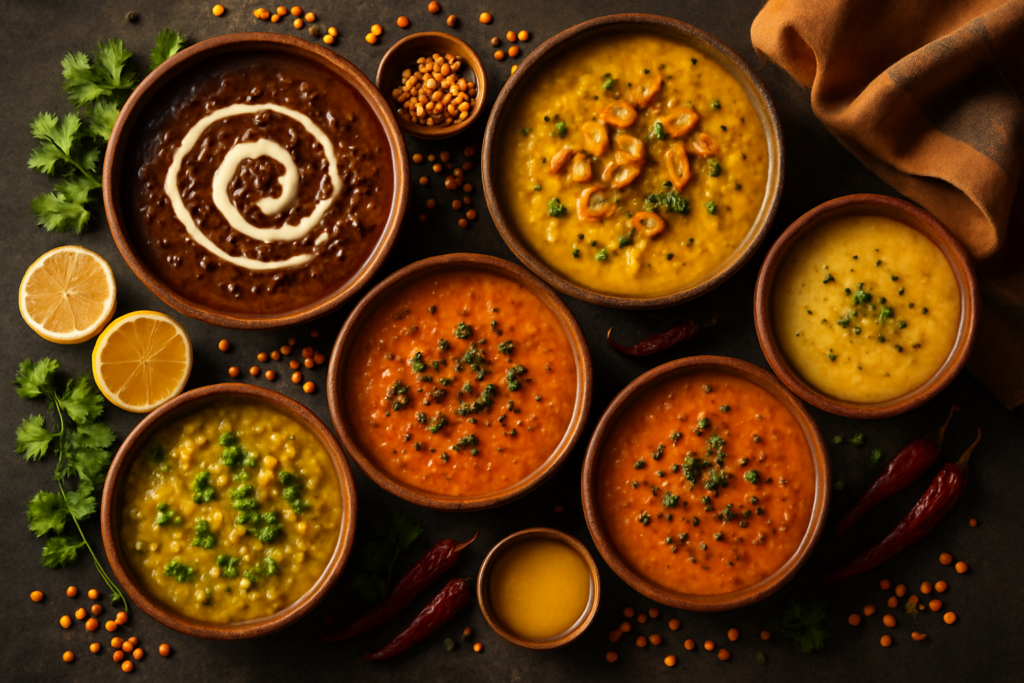
Indian dal recipes are lentil-based dishes cooked with spices and finished with a sizzling tadka (tempering) of ghee, mustard seeds, and aromatics. From the smoky, buttery dal makhani of Punjab to the jaggery-sweet Gujarati dal, this guide covers 25 regional lentil dishes that are the true soul of Indian cooking — humble, nourishing, and endlessly variable.
This is the most comprehensive guide to Indian dal recipes on this site. Whether you’re a first-generation Indian cooking abroad and missing a taste of home, a curious home cook wanting to explore beyond the standard tarka dal, or a seasoned cook hunting for a specific regional recipe, this guide covers 25 distinct dals from every corner of India — with techniques, substitutions, and the reasoning behind every step.
Why You’ll Love This Dal Recipe Collection
- True regional diversity: We’re not repeating the same “add cumin and turmeric” formula 25 times. Each dal here has a genuinely distinct character, from the coconut-kissed dals of Kerala to the mustard-oil-tempered dals of Bengal.
- Beginner to advanced: Every recipe is written so a first-timer can follow it, but includes the insider tricks that’ll make even experienced cooks stop and say “oh, so THAT’S why mine never tasted quite right.”
- Honest about shortcuts: These recipes use a pressure cooker. The traditional method is included too, but a pressure cooker is a perfectly legitimate tool for weeknight dal.
- Diaspora-friendly: Not every ingredient is easy to find outside India. Substitutions are included throughout for cooks in Ontario, Scotland, or anywhere else far from a well-stocked Indian grocery.
- Deeply nourishing: Lentils are one of the most complete plant-based proteins on the planet. Eating dal every day isn’t a sacrifice — it’s one of the best things you can do for yourself.
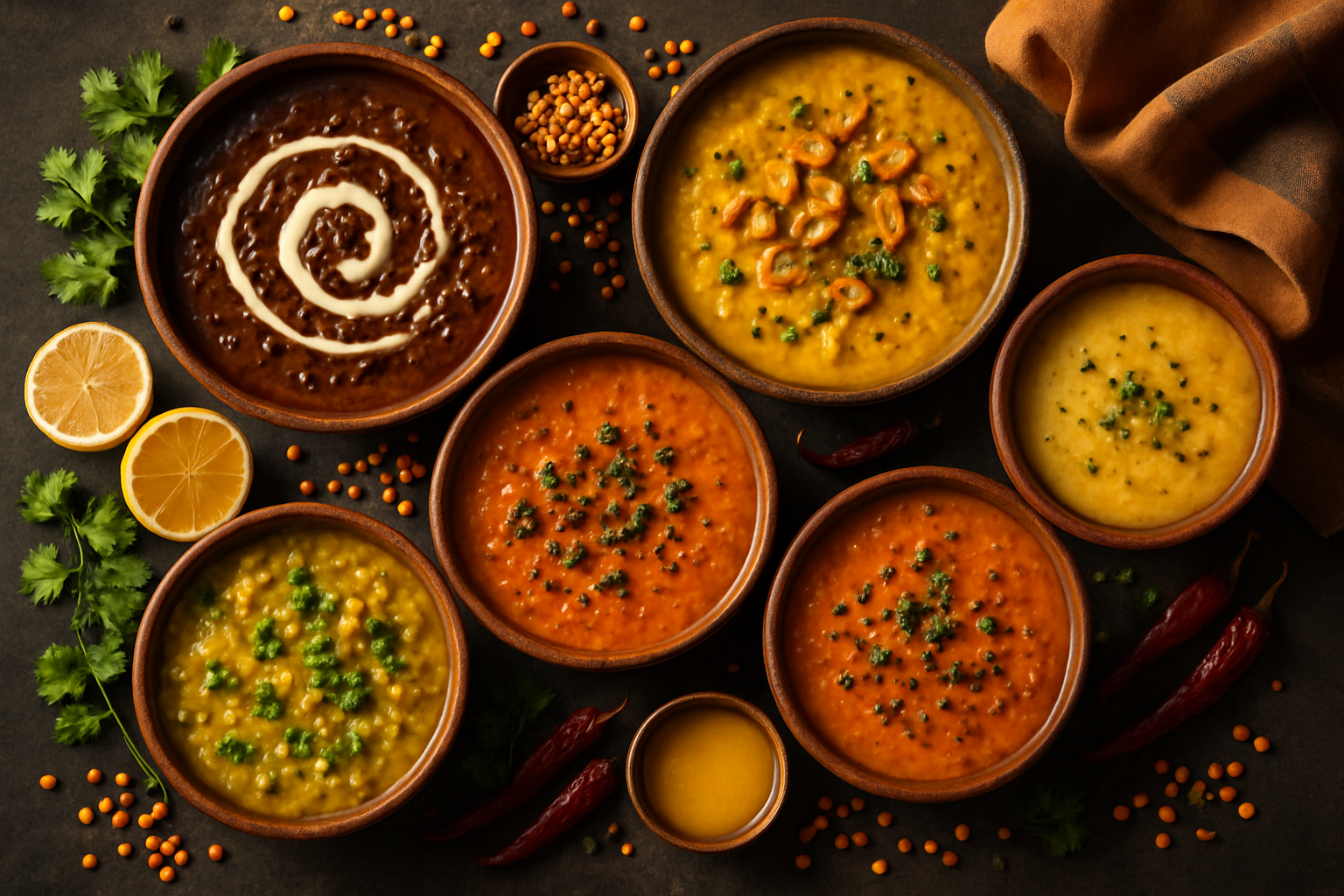
Understanding the Types of Dal in India: Your Lentil Pantry
Before we get into the recipes, here’s a guide to the core lentils. Understanding what each one does will make you a better cook, not just a recipe-follower.
The Essential Indian Lentils (and What to Buy If You’re Abroad)
- Toor Dal (Arhar / Split Pigeon Peas): The everyday workhorse of Indian cooking. Used in sambar, Gujarati dal, and dal tadka. Creamy when cooked, with a gentle earthiness. Diaspora substitute: Find it at any South Asian grocery store globally. In a pinch, yellow split peas work but lack the same depth.
- Masoor Dal (Red/Pink Lentils): The fastest-cooking dal — no soaking needed, done in 15 minutes. The red ones turn golden when cooked. Available everywhere, including mainstream supermarkets in the UK, Canada, and Australia as “red lentils.”
- Moong Dal (Split Yellow Mung Beans): Light, easily digestible, the dal you give sick people and babies. Whole moong is green; split and skinned is yellow. Great for khichdi and moong dal tadka.
- Chana Dal (Split Bengal Gram): Holds its shape beautifully when cooked. Slightly nutty, used in chana dal fry and as a spice in South Indian tadkas. Diaspora substitute: Split chickpeas. NOT canned chickpeas — those are kabuli chana, a completely different creature.
- Urad Dal (Black Lentils / Split White Lentils): Whole black urad is what makes dal makhani silky and dal bukhara legendary. Split white urad is the base of idli and dosa batter. Rich, slightly mucilaginous texture that no other dal can replicate.
- Whole Masoor (Brown/Green Lentils): Used in certain Bengali and Parsi recipes. Holds shape well. French green lentils are a reasonable substitute.
- Rajma (Kidney Beans): Technically a bean, not a lentil, but it belongs in this conversation. The pride of Punjab. Red kidney beans from any supermarket work perfectly.
- Moth Dal (Matki): Used in Maharashtrian misal pav. Slightly chewy even when cooked. Harder to find outside India — use whole moong as a substitute.
The 25 Best Indian Dal Recipes, Region by Region
North India: The Rich, Robust Dals
1. Dal Makhani (Punjab) — The Queen of All Dals
If there’s one dal that’s conquered the world, it’s this one. Real dal makhani — the kind made at Dal Bukhara in Delhi or Moti Mahal — involves whole black urad simmered on a slow fire for hours, sometimes overnight. The version here takes a shortcut with a pressure cooker but still relies on the most important ingredient: time. The final simmer in butter and cream cannot be rushed. I know purists will disagree, but adding a tiny pinch of smoked paprika to the tadka when a clay pot isn’t available gives it that faintly smoky depth that’s otherwise impossible on a gas burner.
Key Ingredients: Whole black urad dal, rajma, butter, cream, tomato, ginger-garlic paste, Kashmiri red chilli powder, kasuri methi.
- Soak whole black urad dal and rajma overnight (at least 8 hours). The quick-soak method produces a noticeably inferior texture.
- Pressure cook the soaked dal and rajma with salt, water, and a pinch of turmeric for 6–8 whistles on medium heat until both are completely soft — when you press a grain between your fingers, it should mash without any resistance.
- In a heavy-bottomed pan (a cast iron kadai works well), melt 2 tablespoons of butter on medium heat. Add finely minced ginger and garlic and fry until the raw smell completely disappears and it turns lightly golden — about 3 minutes.
- Add a generous spoonful of tomato purée and cook it down until the oil starts to separate at the edges of the masala — this is the sign the base is ready.
- Add Kashmiri red chilli powder (it gives colour without excessive heat), coriander powder, and a pinch of garam masala. Stir for 30 seconds.
- Add the cooked dal into this masala, stir well, and add enough water to get a thick, porridge-like consistency. Now comes the crucial step: simmer on the lowest possible flame for at least 30–40 minutes, stirring every 5 minutes so the bottom doesn’t catch.
- Finish with a swirl of cream, a generous knob of butter, and crushed kasuri methi rubbed between your palms. Taste for salt. Serve with homemade butter naan.
2. Dal Tadka (North India’s Everyday Hero)
Dal tadka is toor dal or masoor dal (or a mix of both, which works particularly well) cooked until soft and then hit with a loud, sizzling tadka of ghee, cumin, garlic, dried red chillies, and a pinch of hing. The smell of that tadka hitting the dal is one of the most comforting smells in Indian cooking.
Key Ingredients: Toor dal or masoor dal, ghee, cumin seeds, garlic, dried red chillies, hing (asafoetida), turmeric, tomato, onion.
- Wash and pressure cook ½ cup toor dal and ¼ cup masoor dal with 1.5 cups water, ½ tsp turmeric, and salt for 3–4 whistles. Open the cooker, whisk the dal smooth, and add water if it’s too thick — it should flow like a loose porridge.
- In a small pan, heat 1.5 tablespoons of pure ghee until it shimmers. Add 1 tsp cumin seeds and let them splutter and turn a shade darker.
- Add 4–5 finely chopped garlic cloves and fry until golden and just beginning to crisp at the edges.
- Add 2 dried red chillies, a pinch of hing, and ½ tsp red chilli powder. This all happens in about 20 seconds — have the dal ready because this tadka moves fast.
- Pour this sizzling tadka directly over the dal. It should make a dramatic hiss and release an intense aroma. Finish with fresh coriander and a squeeze of lemon.
3. Rajma Masala (Punjab) — The Sunday Dal
In most North Indian homes, Sunday means rajma chawal. The key is a deeply cooked onion-tomato masala — not a quick sauté, but a proper bhuno until it’s nearly jammy and the oil floats free. Soak rajma overnight. Canned kidney beans work in an emergency but the texture is not the same.
Key Ingredients: Rajma (kidney beans), onion, tomato, ginger-garlic paste, whole spices (bay leaf, cloves, black cardamom), coriander-cumin powder, garam masala, ghee.
- Soak rajma overnight. Pressure cook for 8–10 whistles until beans are completely soft — a bean should crush between your thumb and forefinger with almost no pressure.
- In a heavy pan, heat 2 tbsp ghee or oil. Add whole spices and fry until fragrant. Add finely sliced onions and cook on medium-low heat for 15–18 minutes, stirring frequently, until they are deep golden — caramelized, not just translucent.
- Add ginger-garlic paste and cook for 3 more minutes. Add puréed tomatoes and cook until the masala is thick, dark, and the ghee surfaces — at least 12–15 minutes on medium heat.
- Add dry spice powders, stir for a minute, then add the cooked rajma along with some of its cooking liquid.
- Simmer for 20–25 minutes until the gravy thickens and coats the beans. Finish with garam masala and coriander. Serve with steamed jeera rice.
4. Dal Bukhara (Restaurant-Style Slow-Cooked Urad Dal)
Dal Bukhara is dal makhani’s more austere, more intensely flavoured cousin. No rajma, no cream in the cooking — just whole black urad, tomatoes, butter, and absolute patience. The original in Delhi cooks it for 18 hours. Three hours on the stovetop after pressure cooking produces a genuinely magnificent result. The texture becomes almost velvet.
5. Panchmel Dal (Rajasthan) — Five Lentils, One Bowl
Panchmel dal — also called panch ratna dal — is Rajasthani cooking at its most royal. Five different dals cooked together: toor, chana, moong, urad, and masoor, each bringing its own personality. It’s tempered with ghee and a whole roster of spices. Serve it with dal baati churma for the full Rajasthani experience.
Key Ingredients: Equal parts toor, chana, whole moong, urad, and masoor dal; ghee, hing, whole red chillies, bay leaves, cloves, ginger, amchur (dry mango powder).
- Wash all five dals together. Soak for 30 minutes.
- Pressure cook with turmeric, salt, and water for 4–5 whistles. Whisk partially — some texture is desirable, not a completely smooth purée.
- Prepare a robust tadka with ghee, hing, whole red chillies, bay leaf, cloves, minced ginger, and a paste of onion-tomato-coriander-cumin. Cook this down thoroughly.
- Add the cooked dals, simmer for 15 minutes. Finish with amchur for a tart lift. This dal should be thick, not watery.
South India: Tart, Thin, and Deeply Spiced
6. Sambar (Tamil Nadu / Karnataka) — The Dal That’s Also a Soup
Sambar is a whole philosophy. Every household has their version and every household believes their version is the only correct one. Homemade sambar masala makes a genuine difference over the store-bought powder, though both options are given below.
Key Ingredients: Toor dal, tamarind, mixed vegetables (pearl onions, drumstick, tomato, brinjal are classics), sambar powder, mustard seeds, curry leaves, dried red chillies, coconut oil or sesame oil.
- Pressure cook toor dal until completely mushy — much softer than usual. Whisk it smooth.
- In a separate vessel, soak tamarind in hot water and extract a cup of tamarind water. Bring this to a boil with your vegetables, salt, turmeric, and sambar powder. Cook until vegetables are tender.
- Add the cooked dal to the tamarind-vegetable base. Bring to a simmer. The consistency should be thinner than a North Indian dal — it needs to seep into rice.
- Make a tadka in coconut oil or sesame oil: mustard seeds, dried red chillies, curry leaves, pearl onions until golden, and a pinch of hing. Add this to the sambar.
- Finish with fresh coriander. Taste — it should be simultaneously sour (tamarind), spicy, and slightly earthy. Add a tiny pinch of jaggery if the tamarind is very sharp.
7. Paruppu (Tamil Nadu) — Temple Dal
Paruppu is the simple, pure toor dal served as prasadam at Tamil temples and as an everyday meal with rice and ghee. No onion, no garlic. Just dal, turmeric, tomato, and a restrained tadka of mustard seeds, curry leaves, and dried chilli. The simplicity is the point. Eaten with a spoonful of ghee on hot rice, something so plain can be profoundly satisfying.
8. Kerala Parippu (Moong Dal with Coconut)
Kerala does something extraordinary with moong dal — it cooks it with freshly grated coconut, cumin, and green chillies ground into a rough paste, then tempers it with coconut oil, mustard seeds, and curry leaves. The coconut makes it creamy without any dairy. It’s traditionally served at Onam sadya on banana leaf. Fresh coconut ground into dal produces a noticeably different result from any other method.
Key Ingredients: Moong dal (split yellow), fresh coconut (grated), green chillies, cumin, turmeric, coconut oil, mustard seeds, shallots, curry leaves.
- Pressure cook moong dal with turmeric until very soft and mushy.
- Grind fresh grated coconut, 2 green chillies, and ½ tsp cumin with a little water into a coarse paste. (If fresh coconut isn’t available, frozen grated coconut works well. Desiccated coconut, hydrated with warm water, is a distant third but manageable.)
- Add this coconut paste to the cooked dal and simmer on low heat for 5 minutes — don’t boil vigorously or the coconut paste can separate and turn grainy.
- Make a tadka in coconut oil: mustard seeds until they pop, add sliced shallots and curry leaves, fry until shallots are golden.
- Pour over the dal. Serve with rice and pappadum.
9. Pesarattu Batter (Andhra Pradesh) — When Dal Becomes a Crepe
Technically not a dal dish in the traditional sense, but pesarattu is made entirely from whole green moong dal and is one of the most protein-rich breakfasts in Indian cooking. The batter is stone-ground whole moong with ginger, green chillies, and cumin, then spread thin like a dosa and crisped on a hot tawa. Served with ginger chutney. The moong simply needs an overnight soak before blending.
10. Urad Dal Tadka (Karnataka / Andhra Style)
Split, skinned white urad dal cooked creamy and tempered with sesame seeds, curry leaves, mustard, and a hit of tamarind. It’s earthier and more complex than moong dal but lighter than the whole urad in dal makhani. This is a South Indian dinner dal — plain, comforting, eaten with rice and a little ghee.
West India: Sweet-Sour and Surprisingly Complex
11. Gujarati Dal (Sweet, Sour, and Spiced Toor Dal)
Authentic Gujarati dal is noticeably, intentionally sweet — from jaggery — and also sour from tamarind, and spiced with mustard, methi seeds, and kokum. The combination of sweet, sour, and spiced in a single thin dal is one of the great underrated flavour achievements in Indian cooking.
Key Ingredients: Toor dal, jaggery, tamarind, tomato, kokum (or extra tamarind), peanuts, ghee, mustard seeds, methi seeds, curry leaves, dried red chillies, green chillies, ginger.
- Pressure cook toor dal very soft. Whisk until smooth.
- In a pot, heat ghee and add mustard seeds. When they splutter, add methi seeds (just a pinch — they’re bitter if overused), dried red chillies, and curry leaves. Add a small handful of raw peanuts and fry until they start to colour.
- Add slit green chillies, grated ginger, and then the cooked dal along with 1–1.5 cups of water to thin it out — this is a thin, flowing dal, not a thick one.
- Add grated jaggery (start with 1 tablespoon, taste, then add more — authentic Gujarati dal is genuinely sweet), tamarind pulp, kokum if using, salt, and turmeric.
- Simmer for 10 minutes. Taste and adjust the balance of sweet, sour, and salt. Finish with fresh coriander. Serve with Gujarati thali rice and kadhi.
12. Dal Dhokli (Gujarat) — Dal That’s Also a Dumpling Soup
Dal dhokli is a complete one-pot meal that combines the Gujarati sweet-sour dal with wheat flour noodles / dumplings (dhokli) cooked directly in the simmering dal. It works as weeknight comfort food and festive celebration food simultaneously. The dumplings absorb the dal as they cook and become soft, flavourful, and slightly chewy.
13. Maharashtrian Varan (Pure Toor Dal)
Varan is toor dal in its most minimal form — boiled, whisked, tempered simply with ghee, mustard, cumin, and a single green chilli. No tomato, no onion, no garlic in the traditional Brahmin version. Eaten with rice and a squeeze of lemon. The quality of ghee matters enormously here — use the best homemade or cultured ghee available.
14. Misal Pav (Maharashtra) — The Sprouted Dal That Became a Legend
Misal pav uses sprouted moth dal (matki) cooked in a fiery, dark rassa (spicy gravy) and topped with crunchy farsan, onions, tomatoes, and lemon, served with pillowy pav bread. Every city in Maharashtra — Pune, Kolhapur, Mumbai, Nashik — has its own version with distinct heat levels and garnishes. Kolhapur’s is incendiary. Pune’s is tangy. Mumbai’s is the accessible version most commonly encountered outside the state.
15. Amti (Maharashtra) — The Tangy Toor Dal with Coconut
Amti occupies a middle ground between Gujarati dal (sweet-sour) and sambar (vegetable-loaded). It uses toor dal, kokum for sourness, and a fresh coconut masala. It’s thinner than most North Indian dals and eaten with rice as part of a proper Maharashtrian thali. The kokum gives it a distinctive dark-purple tinge and a gently fruity tartness that tamarind doesn’t replicate exactly — if you see kokum at an Indian grocery, buy it.
East India: Mustard Oil and Quiet Depth
16. Masoor Dal (Bengali Style)
Bengali masoor dal is tempered with mustard oil — and the smell of mustard oil heating in a pan is something the nose remembers. A hit of hing, dried red chillies, and bay leaf. No onion or garlic in the traditional weekday version. Eaten with plain rice, a little mustard-tossed vegetables, and papad. The mustard oil is not optional — it’s the entire personality of this dal.
Key Ingredients: Masoor dal (red lentils), mustard oil, hing (asafoetida), dried red chillies, bay leaf, turmeric, green chillies, salt.
- Wash masoor dal and cook directly in a pot (no pressure cooker needed — masoor cooks fast) with water, turmeric, and salt until completely soft, about 15–18 minutes.
- Heat mustard oil in a separate tadka pan until it reaches smoking point and then cools slightly — this is called “smoking” the oil and it removes mustard oil’s harsh raw edge. This step is important for both safety and flavour.
- Add dried red chillies (broken), a bay leaf, and a generous pinch of hing. Fry for 20 seconds.
- Pour this tadka over the cooked dal. Add slit green chillies directly into the hot dal and stir. Serve immediately — Bengali masoor dal should be eaten fresh and hot.
17. Cholar Dal (Bengal) — Festival Dal with Coconut and Raisins
Cholar dal is chana dal cooked Bengali-style, finished with fresh coconut pieces, golden raisins, and a generous hand with ghee and whole spices. It’s sweet-savoury in the most unexpected, wonderful way. This is what Bengalis eat at Durga Puja, Saraswati Puja, and weddings, paired with luchi (fried flatbread). The coconut pieces stay slightly firm and chewy, making every bite different.
18. Biulir Dal (Urad Dal, Bengal)
Biulir dal is split white urad dal cooked very thin and tempered with mustard oil, paanch phoron (Bengal’s five-spice blend of cumin, mustard, fennel, fenugreek, and nigella seeds), and dried red chillies. The paanch phoron tadka has a distinctive, layered flavour unlike anything else in Indian cooking.
19. Odia Dal (Odisha) — Dalma
Dalma is one of Odisha’s most iconic dishes — toor dal cooked directly with vegetables (raw banana, sweet potato, brinjal, yam, raw papaya) and finished with a simple coconut-cumin tadka. It’s a one-pot meal where the dal and vegetables are inseparable, and it’s served as prasad at the Jagannath Temple in Puri. No garlic, no onion — and yet the depth and completeness of flavour surprises everyone who tries it for the first time.
Central India: Earthy and Robust
20. Dal Bafla (Madhya Pradesh)
Dal bafla is Madhya Pradesh’s answer to Rajasthan’s dal baati. The bafla (wheat dough balls) are first boiled, then baked or fried — giving them a softer interior than the Rajasthani baati. They’re served with a rich, ghee-laden panchmel dal. It’s MP’s proudest culinary export and it’s magnificently filling.
21. Chhattisgarhi Bora (Urad Dal Fritters in Dal Gravy)
In Chhattisgarh, urad dal is soaked, ground, shaped into small dumplings, fried until golden, and then simmered in a spiced dal gravy. It’s simultaneously crisp and soft, textural and saucy. It’s not widely known outside the region and that’s a genuine culinary injustice.
Northeast India and Kashmir
22. Kashmiri Maa Ki Dal (Whole Black Urad, Kashmiri Style)
Kashmiri maa ki dal uses whole black urad but with a completely different spice vocabulary from Punjabi dal makhani — asafoetida, dried ginger powder (sonth), and fennel seeds instead of the onion-garlic base. No tomatoes. The colour is darker, the flavour more austere and warming. Eaten with rice, it provides a depth that goes beyond the physical warmth of the dish.
23. Manipuri Iromba (Fermented Dal-Adjacent Dish)
Iromba is made with fermented fish (ngari) in its traditional form, but the vegetarian version uses fermented soybean (hawaijar) with boiled vegetables and fiery king chilli (bhut jolokia). It’s not a dal in the traditional sense but fermented legumes form its protein base. It is funky, pungent, and completely addictive — and almost nobody outside Manipur knows it.
24. Assamese Masor Tenga Dal (Tangy Lentil Preparation)
Assamese cooking uses elephant apple (oou tenga) or tomatoes for sourness in their lentil preparations. The result is a clear, clean, sour lentil soup that’s completely unlike any other regional dal. Light mustard oil tadka, minimal spicing. The sourness does the work.
25. Dhaba-Style Mixed Dal
Dhaba dal is not a specific regional recipe — it’s a philosophy. Mix whatever dals are available (usually toor, masoor, and chana dal), pressure cook aggressively, smash them rough, cook a slick-with-ghee masala of onion, tomato, ginger, and garlic, toss in the dal, simmer until thick, and make a generous tadka with dried red chillies and heaps of garlic fried dark in ghee. Serve with roti.
Tips for Perfect Dal Every Time
- The tadka is not optional: The dal itself is just the canvas. The tadka — hot ghee, spluttering mustard or cumin, garlic, whole chillies — is the painting. A dal without a proper tadka is a flat, underwhelming thing. Don’t skip it or rush it.
- Don’t skip the long simmer: After adding your cooked dal to the masala, simmer for at least 15–20 minutes. This is where the two components stop being “dal + masala” and become one unified thing. The flavours meld, the starch releases, the colour deepens.
- Consistency matters for each type: Sambar should flow like water off a spoon. Dal makhani should coat the spoon thickly. Gujarati dal should be thin and soupy. Match your water additions to the style of dal you’re making.
- Soaking time: Whole dals (whole urad, rajma, whole moong, chana dal) absolutely benefit from overnight soaking — it reduces cooking time and significantly improves texture. Split, skinless dals (masoor, moong dal) don’t need soaking and are fine going straight from bag to cooker.
- Salt timing: Add salt to dal while pressure cooking — it seasons from the inside. Adjust again at the end. A dal that’s cooked without salt tastes flat no matter how good the tadka is.
Variations Worth Knowing
Jain Version (No Onion, No Garlic, No Root Vegetables)
Most dals can be made Jain by simply removing onion, garlic, and ginger (root). Increase the hing (asafoetida) slightly — it provides some of the depth that garlic usually contributes. Asafoetida is considered Jain-friendly. Use tomato, kokum, or amchur for complexity instead.
Vegan Version
Substitute ghee with refined coconut oil or good-quality neutral oil. Coconut oil gives a lovely flavour in South Indian dals especially. For dal makhani, use coconut cream instead of dairy cream — it won’t be quite the same but it will still be very good.
Gluten-Free Note
All pure dal recipes are naturally gluten-free. The only thing to check is your asafoetida (hing) — some commercial brands of hing contain wheat flour as a stabilizer. Look for “compounded asafoetida” on the label and check ingredients, or use pure resin hing which is completely gluten-free.
Instant Pot / Electric Pressure Cooker Adaptation
For most dals, cook on High Pressure: split dals (masoor, moong) for 8–10 minutes; toor dal for 10–12 minutes; whole urad and rajma for 25–30 minutes. Always allow natural pressure release for dals — quick release can cause the dal foam to spray through the valve.
What to Serve With Indian Dal
- Roti / Phulka: The daily pairing for most North and Central Indian dals. The dal thickens as it cools and becomes perfect for scooping.
- Steamed Rice + Ghee: The South Indian and East Indian way. Plain rice, a ladle of thin dal, a blob of ghee on top. Don’t mix it all at once — eat it in bites, keeping some dry rice to alternate with.
- Khichdi: One step further — cook rice and moong dal together into a soft, porridge-like comfort dish and top it with dal tadka.
Storage and Reheating
Refrigerator: All cooked dals keep well in the fridge for 3–4 days in an airtight container. Most dals actually taste better the next day after the flavours have had time to develop — dal makhani in particular is a completely different (better) dal on day two.
Freezer: Dal freezes beautifully for up to 3 months. Freeze in individual portions. Thaw overnight in the fridge or directly in a saucepan on low heat with a splash of water.
Reheating: Always reheat dal gently on the stovetop with a splash of water, stirring regularly. Microwaving works but can make the texture uneven. If the dal has thickened significantly in the fridge, add water gradually while heating and taste for salt again — cold storage can mute seasoning.
One important note: If you’re freezing dal makhani, leave out the cream and add fresh cream only when reheating and serving. Cream doesn’t freeze well and can split when thawed.
Frequently Asked Questions
What is the easiest Indian dal recipe for beginners?
Masoor dal tadka is the most forgiving starting point — red lentils cook in 15 minutes without soaking, and the tadka is a simple cumin-garlic-chilli sizzle in ghee. It’s genuinely delicious with just five or six ingredients and teaches the fundamental technique of dal-making that applies to every other recipe in this guide.
Can I make Indian dal recipes without a pressure cooker?
Absolutely. Split, skinless dals like masoor and moong dal cook perfectly in a regular pot in 20–25 minutes. Toor dal takes about 40–45 minutes in a pot. Whole urad and rajma will need 1.5–2 hours of simmering — or an overnight soak followed by 60–90 minutes of cooking. A pressure cooker is a convenience, not a requirement.
What is the difference between dal and lentils?
“Dal” in Hindi refers both to the dried split legume itself and to the cooked dish made from it. Not all dals are lentils in the botanical sense — rajma is a bean, chana dal is split chickpea — but in Indian cooking, “dal” collectively refers to the broad category of dried pulses and split legumes. When Indians say “I’m making dal,” they mean the cooked dish.
Why does my dal taste bland even when I follow the recipe?
Three common culprits: under-seasoning (dal needs more salt than you’d expect — season during cooking and taste again at the end), a rushed or skimped tadka (the tadka should sizzle loudly and the spices should actually fry and become fragrant, not just warm), and skipping the final simmer after combining dal with masala. Give those flavours time to marry — 15–20 minutes of simmering transforms a flat dal into something deeply satisfying.
How much dal do I need per person?
A standard serving is about 80–100g (roughly ⅓ cup) of dry dal per person when making dal as part of a meal with rice or roti. If dal is the primary protein in the meal, go up to 120g per person. Most of these recipes serve 4 people comfortably from 200–250g of dried dal.