Soak and rinse the toor dal: Wash the toor dal in 2-3 changes of water until the water runs mostly clear. Soak for 20-30 minutes if you have time — it speeds up cooking and improves texture. Drain before pressure cooking.
Pressure cook the dal: Add the washed dal to a pressure cooker with 2.5 cups water, turmeric, and a teaspoon of ghee or oil. Cook on high flame until you get 3 whistles, then lower the flame and cook for 2 more minutes. Turn off and let the pressure release naturally. If you're using an Instant Pot, cook on Manual/Pressure Cook for 10 minutes with natural pressure release. The dal should be completely mushy — no visible whole lentils. Mash it vigorously with a whisk or the back of a ladle until smooth. This step determines the texture of your sambar.
Prepare the tamarind water: While the dal cooks, soak the tamarind in 1.5 cups of warm water for 15 minutes. Use your fingers to squeeze and extract all the pulp. Strain through a sieve, pressing the pulp hard to get every bit of flavour. Discard the fibrous bits. If using tamarind paste, just dilute 2 tablespoons in 1.5 cups warm water and you're done.
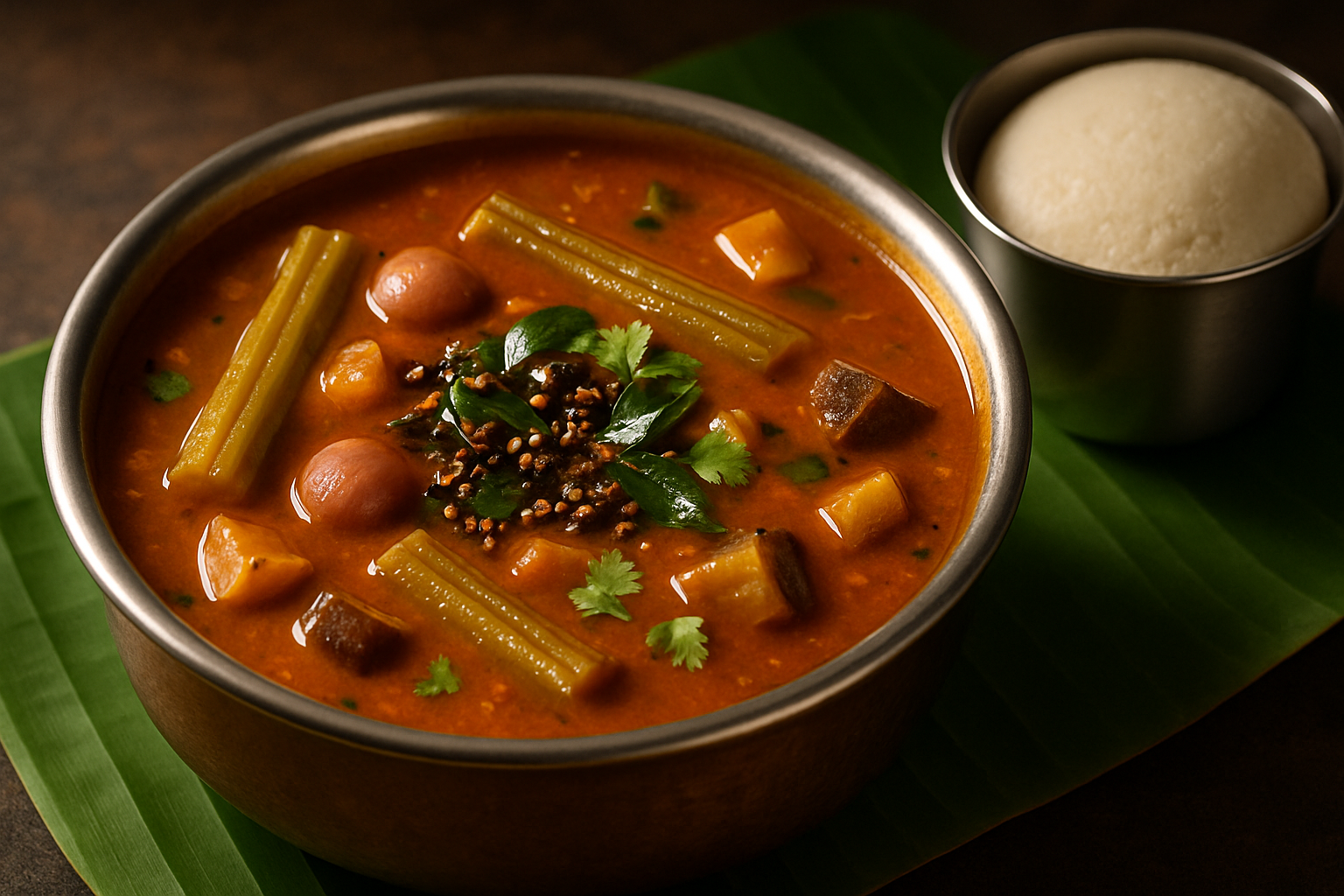
Cook the vegetables: In a large, wide pot (a 4-litre steel vessel works well), add the tamarind water, pearl onions, drumstick pieces, tomato, and brinjal. Bring to a boil on medium-high heat. The tamarind water will look pale at first — don't worry. Add the sambar powder, turmeric, and salt. Stir well. Let this simmer for 12-15 minutes until the vegetables are cooked through. The drumsticks should be tender enough that the flesh scrapes away easily. The brinjal should have completely softened and almost disappeared into the broth — and that's exactly what you want.
Add the cooked dal: Pour the mashed, cooked dal into the pot with the vegetables. Stir everything together vigorously. If the sambar is too thick (it should coat a spoon lightly but still be pourable), add ½ to 1 cup of hot water. Add the jaggery if using. Taste for salt, sourness, and spice. This is the moment to adjust — more tamarind if it needs zing, more sambar powder if it feels flat, more salt. Let everything simmer together for another 8-10 minutes on low-medium heat. The colour will deepen from pale yellow to a rich amber-orange — that's when it's ready.
Make the tadka: Heat coconut oil in a small tadka pan on medium-high heat until shimmering. Add the mustard seeds and wait — in about 30 seconds they'll start spluttering furiously. The moment they do, add the cumin seeds, dried red chillies, and asafoetida in quick succession. Then add the curry leaves — stand back, they'll spit dramatically. If you're adding onion to the tadka, add it now and cook until the edges are just beginning to turn golden, about 2-3 minutes.
Pour the tadka and finish: Pour the sizzling tadka directly into the simmering sambar. Stir gently. Add a generous handful of chopped fresh coriander leaves. Cover the pot immediately and let it sit for 5 minutes — this traps the tempering aromas and infuses them into the sambar. Don't skip this resting step. Serve hot.