Vegan Indian Curry Recipes: 15 Dairy-Free Classic Indian Gravies Made with Coconut Milk and Cashew Cream
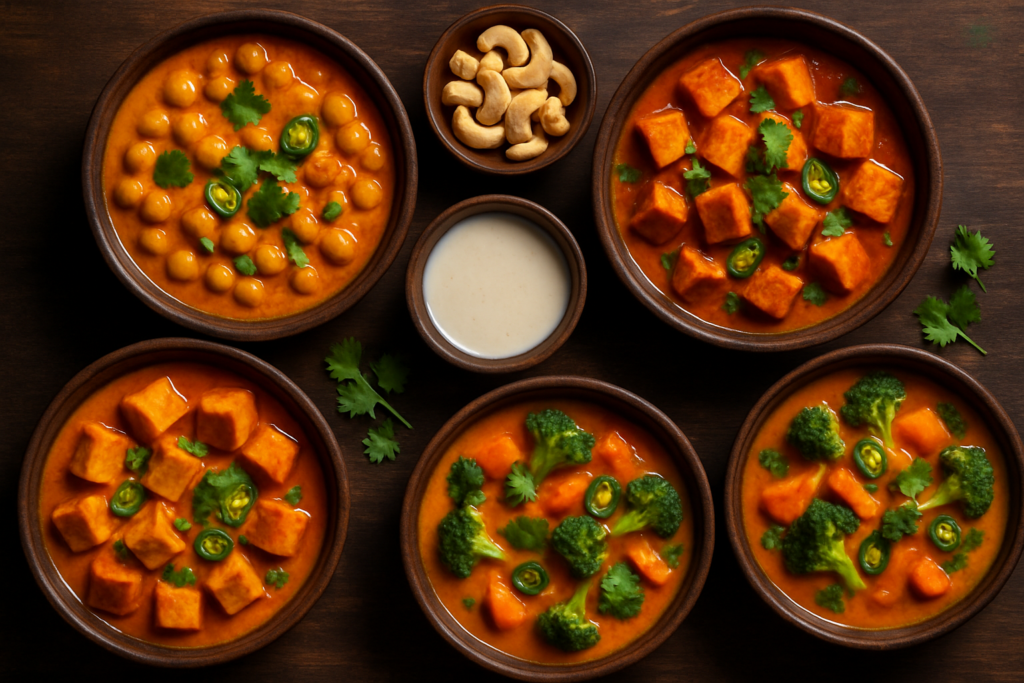
Coconut milk and cashew cream together make a genuinely effective dairy-free base for classic Indian gravies. Full-fat coconut milk provides richness, and blended raw cashews replicate the silky body of heavy cream in cooked dishes. This post covers 15 classic Indian gravies made dairy-free, with a single master base and variations for makhani, korma, saag, chana masala, and more.
⚡ Quick Answer
Prep Time: 20 minutes | Cook Time: 35 minutes | Total Time: 55 minutes | Servings: 4
This master recipe gives you the base for all 15 vegan Indian curry recipes in this collection. Built on a caramelized onion-tomato masala, enriched with coconut milk and homemade cashew cream, it’s completely dairy-free, deeply flavorful, and adaptable to any protein or vegetable you love.
Why You’ll Love These Vegan Indian Curry Recipes
- They taste like the real thing — not in a “it’s healthy so I’ll pretend” way. The cashew cream especially is indistinguishable from heavy cream in cooked dishes.
- One master base, 15 different curries — Once you nail the onion-tomato-cashew cream foundation, you can spin it into everything from a makhani to a saag to a korma.
- Great for the Indian diaspora abroad — All ingredients are available at most large supermarkets or Asian grocery stores, with easy substitutions listed throughout.
- Naturally rich in protein and fiber — Whether you use chickpeas, tofu, or lentils, these curries are genuinely nourishing. Chickpeas alone provide impressive protein and fiber, making them an excellent curry base.
- Perfect for meal prep — Most of these gravies taste even better the next day as the spices deepen overnight.
What Makes a Great Dairy-Free Indian Curry Base
Before we get to the 15 individual recipes, here are the two dairy substitutes that make these gravies work.
Cashew Cream: The Best Cream Substitute for Indian Curry Without Cream
Raw cashews blended with water create a cream that’s thick, neutral-tasting, and silky in a way that oat milk and almond milk simply cannot match for cooked applications. The key is soaking them long enough — 30 minutes in boiling water works well, though an overnight cold soak produces an even smoother result. Blend until there is absolutely zero graininess — a full 2 minutes on high, checking by rubbing a bit between your fingers.
For people in the US or UK who can’t find raw cashews easily: most big supermarkets carry them in the baking or health food aisle. Whole Foods, Trader Joe’s, Waitrose, and Tesco all stock them. They’re sometimes labelled “cashew pieces” which are cheaper and work perfectly for blending. Cashews have been used in Indian cooking for centuries, particularly in Mughlai cuisine, so this isn’t some trendy modern substitution — it’s actually a return to a very old tradition.
Coconut Milk: The Secret Behind a Rich Coconut Milk Indian Curry
Always use full-fat coconut milk from a can — not the carton kind from the refrigerator section, which is watered down and won’t give you that gorgeous richness. The coconut flavor concern is understandable for North Indian style curries, but once it’s cooked down with enough spices and tomato, you really don’t taste “coconut” anymore. You just taste rich. The only exception is a very subtle, delicately spiced korma where the coconut can be more noticeable — in that case, go heavier on the cashew cream and lighter on the coconut milk.
Ingredients You’ll Need for These Vegan Indian Curry Recipes
The Master Cashew Cream Base
- 1 cup raw cashews — soaked in hot water for 30 minutes. Substitution: sunflower seeds work for nut-free versions, though the flavor is slightly different.
- 1 can (400ml) full-fat coconut milk — Thai Kitchen and Kara are reliable brands. Substitution: oat cream for coconut-free curries.
- 2 large onions — yellow or white, roughly chopped
- 4 medium tomatoes — or one 400g can of whole peeled tomatoes works beautifully in winter when fresh tomatoes are watery. UK/US diaspora: canned tomatoes are completely fine here.
- 6 garlic cloves + 1.5 inch ginger — blended together into a paste
- 2 tablespoons neutral oil — sunflower, avocado, or light olive oil
The Spice Blend
- 2 tsp cumin seeds
- 2 bay leaves
- 1 tsp turmeric powder
- 2 tsp coriander powder
- 1 tsp cumin powder
- 1.5 tsp Kashmiri red chili powder — this gives color without excessive heat. Substitution: half sweet paprika, half regular chili powder if Kashmiri isn’t available.
- 1 tsp garam masala — added at the end only
- 1 tsp sugar or jaggery — don’t skip this, it balances the tomato acidity
Your Protein or Vegetable Choice
- Firm tofu (pressed, cubed, and pan-fried) — best vegan paneer alternative
- Cooked chickpeas — canned is completely fine, drained and rinsed
- Mixed vegetables — cauliflower, peas, potato, or paneer-sized cubes of sweet potato
- Store-bought vegan paneer — available at Indian grocery stores and on Amazon
- Cooked lentils or black beans — for a dal-style thick gravy
Step-by-Step Instructions: The Master Vegan Indian Curry Base
This method creates the base for all 15 curries. Variations are listed below — once you’ve made this twice, you’ll be able to riff on it completely intuitively.
Soak your cashews first. Pour boiling water over 1 cup of raw cashews and let them sit for at least 30 minutes while you prep everything else. The cashews are ready when you can crush one easily between your fingers with no resistance.
Make your cashew cream. Drain the soaked cashews and add them to a blender with half a cup of fresh, cold water. Blend on high for a full 2 minutes, scraping down the sides halfway through. You’re looking for a texture like thick heavy cream — smooth, pourable, and completely lump-free. Set aside.
Caramelize your onions properly. Heat 2 tablespoons of oil in a heavy-bottomed pan or kadai over medium-high heat. Add cumin seeds and bay leaves — they should sizzle immediately. After 30 seconds, add the chopped onions and a pinch of salt. Cook on medium heat for 12-15 minutes, stirring every 2-3 minutes. The onions need to turn a deep, even golden-brown color — not pale yellow, not blackened, but that rich amber that smells almost nutty. This step cannot be rushed, and it’s where most curries go wrong.
Cook out the ginger-garlic paste. Push the onions to one side of the pan and add the ginger-garlic paste to the center. It will spit a little — that’s normal. Cook for 2-3 minutes, stirring it into the onions gradually, until you can no longer smell raw garlic. It should look slightly darker and paste-like.
Add tomatoes and dry spices. Add the chopped tomatoes, turmeric, coriander powder, cumin powder, and Kashmiri chili powder. Stir everything together well. Cover the pan with a lid and cook on medium heat for 10-12 minutes, stirring every few minutes. You’ll know the masala is ready when the tomatoes have completely collapsed, the mixture looks almost jammy, and you can see oil beginning to separate and pool around the edges. This oil separation is a traditional Indian cooking cue — it means the raw flavors have cooked out.
Blend the masala base. Turn off the heat and let the masala cool for 5-10 minutes. Transfer to a blender and blitz until completely smooth. If your blender is small, do this in two batches — hot liquid in a blender can be dangerous, so leave the lid slightly ajar and cover with a kitchen towel. Return the smooth masala to the pan over low heat.
Add the cashew cream and coconut milk. Pour in your prepared cashew cream and the full can of coconut milk. Stir gently to combine. The gravy will turn a gorgeous deep orange-peach color. Let it simmer on low heat for 5 minutes, stirring occasionally. Don’t let it boil hard — a gentle simmer is what you want.
Add your chosen protein or vegetables. If using pan-fried tofu, add it now. If using raw vegetables like cauliflower or potato, add them slightly earlier and cook until just tender before adding the coconut milk in the previous step. For chickpeas or cooked lentils, stir them in now. Give everything a gentle stir to coat in the gravy.
Finish and season. Add garam masala (always last!), jaggery or sugar, and salt. Stir and taste. Simmer for another 8-10 minutes on low heat until the gravy thickens slightly and coats everything beautifully. The consistency should be like a thick soup — pourable but not watery.
Garnish and serve. Finish with a generous handful of roughly chopped fresh cilantro. For special occasions, swirl a teaspoon of extra coconut cream on top and add a pinch of chili flakes — it looks absolutely beautiful and takes 30 seconds.
The 15 Vegan Indian Curry Recipes: Variations on the Master Base
Once you have the master base down, these 15 variations are mostly about adjusting your spice profile, protein choice, and the coconut milk to cashew cream ratio. They’re grouped below by style.
Rich Makhani-Style Dairy-Free Indian Curry
For a vegan butter chicken or dal makhani style, increase the Kashmiri chili powder to 2 teaspoons for a deeper red color, add 1 teaspoon of smoked paprika, and use a 70/30 ratio of cashew cream to coconut milk. Blend a teaspoon of tamarind paste into the masala for that slight tang. Add pan-fried tofu, mushrooms, or black lentils as your main ingredient. Finish with a tiny drizzle of vegan butter if you have it — it adds a lovely gloss.
Korma-Style Light Coconut Milk Indian Curry
For a korma, reduce the chili powder to half a teaspoon, skip the tomatoes entirely, and replace them with half a cup of blended soaked almonds for extra body. Use a 50/50 cashew cream to coconut milk ratio. Add a pinch of cardamom and a small piece of cinnamon to the tempering. The result is pale, sweet, and fragrant — perfect with vegetables or tofu. I know purists will say a proper korma needs yogurt, but the almond-cashew combination here is genuinely luxurious.
Saag-Style Green Curry
For a saag (spinach curry), skip the blending step for the masala. Instead, cook the masala, then add 4 large handfuls of fresh spinach and blend the whole thing together until smooth and green. Return to the pan, add only the cashew cream (skip the coconut milk — it turns the saag an odd color), season well, and add your protein. The cashew cream makes it richer than a cream version while keeping the color vibrant.
Chana Masala — The Easiest Vegan Indian Curry Recipe for Beginners
For a chana masala, add a tablespoon of amchur (dry mango powder) and an extra teaspoon of coriander powder to the master base. Use only a quarter cup of cashew cream for a lighter body — chana masala is traditionally more tomato-forward than creamy. Two cans of drained chickpeas go in after blending. This is a good starting point for anyone new to cooking Indian food at home.
Coconut Milk Vegetable Curry (South Indian Style)
For a South Indian influenced version, temper with mustard seeds, curry leaves, and dried red chilies instead of cumin seeds. Skip the garam masala entirely. Add a second can of coconut milk for a much thinner, more soupy consistency. Use mixed vegetables — drumstick, raw banana, yam, or whatever you have. This is closer to a Kerala style curry and it is spectacular with rice and papadams.
Other Variations to Try
- Tofu Tikka Masala — marinate tofu in spiced cashew yogurt (cashew cream + lemon + spices), grill or air-fry, then add to the master masala base
- Mushroom Matar — mushrooms and frozen peas in the master base with extra black pepper
- Jackfruit Curry — young green jackfruit from a can, shredded and added to the makhani-style base
- Kofta Curry — roll spiced mashed potato and chickpea flour into balls, pan-fry, and simmer in the master gravy
- Cauliflower and Potato Curry — a classic aloo gobi made richer with a light cashew cream base
- Black Bean Curry — not traditional, but black beans work beautifully in the makhani base
- Lentil and Sweet Potato Curry — red lentils cooked into the master base become a hearty, thick, protein-packed meal
- Baingan Bharta — fire-roasted eggplant mash stirred into a light masala with just a touch of cashew cream
- Methi Malai Tofu — fenugreek leaves and tofu in a cashew-cream-forward delicate gravy
- Rajma (Kidney Bean Curry) — North Indian comfort food, no cream needed but a small spoon of cashew cream at the end adds beautiful body
Tips for Perfect Vegan Indian Curry Recipes Every Time
- Brown your onions deeply and patiently. Pale onions = flat curry. Deep golden-brown onions = complex, restaurant-worthy curry. Set a timer for 15 minutes and don’t cheat.
- Always add garam masala at the very end. It’s a finishing spice. Adding it early cooks off the delicate aromatics and you lose all the floral complexity.
- Press your tofu properly. For the best vegan paneer alternative, wrap firm tofu in a clean kitchen towel, put a heavy pan on top, and leave it for 20-30 minutes. The drier the tofu, the better it fries and the less it breaks apart in the curry.
- Use full-fat coconut milk, always. Low-fat coconut milk produces a noticeably thinner and less satisfying result. The fat is where the flavor lives.
- Taste and adjust at the end. Every batch of tomatoes is different in acidity, every batch of cashews varies slightly in richness. Always do a final taste test and adjust salt, sweetness, and heat before serving. A good curry is finished by someone who cares, not by a recipe alone.
Jain and No-Onion-No-Garlic Variations
For a Jain-friendly version of these vegan Indian curry recipes, skip the onion and garlic entirely. Replace the ginger-garlic paste with just ginger and a pinch of asafoetida (hing). Use cashew paste as the body for the gravy and increase the tomato quantity slightly. The result is different but genuinely delicious — and still completely Jain diet compliant.
For gluten-free versions, check your asafoetida (some brands contain wheat flour) and use tamari instead of any soy sauce if it appears in your recipe. All other ingredients in this collection are naturally gluten-free.
What to Serve With These Dairy-Free Indian Curries
- Jeera rice or coconut rice — plain basmati rice tossed with toasted cumin seeds is an everyday go-to. Coconut rice amplifies the coconut milk curry notes beautifully.
- Vegan roti or paratha — made with whole wheat flour and a touch of oil instead of ghee. These curries are thick enough to scoop with bread wonderfully.
- Papadams and mango chutney — for a complete spread. The crunch of a pappadam against a silky cashew cream curry is one of life’s genuinely simple pleasures.
Storage and Reheating
All of these vegan Indian curry recipes store beautifully. Here’s what works:
- Refrigerator: Store in an airtight container for up to 4 days. The flavors deepen overnight — most of these curries are better the next day.
- Freezer: Freeze for up to 3 months. Portion into single-serve containers for easy weeknight meals. Thaw overnight in the fridge.
- Reheating: Reheat on the stovetop over low heat with a small splash of water or extra coconut milk to loosen the gravy — it thickens considerably when cold. Avoid microwaving tofu-based curries as tofu can become rubbery; stovetop reheating is gentler.
- Note on cashew cream after freezing: Cashew cream can sometimes separate slightly after freezing. Just stir the reheated curry vigorously and it comes back together. A fresh drizzle of coconut milk while reheating helps enormously.
Frequently Asked Questions About Vegan Indian Curry Recipes
Can I substitute coconut milk with something else in vegan Indian curry recipes?
Absolutely! Oat milk works surprisingly well in milder curries like korma. Almond milk is another option but it’s thinner, so use full-fat versions only. For richness without coconut flavor, cashew cream alone is excellent. Soy cream is widely available in Europe and works great too. The coconut milk and cashew cream combination is worth trying because together they mimic the richness of heavy cream almost perfectly.
What is the best vegan paneer alternative for Indian curries?
Pressed and pan-fried extra-firm tofu is hands down the best vegan paneer substitute. It has a similar mild flavor and absorbs the curry beautifully. You can also find store-bought vegan paneer made from cashews or soy at Indian grocery stores and online. Some people also use firm silken tofu for softer gravies. Tofu that’s been pressed overnight, cubed, and then air-fried or pan-fried until golden works especially well — it doesn’t fall apart in the gravy and has a texture surprisingly close to paneer.
How do I make vegan Indian curry without it tasting bland?
The biggest mistake people make is not blooming their spices properly and not cooking the onion-tomato base long enough. Those two steps are non-negotiable. Also, always add garam masala at the END of cooking — it’s a finishing spice and its aromatics dissipate if added too early. A small pinch of sugar or jaggery at the end also brightens everything up. And please, use good quality whole spices where you can — even just cumin seeds and bay leaves at the start make a massive difference to the final flavor.
Can I make cashew cream ahead of time and store it?
Yes! Cashew cream keeps in an airtight container in the fridge for up to 4 days. You can also freeze it in ice cube trays and use cubes as needed — just thaw before adding to your curry. Making a double batch and using it through the week for different curries is efficient and practical. It also works as a base for vegan raita, vegan lassi, and even pasta sauces — so it’s very versatile.
Are these vegan Indian curries also gluten-free?
Most traditional Indian curries are naturally gluten-free since they’re built on spices, onions, tomatoes, and legumes. Every recipe in this collection is gluten-free as long as you use certified gluten-free asafoetida (hing), which sometimes contains wheat flour as a filler. Always check your packaged spice blends. Serve with rice, gluten-free roti, or bajra bhakri to keep the whole meal gluten-free.